HOW DRU CATCH SEES IT
The Chameleon's Flashiest Scale Is the One Nobody Checked
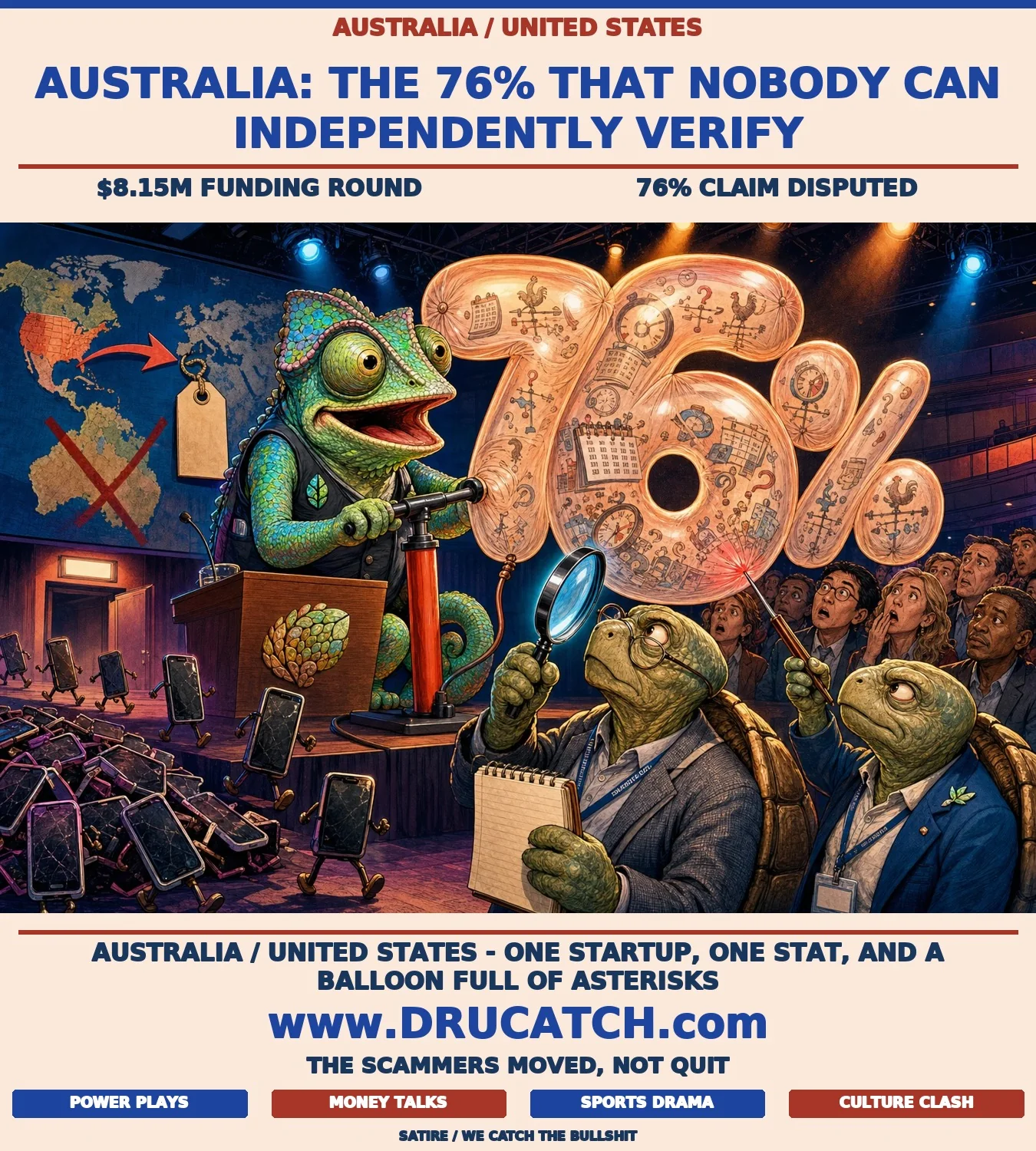
Apate.ai is doing what every good chameleon does: shifting colors fast enough that the audience focuses on the spectacle rather than the anatomy. The Australian startup boasts that its AI bots have consumed 17 years of scammers' time over 2.5 million conversations, and that the Commonwealth Bank of Australia experienced a 76 percent decline in publicly reported scam losses. On a slide deck, that figure gleams. Under a magnifying glass, it gets blurry in a hurry.
Nobody serious is calling the technology useless. Mary Ann Miller, a fraud executive advisor at digital-identity firm Prove, told Moneywise the approach holds genuine promise for uncovering fraudulent accounts and tactics before victims get hurt. The trouble starts when you try to draw a straight line from one startup's chatbot army to a three-quarter reduction in losses. Former Deloitte analyst Saugat Nayak flagged the obvious: fraud-loss estimates shift with reporting rates, seasonal cycles, and economic conditions, all at once. Dave Parkinson - whose John Parkinson Family Foundation works to shield older adults from financial fraud - added that he would need to know what other defenses launched in the same window and whether criminals simply pivoted to softer targets.
Welcome to the Asterisk Economy
Strip away the press-release polish and the 76 percent figure might be part signal, part coincidence, and part measurement quirk - with no independent audit publicly separating the three. That is not corporate malfeasance. It is startup arithmetic: find the most dazzling number in the data room, paste it onto the pitch, and ride it into your next market while the funding round is still warm. In this case, the round was $8.15 million and the next market is the United States.
Co-founder Brad Joffe told TechCrunch that his company confronts scammers directly instead of cleaning up afterward. That distinction is real and potentially valuable. But "we engage the fraudster" and "we caused 76 percent of the improvement" occupy different evidentiary zip codes. The first claim is operational; the second demands controlled, multi-variable analysis that, so far, nobody outside Apate.ai has published for peer review. Until someone does, the headline number is doing marketing work, not scientific work.
Chasing Raccoons Into the Neighbor's Yard Is Not Pest Control
Parkinson raised the question that should keep every fraud analyst honest: did the criminals actually stop, or did they simply relocate? If scammers drifted to different banks, different channels, or different countries, then Apate.ai did not shrink the problem - it reshuffled it, which is the cybersecurity equivalent of shooing raccoons over the fence and calling the yard clean. The raccoons are still eating garbage; it is just someone else's garbage now. And the neighbor who is about to inherit them is the entire United States, where the FBI recorded nearly $20.9 billion in cybercrime losses for 2025 - a 26 percent jump from the prior year. The Federal Trade Commission's consumer-fraud tally added another $15.9 billion. A market that size does not need another glossy stat. It needs independently verified receipts, preferably before the balloon gets any more inflated.
THE COMMENTS SECTION HAS ENTERED THE CHAT
If a fraud-prevention startup's headline number cannot be independently verified or isolated from other variables, should investors and regulators demand controlled evidence before a US market expansion - or is directional progress enough?
Join the discussion / save / share