HOW DRU CATCH SEES IT
The Mandate That Cannot Explain Itself
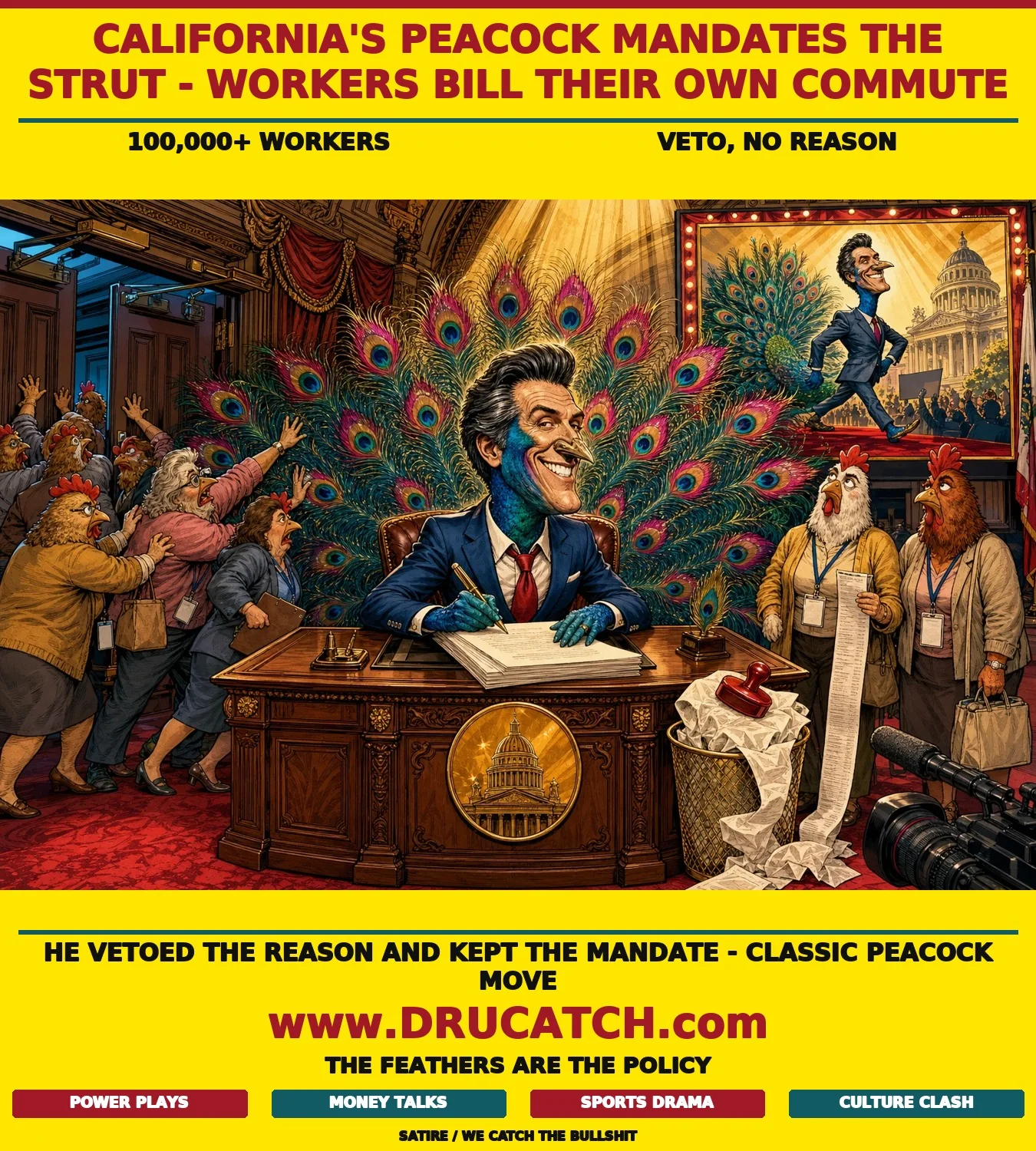
Gavin Newsom directed more than 100,000 California state workers to return to the office four days a week starting July 1. His stated rationale - that physical proximity drives collaboration and innovation - is exactly the kind of argument that fits neatly on a single page. Apparently it does not fit on a legally binding one: the state legislature sent him a bill requiring agencies to produce a written justification for any return-to-office directive, and he vetoed it.
What remains after that veto is a policy whose official logic is sturdy enough for a podium but apparently too delicate for a memo. The mandate stands; the obligation to defend it in writing does not. That combination is not a governing position - it is a press release that has been surgically protected from follow-up questions.
When the State's Own Logic Works Against the Governor
SEIU Local 1000 is not staging a protest against accountability. The union's fiscal case is straightforward: empty desks cost the state less than occupied ones, so the collaboration-and-innovation argument must clear a budget hurdle before it clears a philosophical one. When the state's own spending ledger benefits from remote arrangements, 'come back anyway' requires more than optimistic language about workplace culture.
The union's remaining demands sketch a portrait of workers already squeezed by the state they serve. A 20% salary increase across three years, plus greater state contributions toward healthcare, describes employees who cannot comfortably afford the California cost of living on wages set by the California government. Union president Anica Walls said members need to cover groceries, childcare and rent. The California Department of Human Resources replied that it 'remains focused on a fair and responsible agreement' - a sentence whose function is to occupy space where a specific response would otherwise go.
His Resume Leaves in January; Their Commute Doesn't
Newsom departs the governorship in January. The unresolved contract, the commute mandate and the workers idling in traffic will all transfer to his successor's inbox. The political geometry is not difficult to read: demonstrating that he can hold firm against a major public-sector union - rather than accommodating it - produces a useful data point for a Democratic presidential primary audience that wants evidence of managerial toughness.
That dynamic is precisely what the strike puts on display. During the pandemic the governor leaned into flexibility and remote capacity as signs of responsive, modern governance. Now, with a national audience assembling, the office becomes a symbol of discipline and the four-day mandate becomes a talking point. The 100,000 auditors, nurses and counselors who carry out California's daily services are being asked to perform 'collaboration' for a camera that, by every indication, is trained on a completely different stage.
THE COMMENTS SECTION HAS ENTERED THE CHAT
If Newsom's return-to-office mandate genuinely improves government services, why did he veto the bill that would have required agencies to simply write down the reason - and does a governor's 2028 presidential ambition change how you read that veto?
Join the discussion / save / share