HOW DRU CATCH SEES IT
The Gate That Closes Behind You
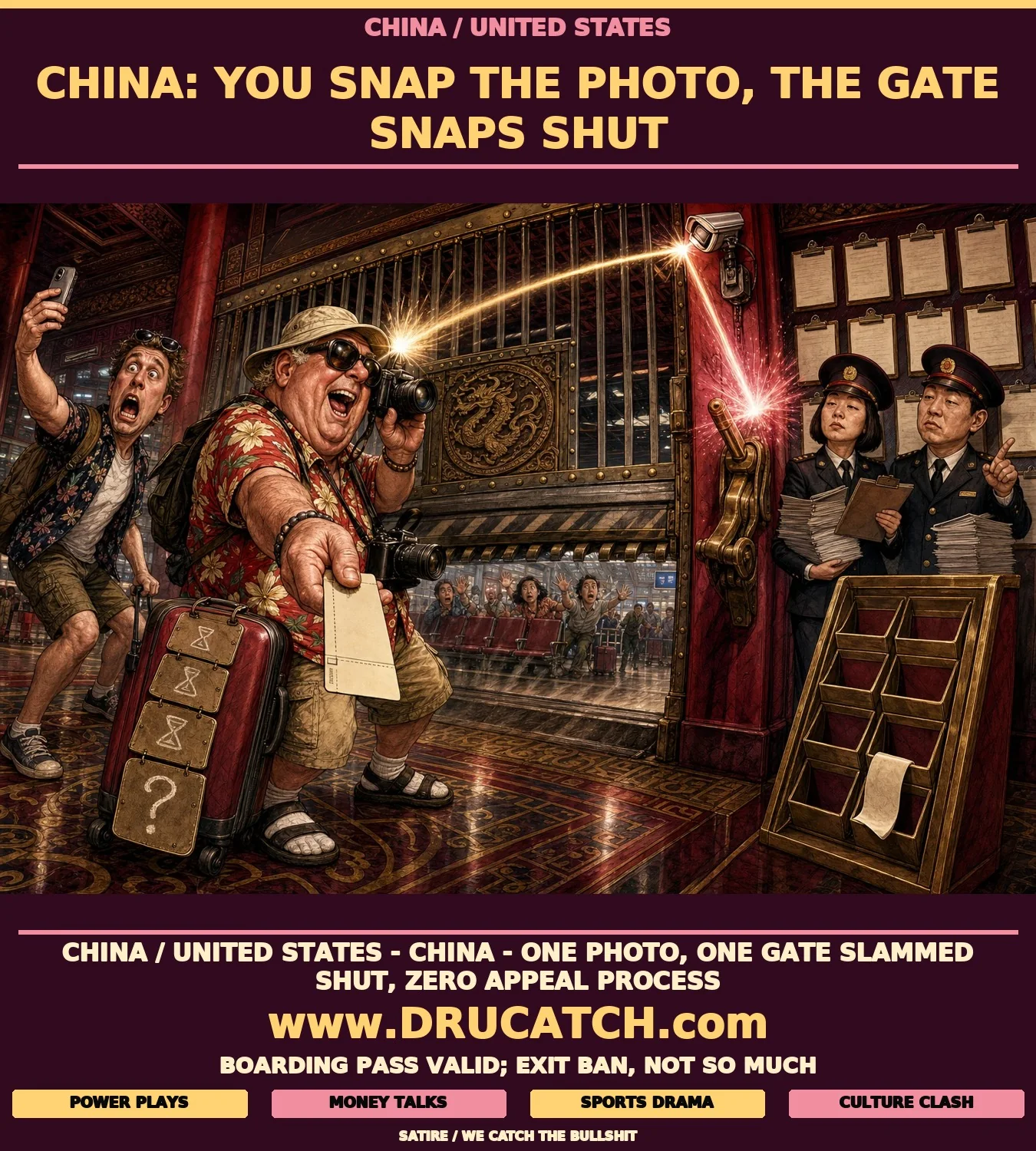
There is a specific kind of trap that only reveals itself when you try to leave. China's exit ban system is not a theoretical risk buried in the fine print - the State Department is now telling Americans, in plain official language, that they might not know they are trapped until they scan their boarding pass at the gate. Years of your life, resolved by a bureaucracy that offers no clear legal remedy and no guaranteed consular access. The vacation ends; the exit ban does not.
A Photo, a Text, a Business Trip
What makes this genuinely absurd - rather than just alarming - is the breadth of what qualifies as a triggering offense. According to travel expert Bobby Laurie, cited in the sourced reporting, snapping a photo of a police officer on the street is a plausible starting point. A private text message sent before you even boarded the plane to China can do it. Academic work, routine business dealings, a relative under investigation who shares your last name - all of these are documented pathways into a detention or exit ban scenario. China's security laws are not narrowly drawn. They are, by design, wide enough to catch almost anything.
The Double Standard You Check In With
The double standard at the center of this story is quiet but brutal: Western countries treat these same activities - photography, private speech, professional research - as unremarkable rights. China treats them as potential national security events. The State Department is not advising Americans to change their values. It is advising them to strip their phones, schedule check-in calls, and accept that the ordinary things they do every day at home are legally radioactive the moment they land. That is not a travel inconvenience. That is the cost of entry to a country that has decided your texts are intelligence and your itinerary is a confession.
THE COMMENTS SECTION HAS ENTERED THE CHAT
If the U.S. State Department warns that routine activities - photography, private messages, academic research - can lead to years of detention without a clear legal remedy in China, at what point does "Exercise Increased Caution" become an inadequate warning, and what should governments do to better protect their citizens who travel there for business, study or family reasons?
Join the discussion / save / share