HOW DRU CATCH SEES IT
Flu Season Has a Media Kit - The Virus Skipped the Briefing
Every autumn, the American public health infrastructure performs a ritual as choreographed as a Broadway opening night. The CDC cues up its seasonal countdown. Pharmacy chains plaster window clings on every storefront. Local TV stations dust off their 'it's flu season - here's what you need to know' segments, recorded sometime in August and waiting in a folder labeled DO NOT AIR BEFORE OCTOBER. There is a schedule. There are timelines. There are PowerPoints.
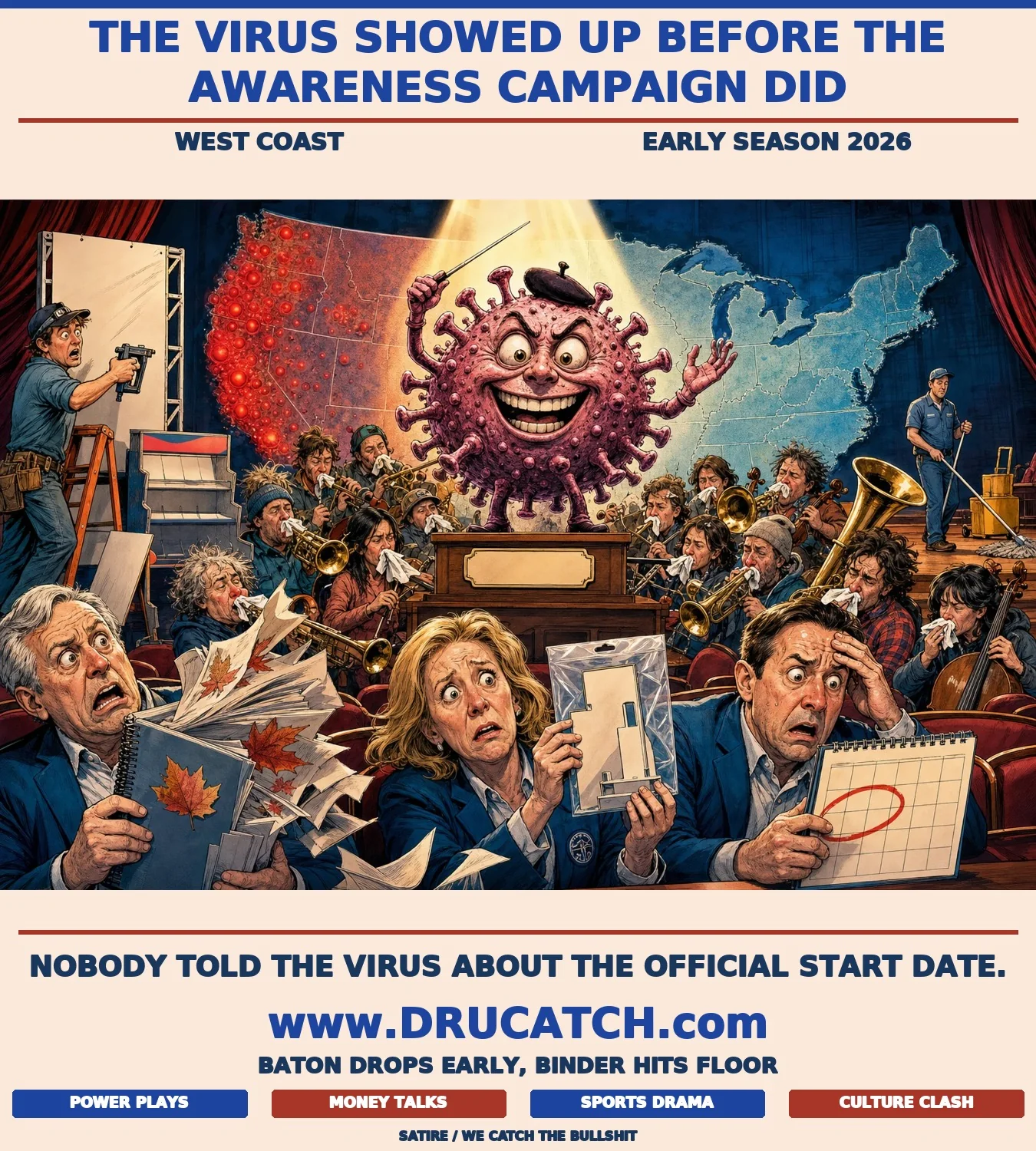
A mutated flu virus, apparently, does not own a calendar. According to CNN, a mutated virus is driving the US into an early flu season in October 2026, with the West Coast taking the first hit. This is the institutional equivalent of the caterer showing up three hours early and finding the venue still unlocked, half-decorated, with someone's uncle asleep in a folding chair.
West Coast First: Geography as Public Health Punchline
The West Coast specificity reported by CNN isn't just a weather pattern - it's a stress test on the assumption that national preparedness campaigns translate evenly across regions. When one coastline absorbs an early wave while the rest of the country is still in pre-season messaging mode, the gap between the national rollout calendar and local reality becomes very visible, very fast.
This isn't a new pattern. Geographic asymmetry in public health responses has a documented history of creating uneven resource allocation between states. What's novel here is the timing: a mutation that accelerates the clock before the machine has finished warming up. The PSAs haven't dropped. The pharmacies are mid-restock. The talking points are still in draft.
The Virus Isn't the Problem - The Rigidity Is
The deeper absurdity isn't that flu comes early. Mutations happen; viruses don't negotiate with bureaucracies. The real joke is how much institutional energy goes into packaging flu season as a predictable, manageable annual event - a thing with a promotional calendar and a phased awareness rollout - and how completely that framing collapses the moment biology deviates by a few weeks.
Preparedness, by definition, should absorb surprises. A system that only works when the virus cooperates with the expected timeline isn't a preparedness system. It's a press release schedule with medical branding. The mutated virus didn't upstage public health. It just refused to wait for the curtain.
THE COMMENTS SECTION HAS ENTERED THE CHAT
Public health agencies invest heavily in seasonal preparedness calendars and awareness campaigns built around expected flu timelines. When a mutated virus arrives early and disrupts those schedules - as CNN reported for the 2026 West Coast flu season - does the problem lie with the virus's unpredictability, or with an infrastructure that treats a biological event like a marketing launch window?
Join the discussion / save / share