HOW DRU CATCH SEES IT
One Minute: The Full Career Summary
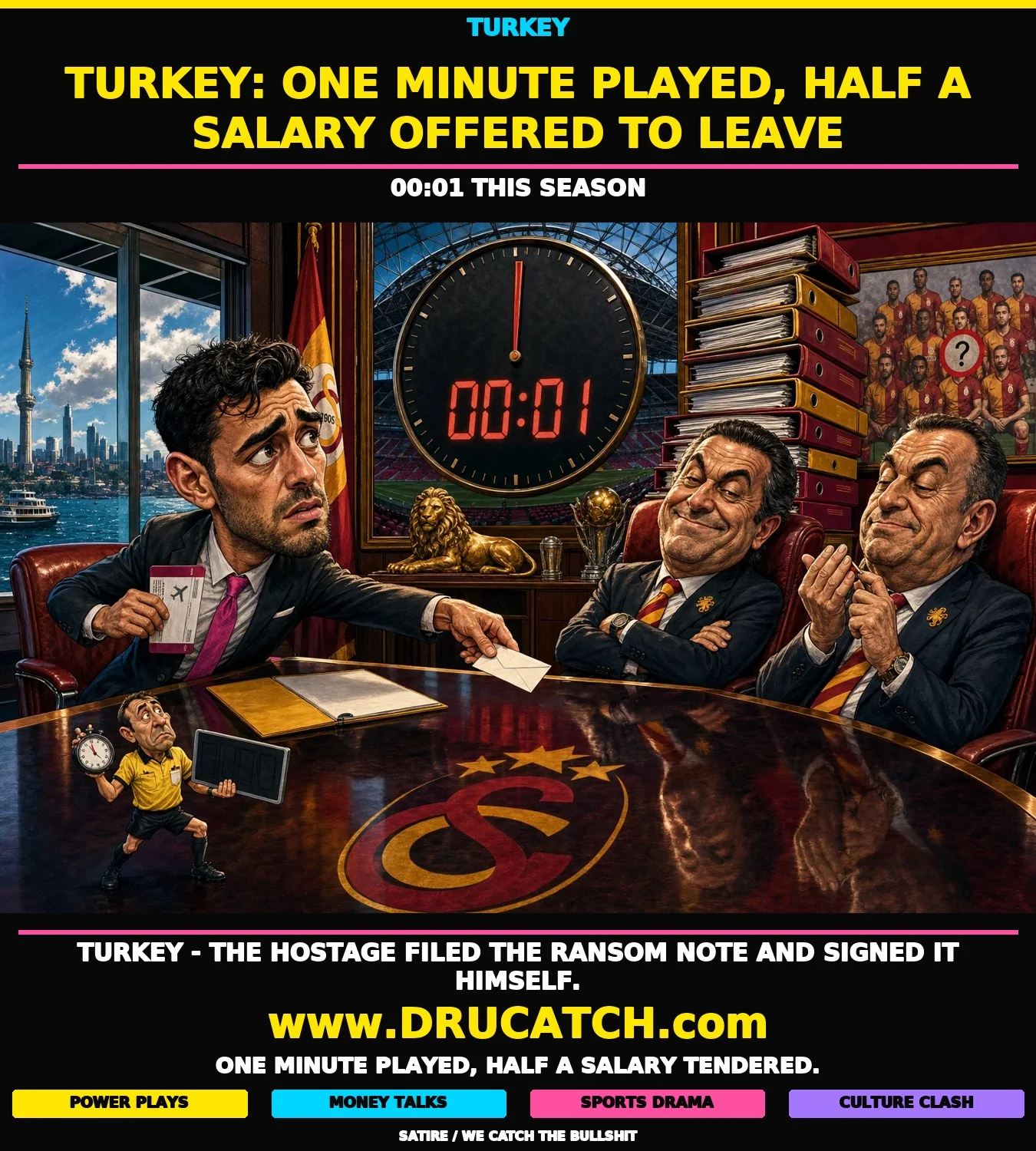
Kaan Ayhan has played one minute of football this season. Not one half. Not one game. One minute - the length of time it takes to microwave a bowl of soup. And now, holding a contract that runs to June 2028, he is reportedly offering to give back half a season's wages just to get out. That is not a transfer negotiation. That is a man paying his own bail in a jail he technically chose.
Follow the thread: Austria: Wacker Innsbruck Ultras Declared War Over a 0:1 Second-Division Loss.
When the Hostage Covers the Ransom
The comedy is structural. Galatasaray holds all the cards: a signed contract, nearly two years of contracted salary still owed, and a player so comprehensively frozen out he barely registers as a statistic. Yet somehow it is Ayhan who is making the concession - waving his own salary like a white flag, hoping the club takes pity and prints him a ticket to Germany. The hostage is filing his own ransom demand. And offering to split the bill.
The Exit Cost Is Always the Employee's Problem
What makes this a genuinely Turkish football institution story is that nobody looks embarrassed. Clubs routinely park players on wages until they break psychologically and beg to leave on worse terms. Ayhan's 60-second cameo appears to be the sum total of his relevance at one of Europe's better-resourced clubs. A player valued at 1 million euros, locked to a squad until 2028, reduced to pitching his own redundancy package.
The football industrial complex has made the exit cost the employee's problem, and Ayhan is just the latest to discover that the contract you celebrate on signing day is the same contract that eventually holds the door shut from the outside.


THE COMMENTS SECTION HAS ENTERED THE CHAT
When a professional club contracts a player for years and then gives him essentially zero playing time, who should bear the cost of ending that arrangement - the club that benched him or the player who signed the deal?
Join the discussion / save / share