HOW DRU CATCH SEES IT
Scotland Sold the Dream and Forgot to Wire the Room
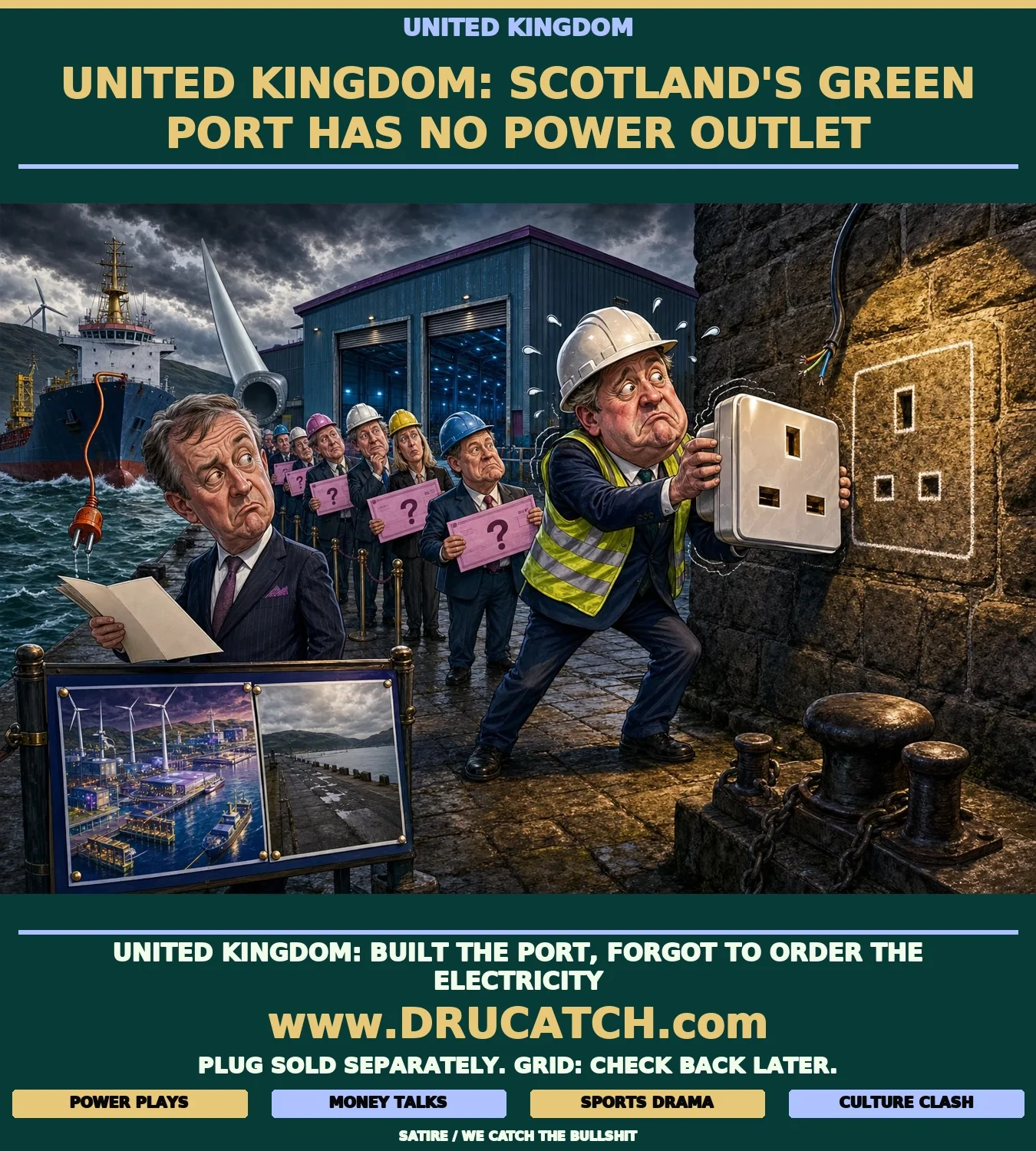
For the better part of a decade, Scotland has assembled a compelling pitch for offshore wind manufacturers: modernised ports, committed political rhetoric and a coastline that reads like a renewable energy prospectus. The one detail left off the brochure is that the electricity grid may not arrive in time to honour any of it.
Roadnight Taylor's report, drawn from conversations with representatives at twelve Scottish ports, found every facility carrying a different set of power demands - ranging from modest capacity bumps for day-to-day operations to the kind of step-change infrastructure that industrial-scale wind manufacturing requires. The largest appetites belong precisely to the high-value tenants everyone is trying to land. And that is where the logic folds in on itself: a port cannot guarantee electricity supply without a committed tenant, and a prospective tenant will not commit without a guaranteed supply. The grid connection queue observes this standoff from a polite distance and does nothing to resolve it.
Attract the Tenant, Then Build the Power - or Is It the Other Way Around?
Scottish Renewables chief executive Angela Hepworth made the point without ceremony: ports require confirmed power capacity before manufacturers will take them seriously, and that capacity has to be secured before any lease is signed. Stating this plainly in 2026 - a full decade into Scotland's offshore wind ambition occupying the opening paragraph of nearly every energy announcement - is itself a kind of admission. The aspiration has been enormous; the socket has been theoretical.
The organisation's remedies are reasonable: embed port electricity requirements inside the Strategic Spatial Energy Plan and the Regional Energy Strategic Plans, accelerate consenting timelines and make connection costs legible before anyone is committed. Sensible, all of it. It is also a remedial checklist for hazards that were clearly visible the moment someone first drew a straight line between 'world-class wind manufacturing hub' and the reality of a grid upgrade queue that moves at its own unhurried pace.
Even the Ships Can't Plug In
Shore power - the arrangement by which a berthed vessel connects to the land grid rather than running its onboard generators, thereby cutting local emissions - runs into precisely the same ceiling. Constrained network capacity, steep upfront costs, opaque pricing and genuine doubt over whether enough ships will show up to justify the investment have all combined to keep the technology peripheral rather than routine. Every tier of Scotland's maritime decarbonisation ambition is stacking up behind the same bottleneck.
Advertising a green maritime future while the quayside carries no spare capacity is the infrastructure equivalent of selling tickets to a concert and then neglecting to construct the stage. The Roadnight Taylor report provides a clear map of the problem. The more pressing question is why the venue was announced to the public before a single contractor checked whether there was anywhere to hang the lights.
THE COMMENTS SECTION HAS ENTERED THE CHAT
Scotland has loudly marketed itself as a global offshore wind destination for years - so why are ports only now discovering the grid cannot support the tenants they are meant to attract, and who should have connected those dots earlier?
Join the discussion / save / share