HOW DRU CATCH SEES IT
The Metallic Glint That Launched a Boat
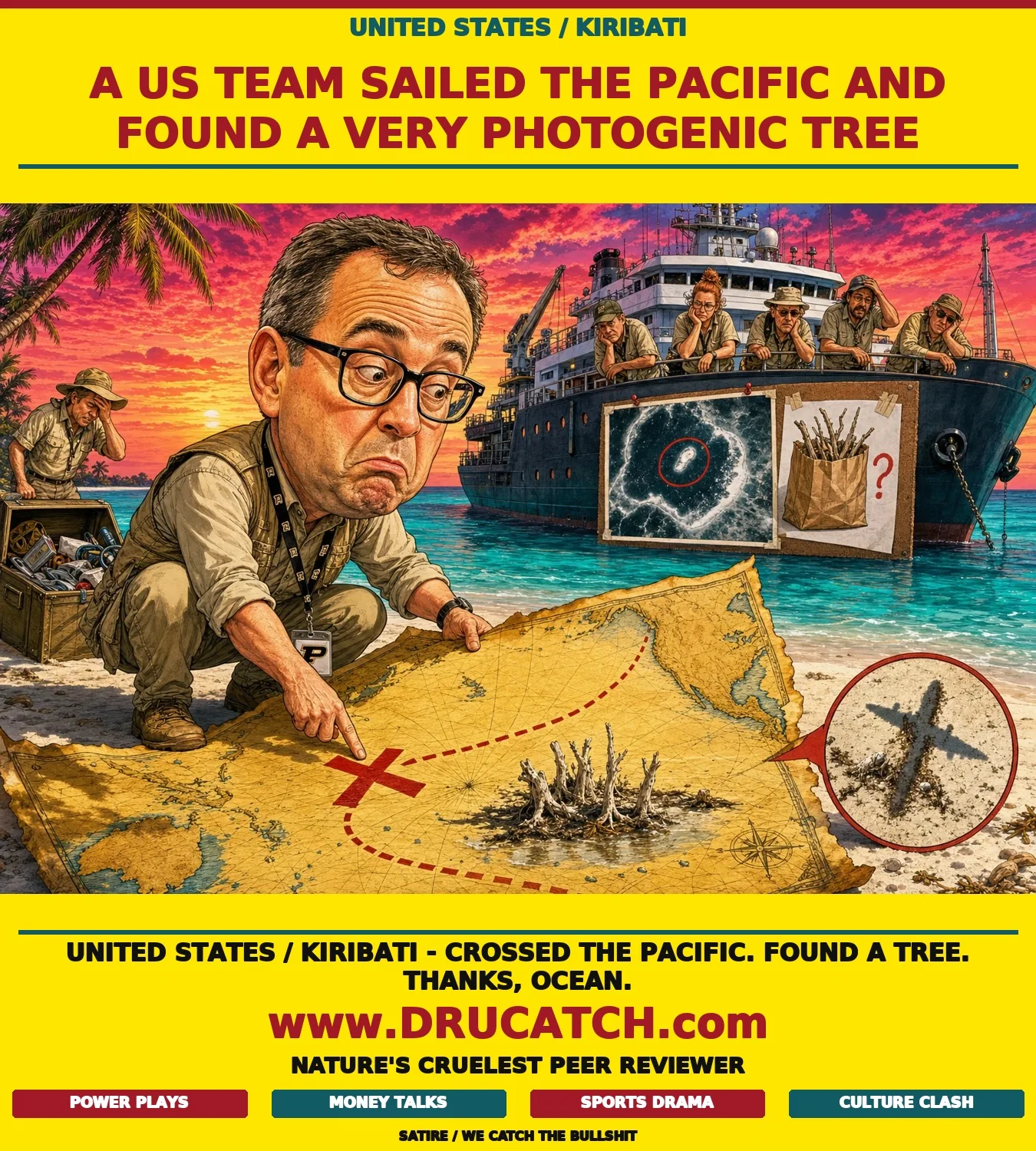
Here is the full, noble arc of modern exploration: spot something shiny in a satellite image, charter a boat, cross the Pacific Ocean, and discover that nature has been littering. The researchers were not wrong to look - the mystery of Amelia Earhart's 1937 disappearance is genuinely one of aviation history's great unsolved puzzles. But there is something cosmically funny about the gap between 'we may have found the plane' and 'it was a clump of trees standing in water.'
The metallic glint is doing a lot of work here. That phrase conjures aluminum fuselage and historic wreckage. What it apparently delivered was driftwood with a certain je ne sais quoi in the right light. The Pacific Ocean, it turns out, is excellent at making debris look mysterious from a distance. It has been doing this to humans for centuries and shows no signs of stopping.
The Treasure Map Led to Sticks
The expedition's premise followed a perfect treasure-hunt structure: cryptic visual clue, remote island, dramatic voyage, X marks the spot. The X marked a pile of washed-up trees. There is a version of this story that is pure farce - researchers crossing thousands of miles of open ocean to find something any park ranger could identify. But it is also an honest account of how exploratory science actually works: you chase the lead, you check, and occasionally the lead is a log.
The more interesting absurdity is that 'metallic glint' passed enough scrutiny to justify the voyage in the first place. That is not a criticism of the researchers - satellite imagery of remote Pacific atolls is genuinely limited - but it does raise the question of what the bar for a Pacific expedition currently looks like. Shiny and vaguely plane-shaped, apparently.
The Smoking Gun Was a Log
Steve Schultz of Purdue University stood on the sand of Nikumaroro in front of a blue lagoon and said they could not find the smoking gun. That image - the blue lagoon, the empty hands, the careful understatement - is doing more satirical work than any punchline could. The smoking gun was, in this case, a tree. Several trees. Washed up by the Pacific at some indifferent point in recent history.
The Earhart mystery has a long and expensive history of almost-answers: bone fragments, aluminum panels, shoe parts, radio signals, and now a photogenic cluster of driftwood. Each expedition carries the same weight of hope, and each adds another entry to the list of things Earhart's plane definitively is not. At this rate, we have an increasingly precise map of what happened to her plane - drawn entirely in things it turned out to be wrong about.
THE COMMENTS SECTION HAS ENTERED THE CHAT
Does the continued public fascination with Amelia Earhart's disappearance reflect genuine historical curiosity, a media appetite for mystery, or both - and at what point does hope become expensive noise?
Join the discussion / save / share