HOW DRU CATCH SEES IT
The House That Wrote the Rules (and Then Ignored Them)
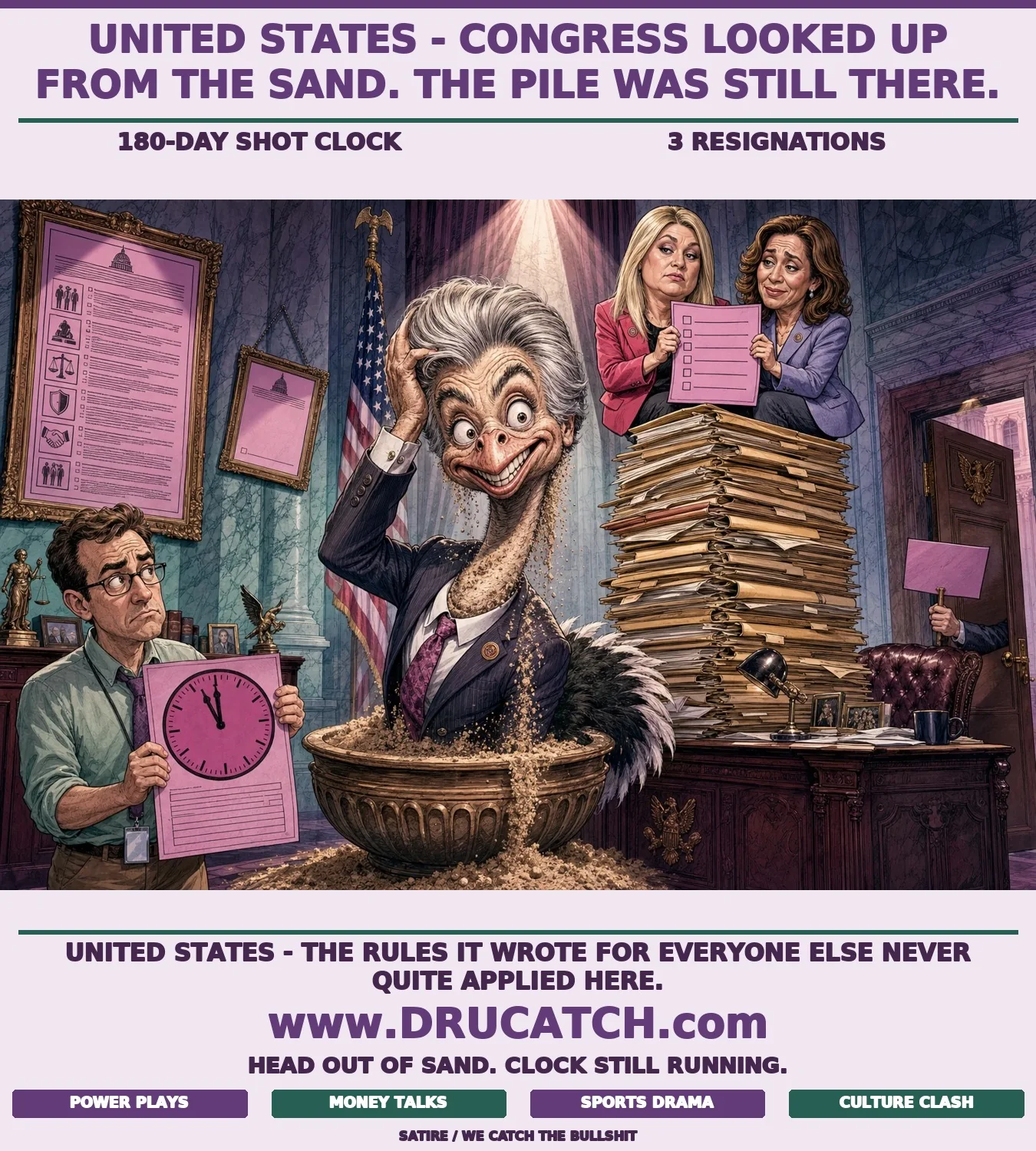
The Congressional Accountability Act was Congress's formal commitment to hold itself to the same employment standards it imposed on private employers. Among its provisions: a 180-day window for filing a harassment complaint. The Equal Employment Opportunity Commission already extends that window to 300 days in jurisdictions with local anti-discrimination law. Congress did not build that extension into its own staff protections. Cammack's characterization of what that produced was blunt - the Capitol Hill system is, in her framing, structured to discourage victims from coming forward at all. That is not a description of negligence. It is a description of design.
When Cammack launched her task force this spring, former staffers surfaced in numbers, she said, having kept quiet for years because the institutional understanding was clear: filing a complaint meant ending a career you had worked to build. The Ethics Committee's recent caseload gave that silence a concrete shape. Three sitting members left rather than face expulsion votes this year. Two of those departures were tied to alleged sexual misconduct. A third member was censured - following a committee finding of persistent inappropriate conduct toward two junior female staffers - by a House vote of 413 to 2. That margin is itself a form of editorial comment.
Reform Arrives Right on Schedule - After the Scandals Do
The bipartisan working group ran a methodical process: listening sessions with lawmakers and staff, outreach to the military, corporate America, and victim advocacy organizations. That is the architecture of a serious effort. It is also the kind of effort that, apparently, requires a sufficient accumulation of public ethics cases to get authorized. Leger Fernandez put the underlying frustration plainly - still arguing, in 2026, that workplace harassment of women is unacceptable is not a sign of progress. It is a measurement of how far the baseline has slipped. That observation is in the record. It does not require addition.
The proposed changes circulating within the working group are not novel. Broadening the ban on sexual relationships with staff beyond a member's immediate office to cover all Capitol Hill personnel. A unified reporting channel - one call, one entry point, all options explained. A longer window to file. Stronger accountability for senior staff. Every one of these adjustments addresses a gap in the existing framework that was apparent when the existing framework was written. The task force is not inventing new standards. It is proposing that Congress meet the ones it already endorsed for everyone else.
And Then There Is the Senate Variable
Several of the more substantive proposed changes require amending the Congressional Accountability Act - which means the Senate has to agree. AP's reporting describes that dependency as something that 'complicates prospects,' a phrase doing considerable work. The House working group held the listening sessions. The House produced the cases. Some of the most protective changes now sit behind a chamber that was not part of that process, with a reform window the task force has targeted for closure before the end of the year. Whether a post-election lame-duck calendar is the right container for structural harassment reform is not a rhetorical question. It is the one the timeline has made unavoidable.
THE COMMENTS SECTION HAS ENTERED THE CHAT
Congress exempted itself from the stronger harassment-complaint timelines it effectively endorsed for private-sector workers. The bipartisan working group now wants to fix that - but meaningful changes require Senate approval, and the reform window closes at year's end. Is a lame-duck deadline the right moment to pass structural harassment protections for Capitol Hill staff, or does the urgency of the timeline risk producing rules that are easier to pass than to enforce?
Join the discussion / save / share