HOW DRU CATCH SEES IT
The Heist That Came With a Receipt
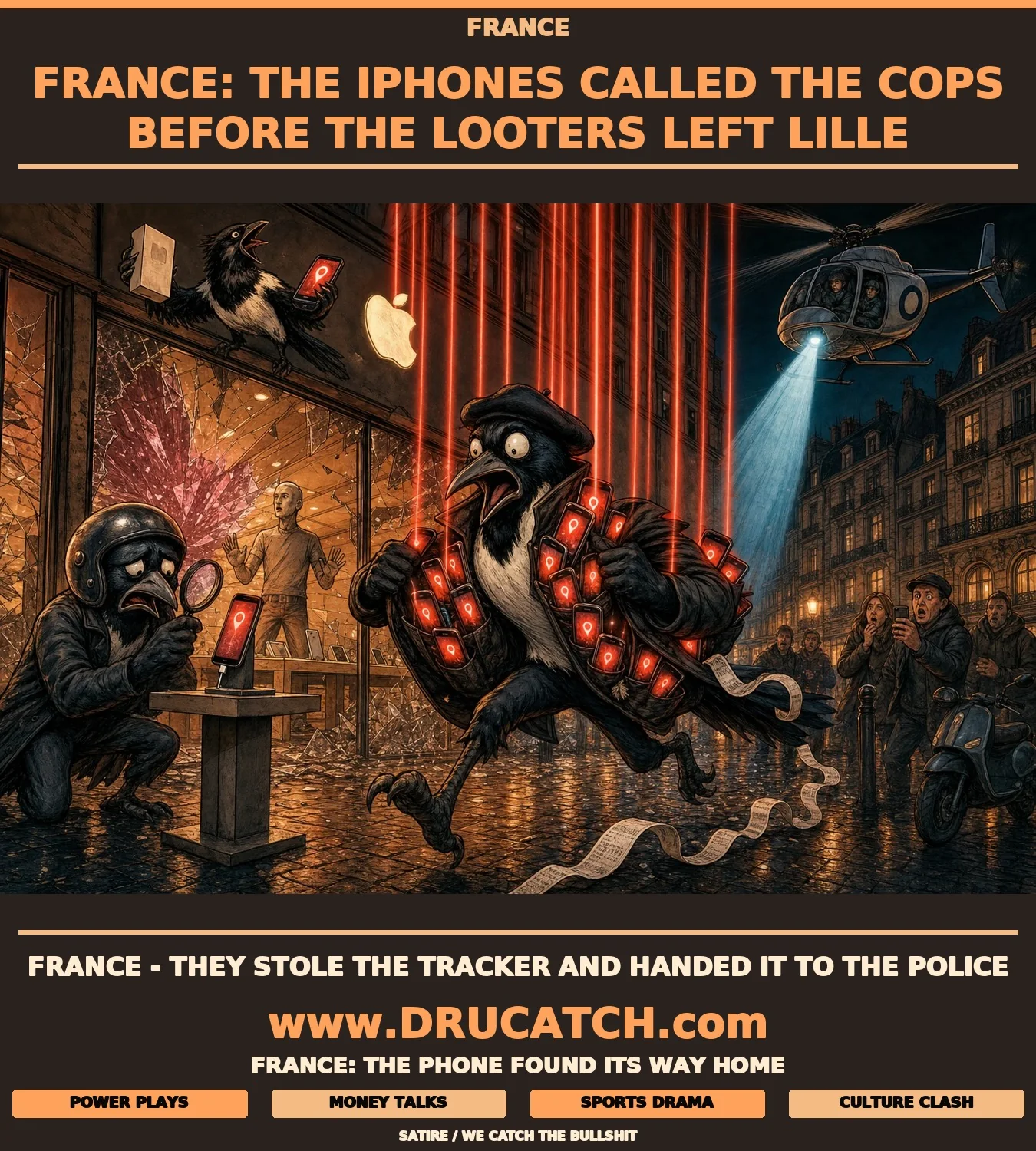
There is a particular genus of self-defeating crime that does the prosecution's job on arrival. Smashing into a retail display case to grab a product whose marquee selling point is knowing exactly where it is at all times is less a robbery than a live field trial. The iPhones, as it turned out, performed flawlessly.
Apple's anti-theft architecture is not classified information. Unboxing channels, Genius Bar appointments and a decade's worth of YouTube walkthroughs have made Activation Lock about as obscure as the power button. When a thief held up his freshly looted device on camera, the screen was already delivering its standard notice: the phone was disabled, its position was transmitting, and local authorities had been notified. That alert is, functionally, a timestamped receipt - and the merchandise had already started filing paperwork.
The Phone Was Not Stolen. The Thief Was Recruited.
The richer irony is not that the thieves were caught; it is that their own loot did the catching. Apple has spent years selling an ecosystem built around the premise of seamless, intelligent connectivity. On Oct. 17 in Lille, a looter field-tested that pitch at personal expense and confirmed every bullet point.
What left the store was not a stolen phone. It was a GPS transponder with a great camera, held by a volunteer who promptly mailed his coordinates to law enforcement - no postage required. That is not a criminal act so much as an enthusiastic unpaid beta test, and the product earned a five-star review from the arresting officer.
Apple's Cheapest and Most Effective Ad Campaign
No marketing agency could have staged a cleaner demonstration of Find My and Activation Lock. Social media users treated the viral clip less like riot footage and more like a product launch recap - observers on X correctly called in real time that the devices would be locked and traced before the looters reached the exit.
The wider unrest across France hit luxury retailers from Bordeaux to Marseille, with insurance losses projected by Morningstar at somewhere between $1.3 billion and $1.6 billion. Apple's exposure in Lille was presumably resolved the moment its servers returned a street address. Every individual who walked out of that store carrying a bricked, broadcasting device was, in effect, a volunteer courier returning merchandise to sender. The phones made it home. The thieves made it onto a viral meme. Outcomes, all around, proportional to effort.

THE COMMENTS SECTION HAS ENTERED THE CHAT
Apple's anti-theft lock has been publicly documented for years - should retailers and law enforcement do more to publicize it as a theft deterrent before riots happen, or does the comedy of would-be thieves self-reporting their location make a better public-safety advertisement than any press release?
Join the discussion / save / share