HOW DRU CATCH SEES IT
The One Number That Fit on the Index Card
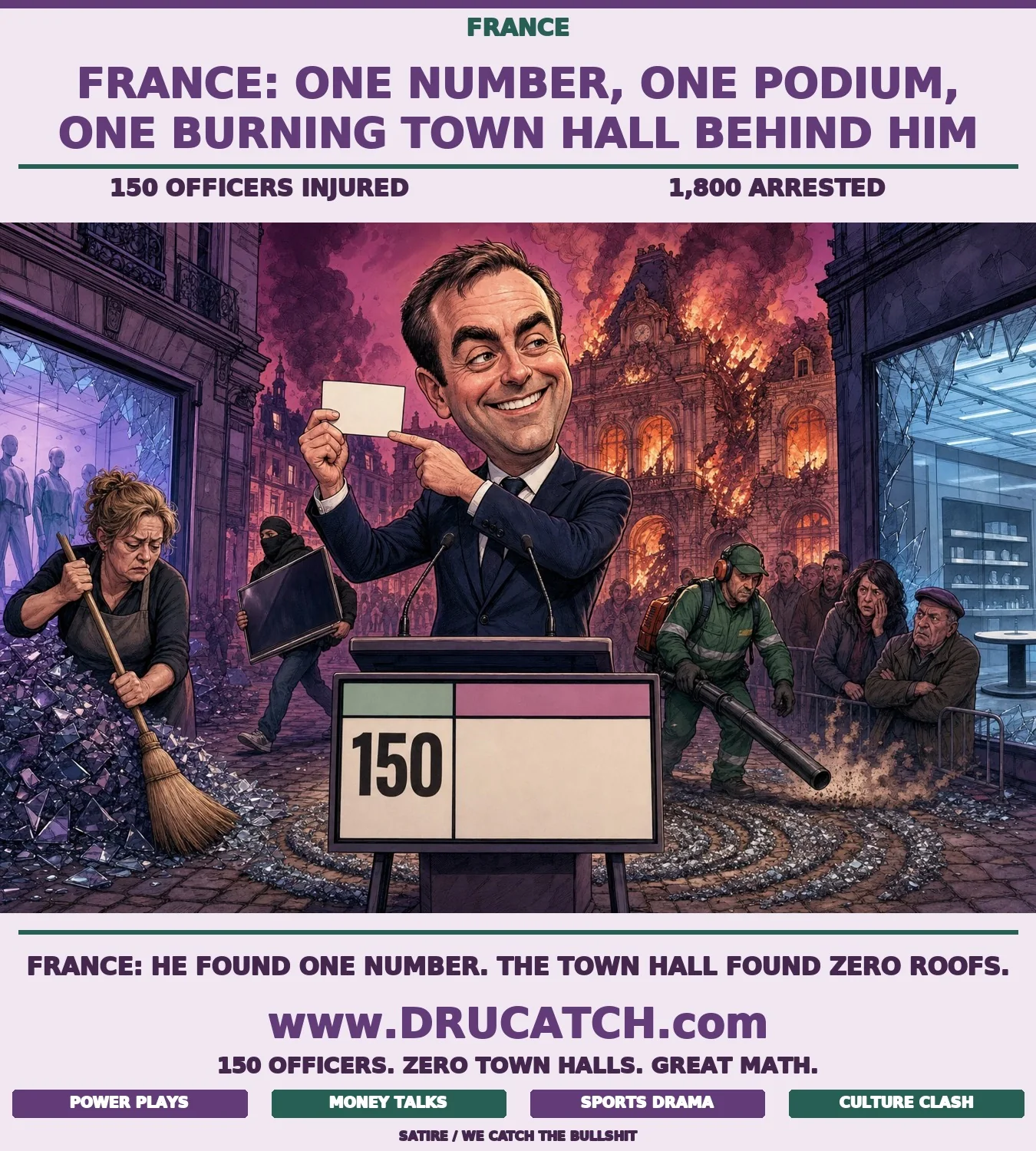
Prime Minister Sébastien Lecornu stepped to the podium and delivered the tidiest figure available: 150 injured officers. The 1,800 arrests went unannounced. The Limoges town hall - a 143-year-old civic building now described by local officials as 'largely lost' - did not make the headline. Neither did the gutted Apple Store in Lille, the McDonald's that burned, or the Ralph Lauren and Gucci shopfronts whose glass ended up in shin-deep drifts across Paris cobblestones. One number. Announcement complete.
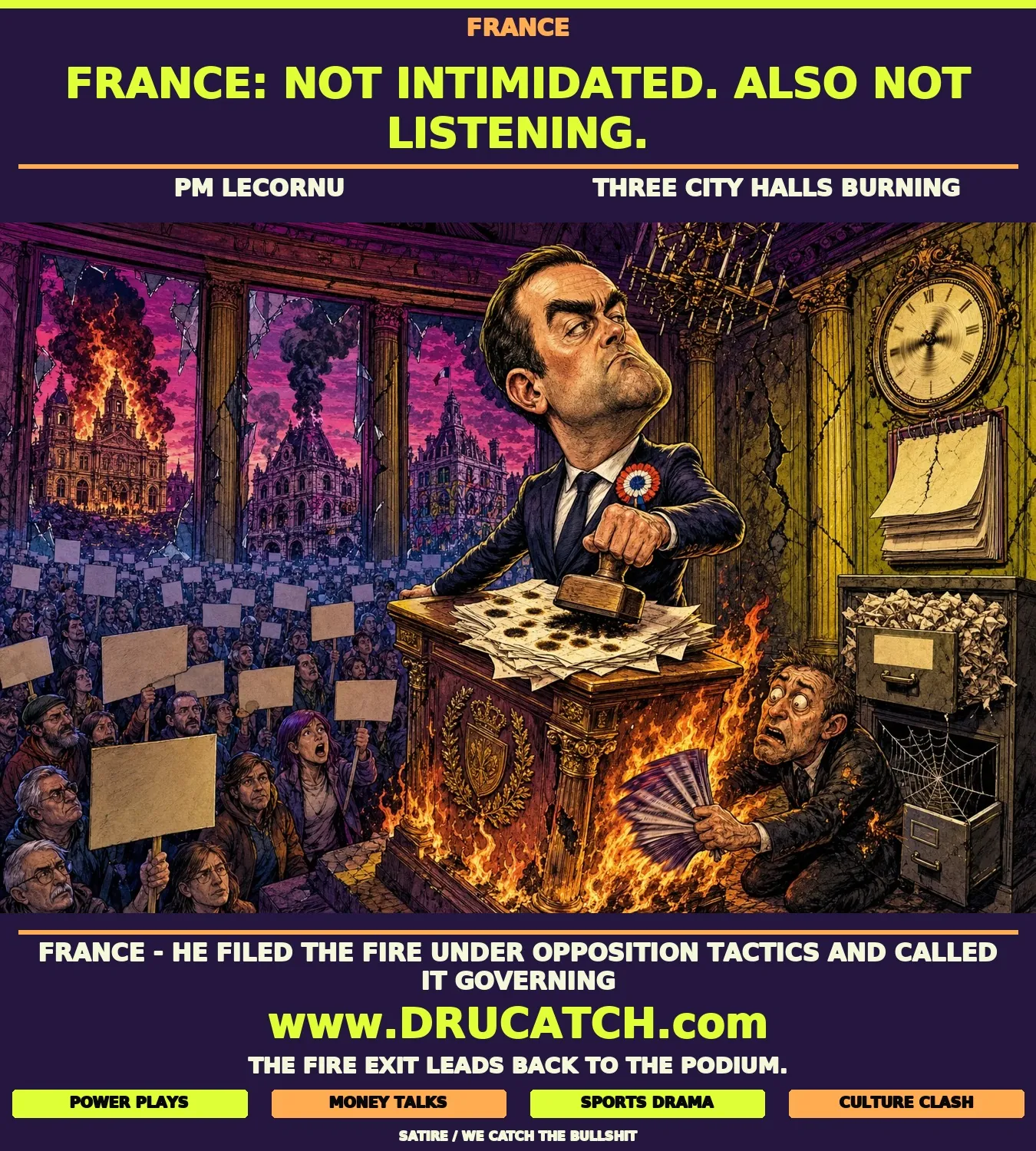
Half a million people had turned out over fuel prices, crumbling classrooms and a chronic shortage of teachers - grievances that had been building through months of student demonstrations. After dark, a separate wave of masked rioters moved through the same cities: cars torched, Marseille's city hall breached with a metal fence repurposed as a battering ram, firefighters driven back from the burning Lyon tourist office, designer boutiques relieved of their stock. Two very distinct crowds occupied the same Saturday night. The government's accounting produced one integer.
What the Framing Quietly Accomplished
Opening with officer injuries is not a neutral editorial choice. It casts the state as the party that absorbed harm, shifts the street into the role of aggressor, and nudges everything else toward the margin - the shopkeeper on the Rue de la République pushing glass around with a domestic broom at sunrise, the Lyon mayor calling his city's gutted tourist office 'a tragedy,' the Limoges prefect describing a 'wild horde' that 'deliberately' set the building alight. Those are not supporting details to an injury tally. They are the actual ledger of the night.
The Mayor of Saint-Étienne reported a young man lost his hand to a small explosive. France's Channel 2 broadcast CCTV of masked teenagers methodically clearing shelves in a mobile phone shop. The owner of a ransacked clothes store near the Place de la République told reporters he watched the looting unfold for roughly ninety minutes without seeing a single officer. Not one of those data points anchored the government's opening statement.
A Press Conference Inside a Burning Building
The announcement achieved a precise rhetorical effect: it made the institution the story and let the civic wreckage blur into backdrop. That is not crisis communication. It is a press conference conducted inside a burning building by a speaker who has paused to observe that his shoes are scuffed.
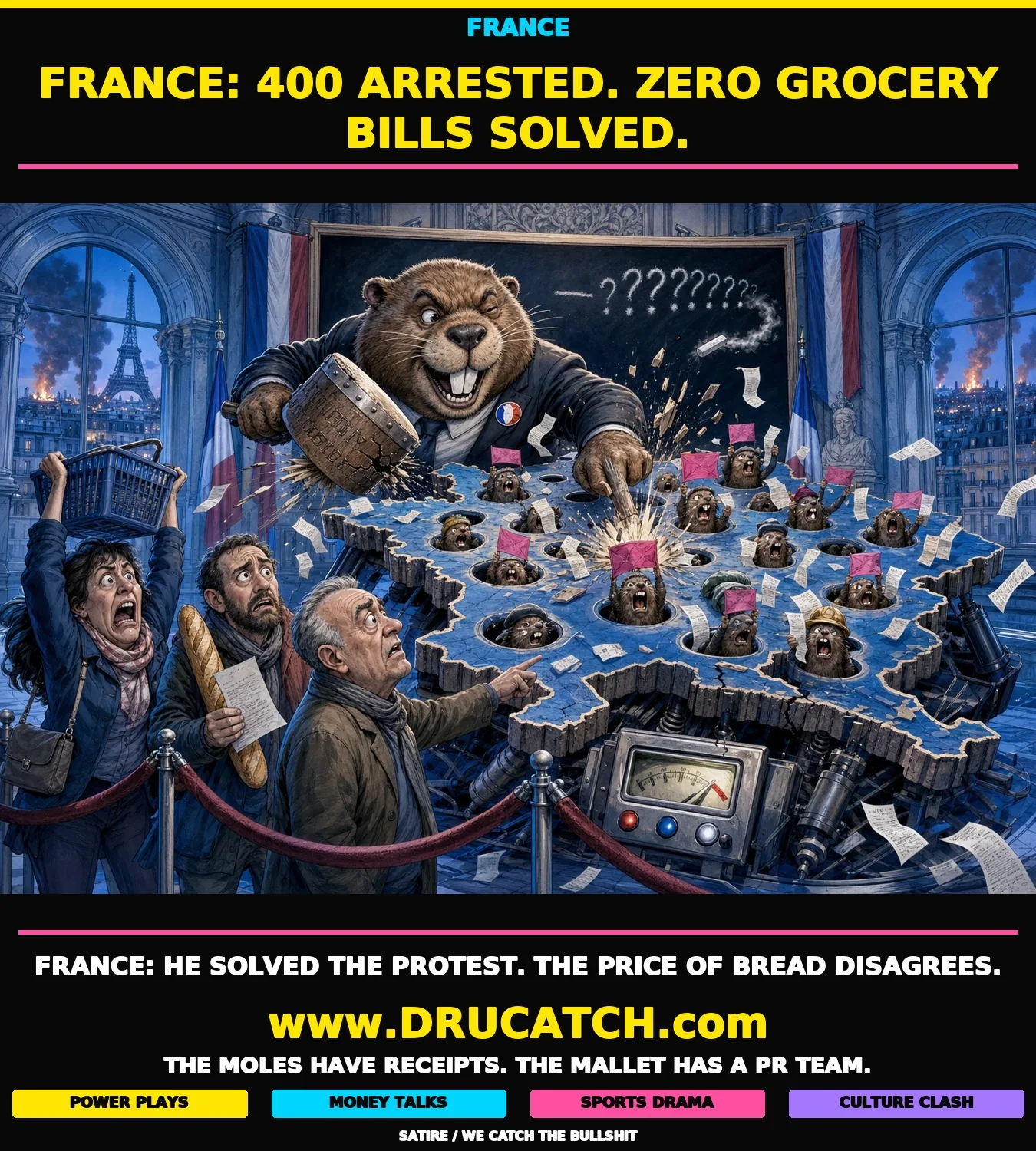
The figure of 150 officer injuries is real and not trivial - but what it displaces matters. Graffiti reading 'tax the rich' and 'eat the rich' covered Paris storefronts. The students who ignited this season of protest wanted functioning school buildings, adequate staffing and classrooms that could fit the students assigned to them. Those demands did not evaporate because someone torched a town hall. Packaging an entire night of civic rupture into a single injury count is the governmental equivalent of sweeping the broken glass into a neat pile and announcing the street is clean.
THE COMMENTS SECTION HAS ENTERED THE CHAT
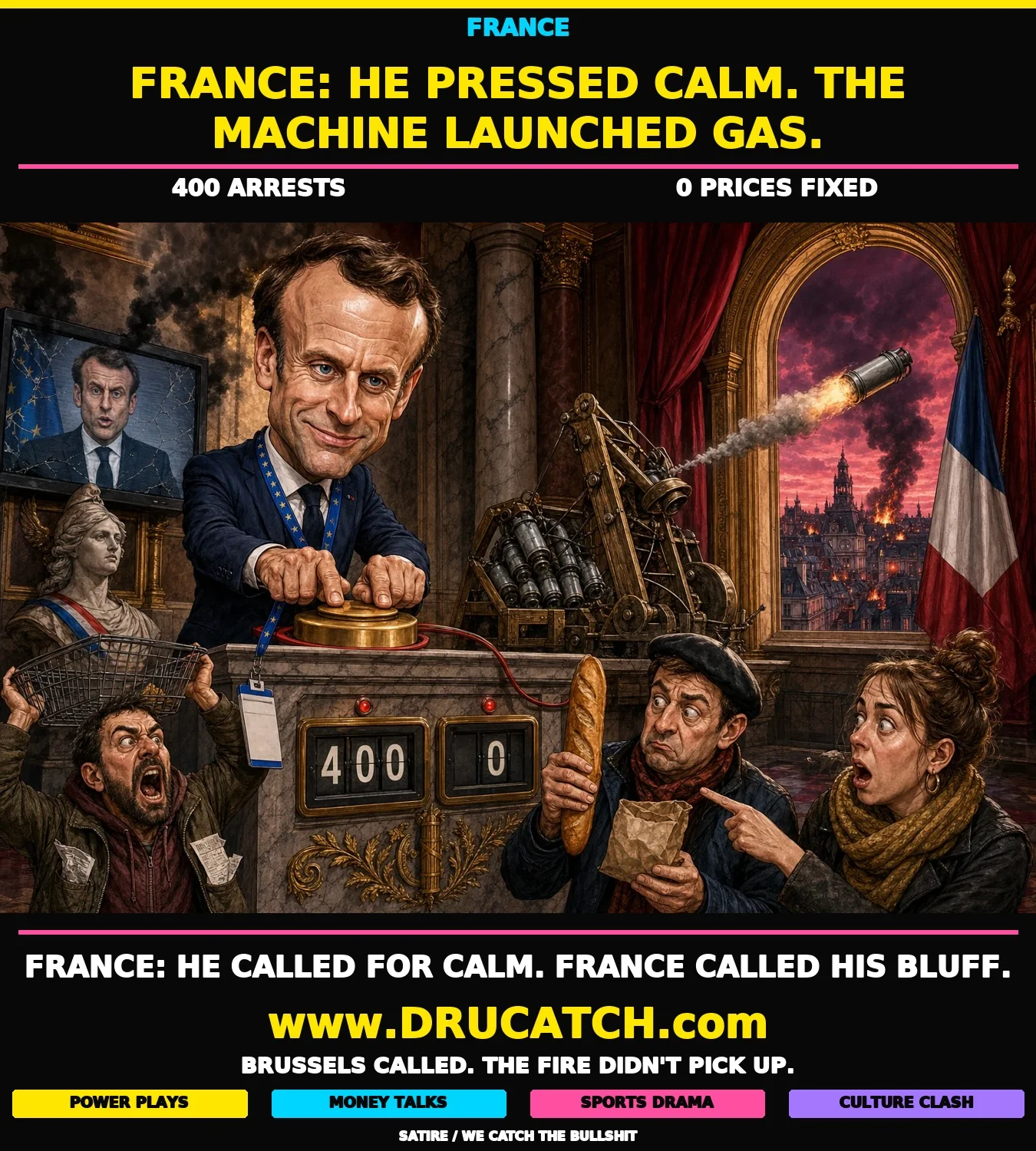
When a government's first public statement after a night of mass riots leads with police injuries rather than the scale of civic destruction or the underlying grievances that brought 550,000 people into the streets, is that responsible crisis framing - or is it a deliberate choice about whose suffering counts in the official story?
Join the discussion / save / share