HOW DRU CATCH SEES IT
Calm From Brussels, Fire From Everywhere
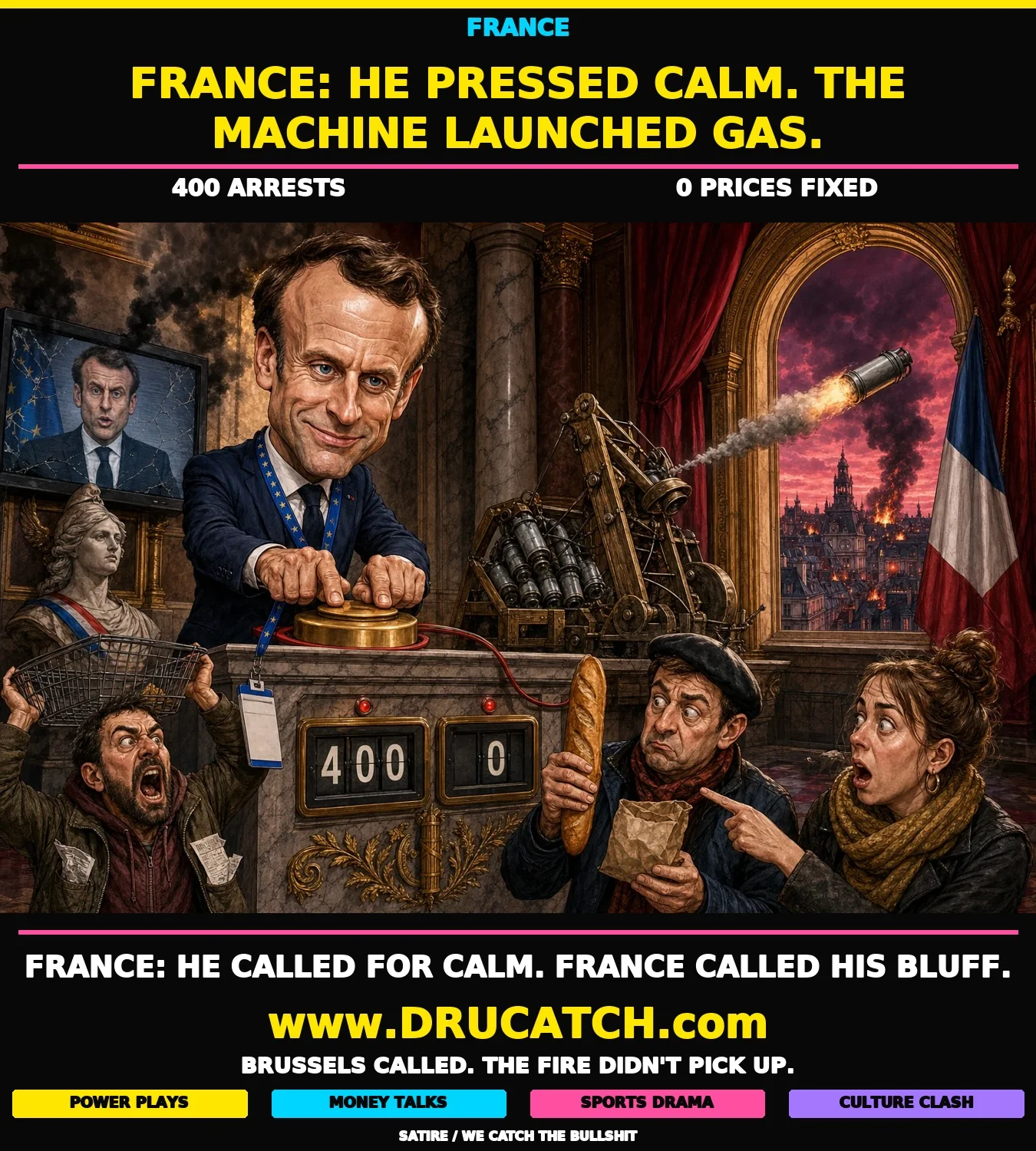
The day before France burned, Emmanuel Macron stood in Brussels and asked demonstrators to please be respectful. Then town halls got battering-rammed, a Hermès boutique got looted, and someone set fire to a tourist office in Lyon while firefighters were pelted with fireworks trying to reach it. Macron's post-riot promise - "those who broke will be pursued and punished" - arrived with all the authority of a man locking the barn door while the horse is already on the Champs-Élysées.
The Government Predicted the Riot, Then Counted the Arrests
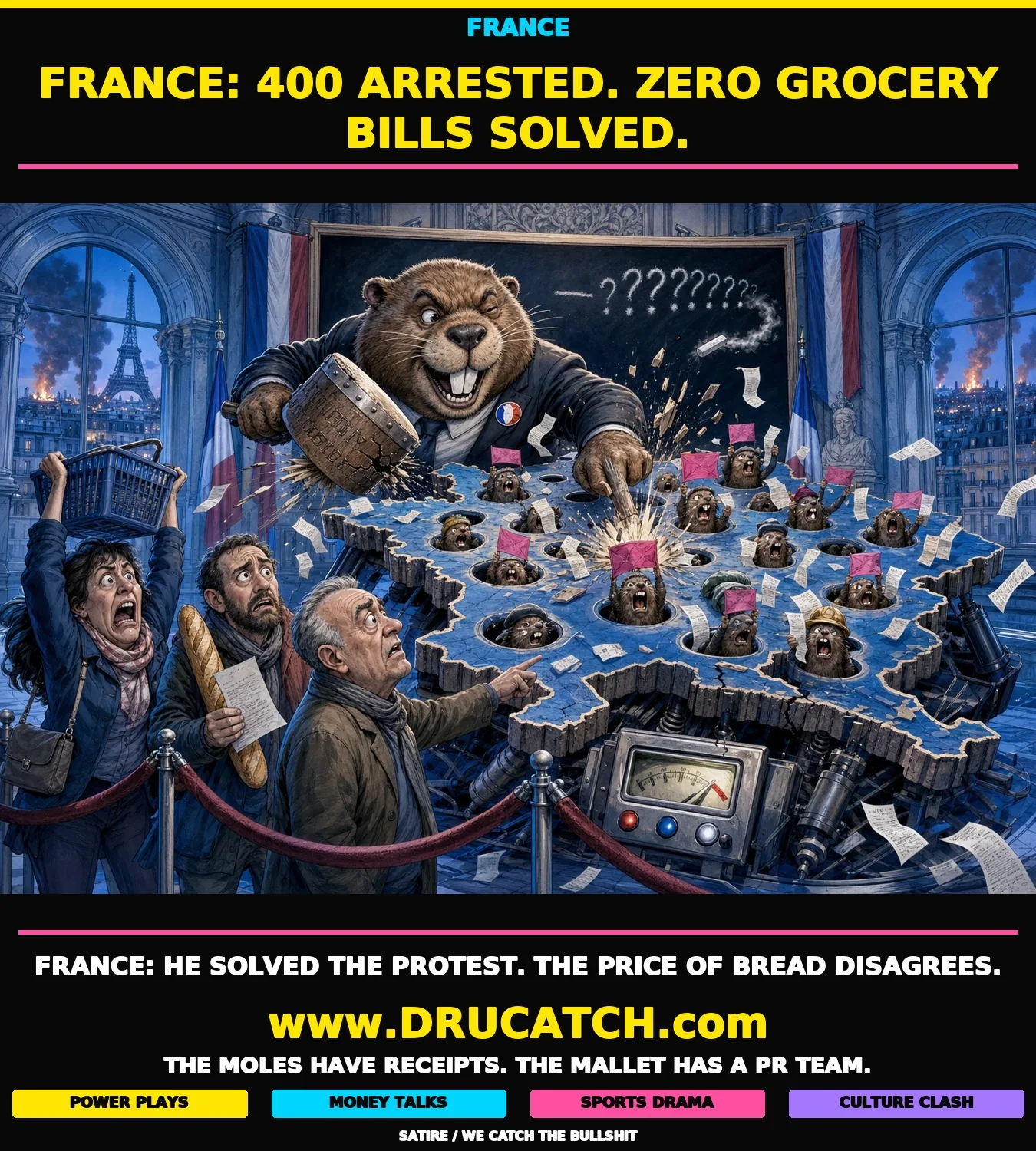
Here's the specific absurdity: the government knew this was coming. Interior Minister Laurent Nuñez warned the day before that "the probability of the ultra-guerrilla provoking riots was very high." Police unions feared "the worst." The state deployed 10,000 officers, armored vehicles and an interministerial crisis cell. And after all that preparation, the official headline number was 400 arrests - not a single policy concession on the fuel prices, electricity bills or grocery costs that put people in the streets. The government's entire visible output was a custody count.
The Loop France Knows by Heart
The underlying demands - fuel, food, electricity, school funding, hospital resources - remain a "catalog of social exasperation," per reporting, and the next strike is already scheduled for November 5. The state unblocked between 500 and 700 million euros for agriculture and extended fuel aid, but evidently not enough to keep the yellow vests in the closet. So France finds itself in the same loop it rehearsed in 2018: protesters march, vandals hijack the footage, the government counts arrests, nobody's grocery bill changes, and Macron calls for calm from whatever capital he happens to be visiting at the time. The street, as La Nacion notes, "has not yet said its last word." Neither has the budget.
THE COMMENTS SECTION HAS ENTERED THE CHAT
When a government accurately predicts mass riots, deploys 10,000 officers and armored vehicles, and still leads its public response with an arrest count rather than a policy concession, is the security operation managing the crisis or substituting for governance?
Join the discussion / save / share