HOW DRU CATCH SEES IT
The Rule That Rewrites the Result
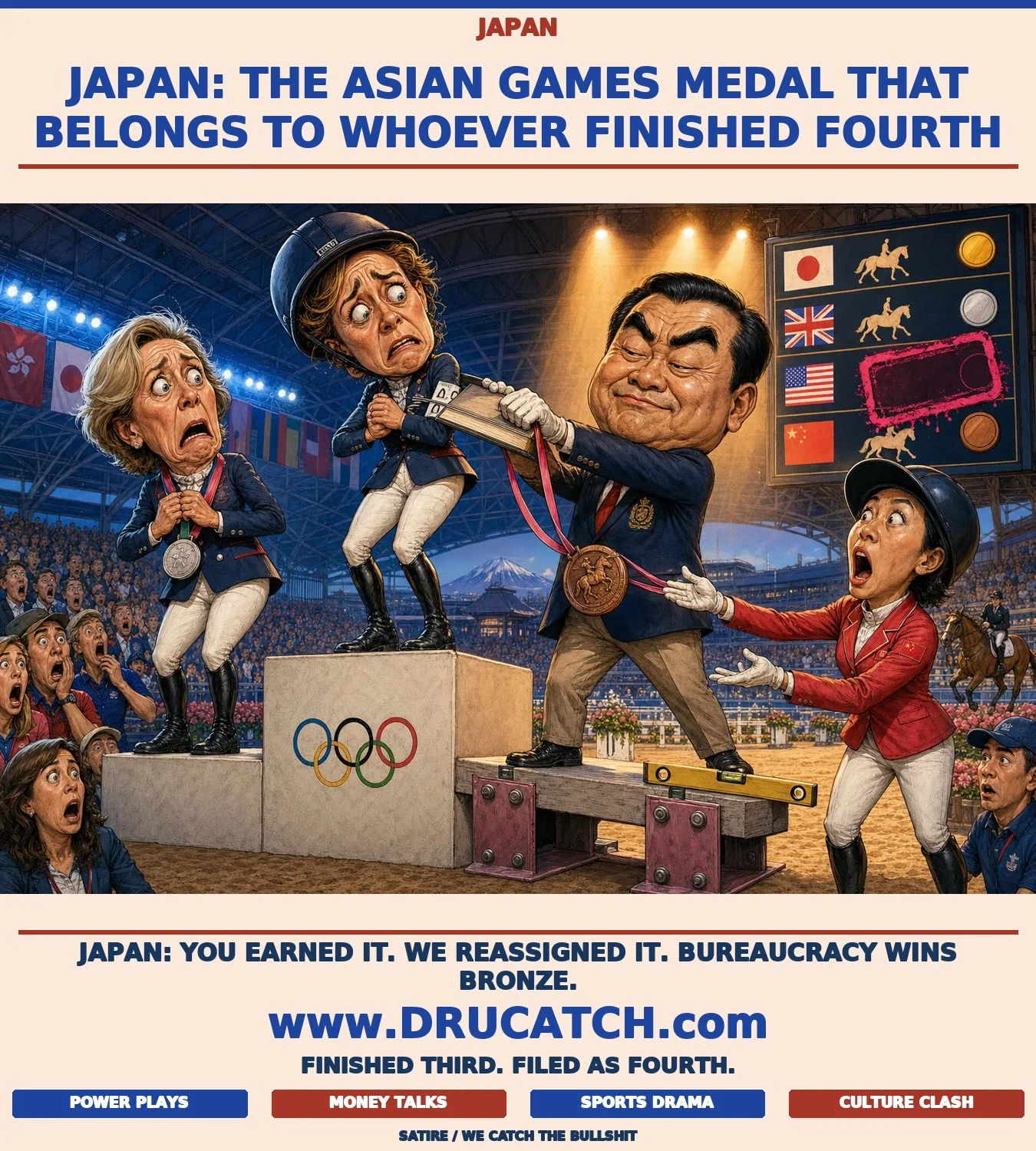
There is a special kind of institutional madness that only sports bureaucracy can produce: a rule so committed to its own principle that it punishes an athlete for performing too well among teammates. The Asian Games' bronze-redistribution rule doesn't just move a medal - it erases a result. The person who finished third, on the day, on the course, in the arena, is told their performance no longer counts because the people who beat them happened to share a passport.
A Quota That Can't Do the Math
The logic offered is that the Asian Games limits each nation to two athletes in any individual competition. Fine. Except in eventing, the team and individual competitions run concurrently - the same horses, the same riders, the same rounds. There is no parallel universe where a team of three competes without all three also being in the individual. The quota rule collides with the structural reality of the sport and the rulebook simply hands the wreckage to whoever finished fourth.
The Medal That Went Sideways
What makes this genuinely absurd is that the medal isn't voided - it's transferred. The fourth-place finisher from another nation didn't outride the bronze medalist. They didn't beat them in a jump-off, a tiebreak or a second attempt. They finished behind them. The medal migrates not because of anything the fourth-place athlete did, but because of the nationality printed on their passport and the accident of their teammates being excellent. That is not a competition result. That is an administrative reassignment wearing a podium.
THE COMMENTS SECTION HAS ENTERED THE CHAT
Should international multi-sport games be allowed to override an individual athlete's verified competition result in the name of national participation quotas - and if so, where does that principle logically stop?
Join the discussion / save / share