HOW DRU CATCH SEES IT
The Game Was About Debt. The Studio Skipped Payroll.
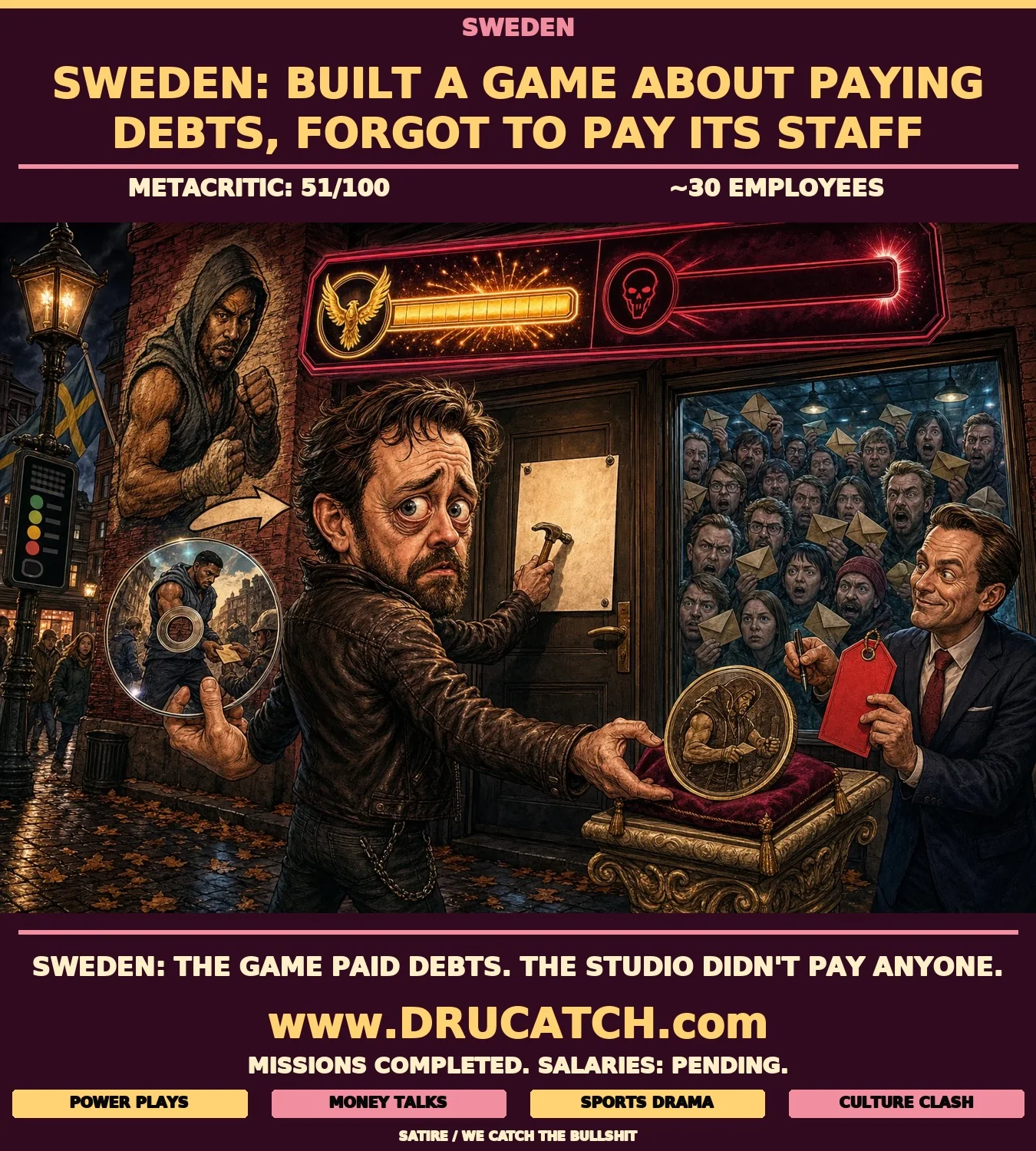
The particular cruelty of Liquid Swords' situation is baked right into the game itself. Samson: A Tyndalston Story is, per the developers' own description, an open-world crime game focused on combat, chases, and missions related to debt repayment. The studio spent years building a product about a character clawing his way out of financial obligation - and then failed to meet its own financial obligations to the people who built it. That is not irony. That is the premise of the game playing out in real life, on the developer side of the screen.
A Score of 51 and a Bill Nobody Paid
The studio's Metacritic score of 51 and a user rating of 5.2 out of 10 tell the story efficiently enough. Critics praised the atmosphere; players complained about technical errors, control issues, and a combat system that didn't land. For a first game from a studio founded by someone with Just Cause's creative DNA, a 51 is not a disaster on its own - but it is not the launch that saves the company, either.
Around 30 employees are expected to benefit from Sweden's government compensation system for company failures - a backstop that exists precisely because studios like Liquid Swords sometimes run out of runway before the payroll clears. The employees did not design this outcome. They built the thing.
Now the Character Waits for Someone to Pay His Creator's Debts
What makes this more than a routine studio closure is the bankruptcy administrator's apparent optimism. Attempts are reportedly ongoing to find a buyer for the assets and intellectual property. That means the game's future - its servers, its updates, its story - is now a line item in a Swedish insolvency proceeding. Samson the character runs debt-repayment missions. Samson the product is waiting to see if anyone will pay its debts. The recursion is almost too neat - except for the 30 real people who showed up to work and stopped getting paid.
THE COMMENTS SECTION HAS ENTERED THE CHAT
When a game studio spends years building a product about financial redemption and then collapses owing wages to its own staff, who bears responsibility - the founders, the investors, or an industry model that routinely underfunds first-game studios until the launch review scores come in?
Join the discussion / save / share