HOW DRU CATCH SEES IT
The Welfare Sermon With an Election Chaser
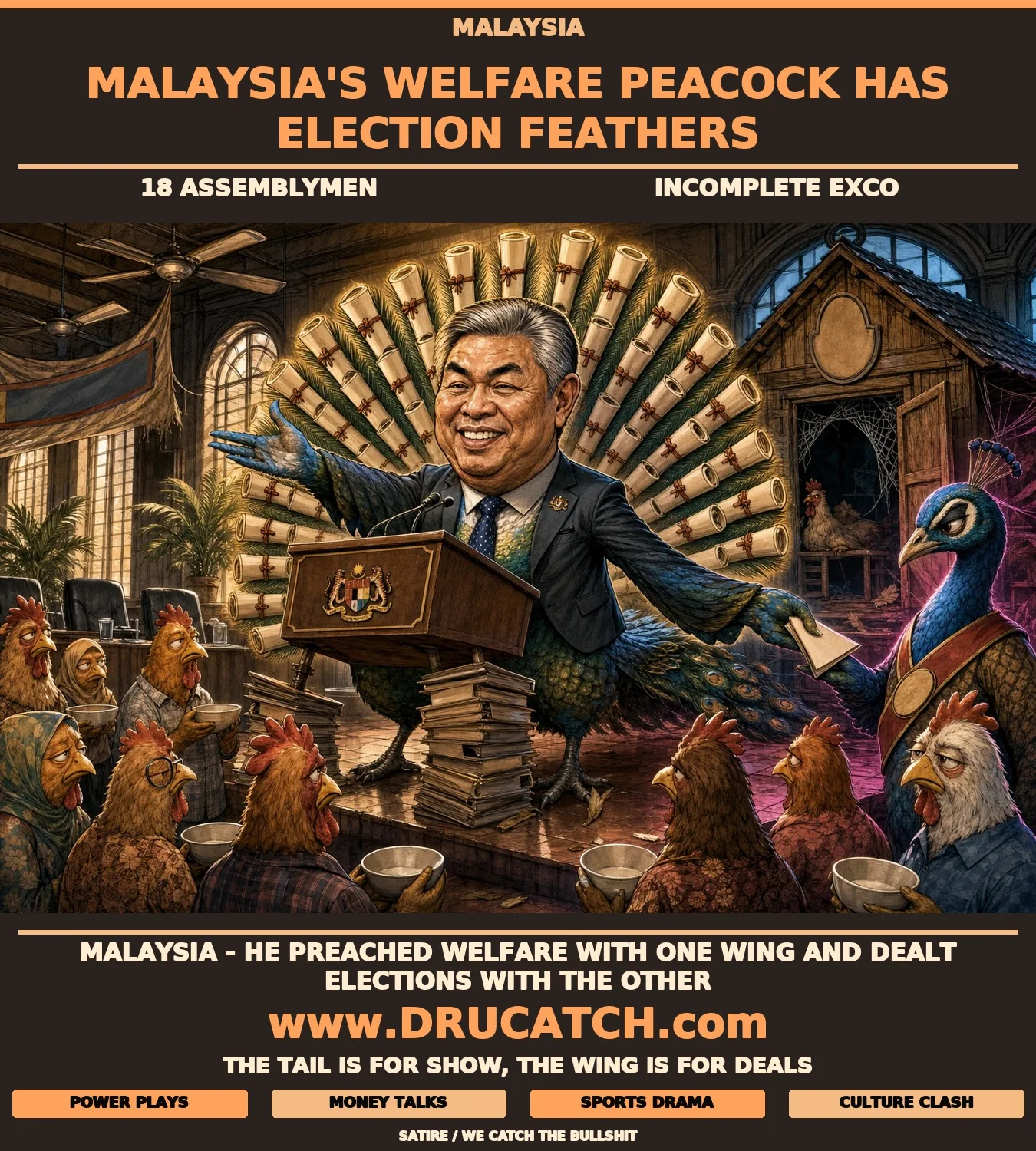
Ahmad Zahid Hamidi telling assemblymen to focus on the people's welfare is like the guy who set the kitchen on fire handing out smoke detector pamphlets. This is the chairman of Barisan Nasional - a coalition so entangled in political maneuvering that Negeri Sembilan doesn't even have a full state executive council right now - standing at a Road Safety Congress and sermonizing about putting the public first. By his own admission, the state government is drafting a budget with an incomplete leadership team while hoping that 11 unaligned assemblymen will simply cooperate out of goodwill.
Drawing a Chalk Outline Around Every Hard Question
The advice itself is a masterpiece of political performance. "Don't interfere with royal institutions. Don't touch customary law. Just serve the people." That's not governance guidance - that's a politician drawing a chalk outline around every sensitive topic and telling everyone to stay inside the safe zone. When a Deputy Prime Minister's best counsel is essentially "avoid all the hard stuff and smile," the welfare talk becomes a convenient shield. The people get mentioned as a priority precisely because nobody has to define what that means while the actual power structure remains unresolved.
The Mask and the Face Are On at the Same Time
And then there's the kicker: Zahid casually mentions that he's already reviewing political cooperation for the upcoming Melaka state election. So the same man advising assemblymen to put aside politics and focus on welfare is, in the same press conference, openly horse-trading about the next election. That's not a contradiction he's hiding. He volunteered it. The mask and the face are on at the same time, and he's fine with it. In Malaysian politics, "focus on the people" is apparently what you say in the first paragraph before getting to the real agenda in the third.
THE COMMENTS SECTION HAS ENTERED THE CHAT
When a political leader publicly advises colleagues to prioritize welfare while simultaneously negotiating election alliances, does the welfare rhetoric serve the public or just provide cover for the political maneuvering?
Join the discussion / save / share