HOW DRU CATCH SEES IT
A Tollbooth with a Minefield Underneath It
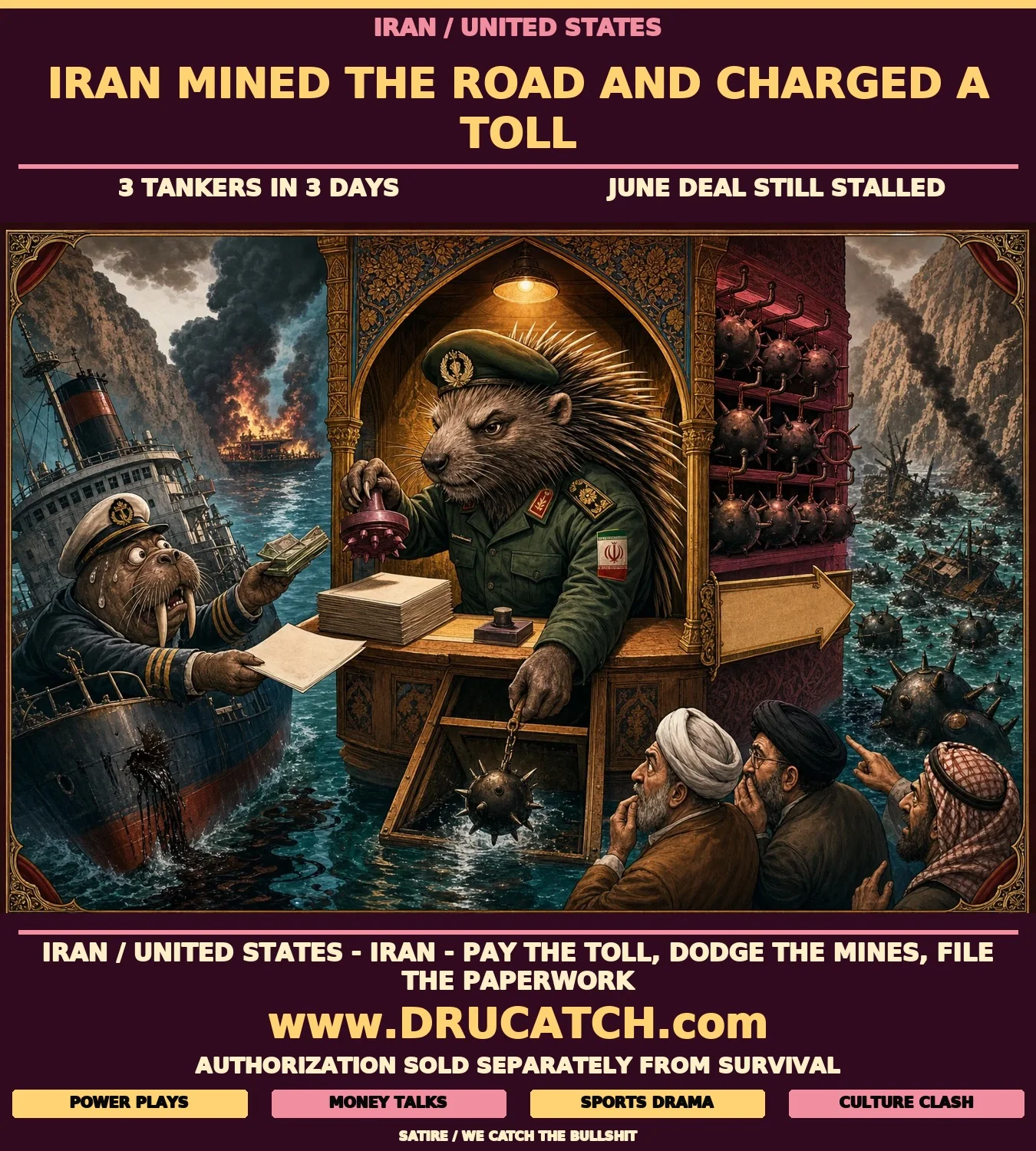
Iran mined one of the world's most critical shipping lanes, then announced it would punish anyone who tried to leave without permission. That's not sovereignty enforcement - that's a tollbooth operator who also planted the potholes.
Three tankers hit mines in three days while trying to cross the strait. The IRGC's response wasn't to acknowledge its minefield might be the problem. It was to threaten "severe measures" against ships that turn off their tracking systems - the same ships presumably turning off their systems because they'd rather not broadcast their location to the people who mined the water underneath them.
Two Referees, One Burning Ball
The June memorandum on freedom of navigation between Washington and Tehran sits unimplemented because the two sides can't agree on which routes are free or what "navigation" means. The US encourages ships to use a southern corridor near Oman. Iran says that corridor doesn't exist without Tehran's stamp. So global oil shipping - roughly a fifth of all hydrocarbon trade before the war - is now a game where both referees wrote different rulebooks and the ball is on fire.
Piracy with a Permit Office
The real absurdity isn't that two countries disagree about a waterway. It's that Iran simultaneously claims sovereign control over the strait and mines it so aggressively that ships can't safely comply even if they wanted to. You can demand a toll or you can blow up the road. Doing both is just piracy with a permit office.
THE COMMENTS SECTION HAS ENTERED THE CHAT
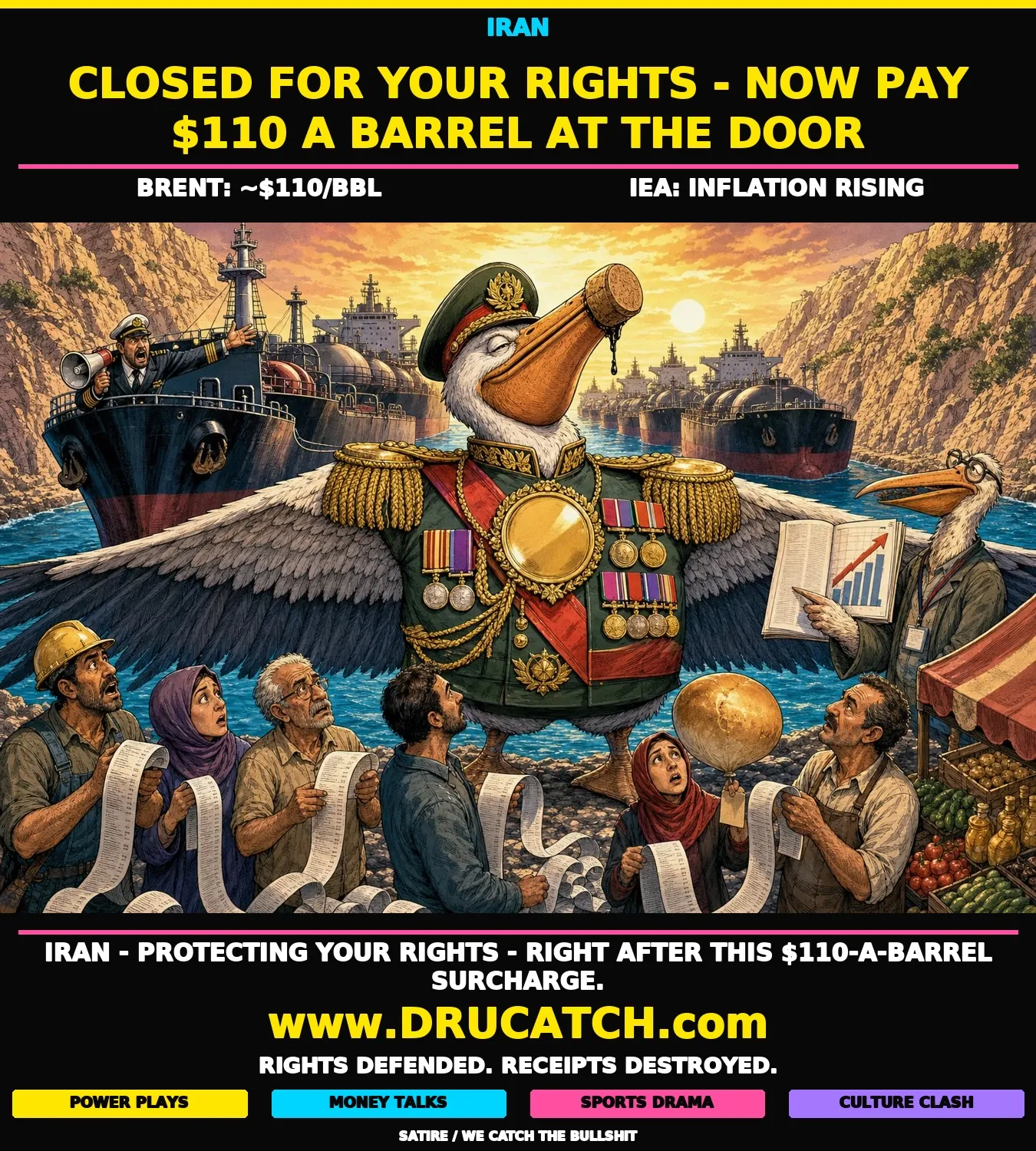
If Iran demands ships request authorization to cross the Strait of Hormuz but has also mined the route, what exactly is the authorization supposed to protect ships from - the mines or the people who laid them?
Join the discussion / save / share