HOW DRU CATCH SEES IT
The $133 Million Renovation That Added a Hallway
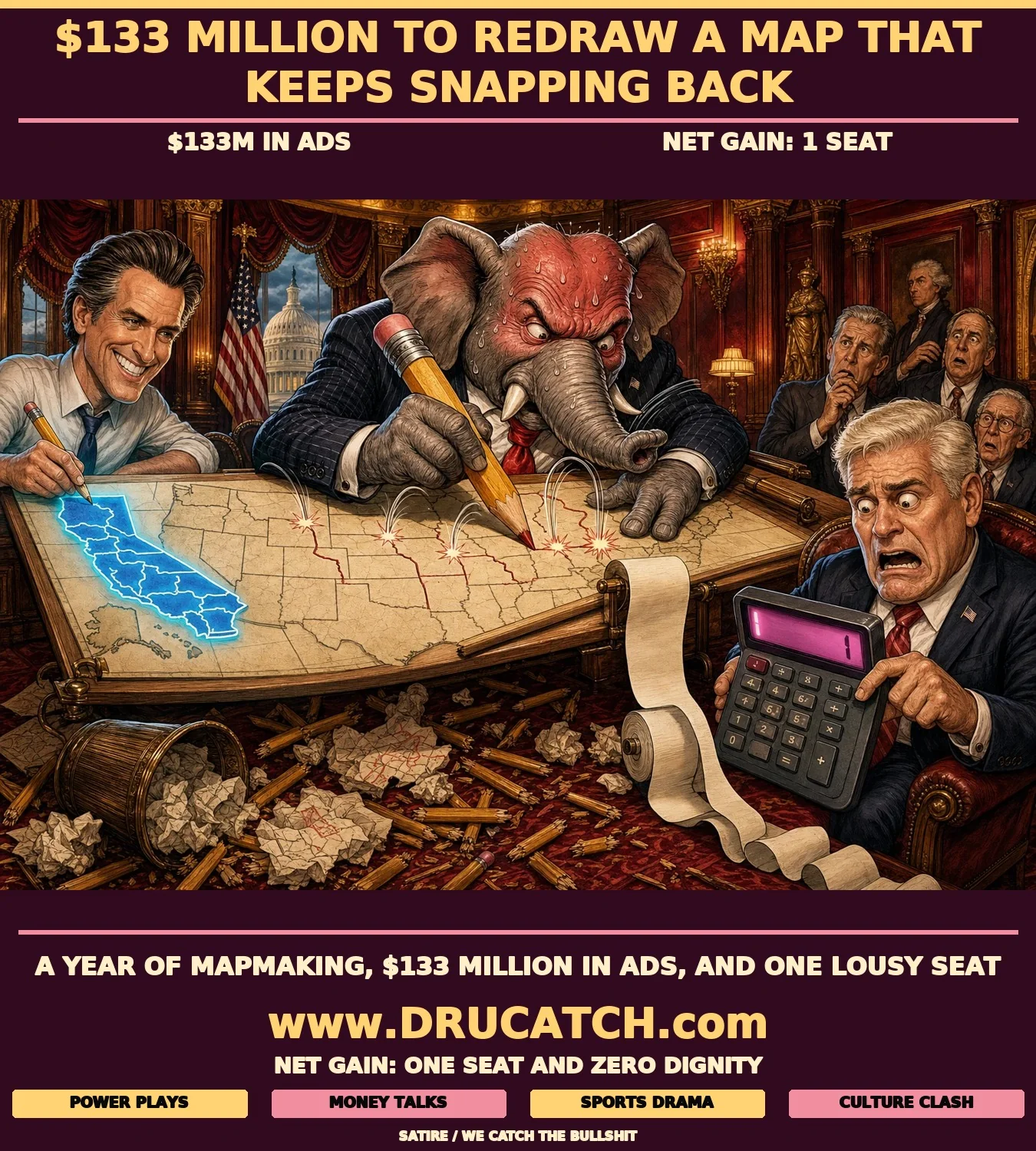
Republicans spent a year redrawing the American map and $133 million in TV ads to defend it, and the current best-case math says the whole operation might net them one more seat than they started with. That's not a gerrymandering strategy. That's a home renovation where you knock out every wall, hire three contractors, and end up with the same number of rooms plus a slightly wider hallway.
The original pitch was beautiful in its ambition: 16 new GOP-friendly seats across Texas, Florida, Ohio, North Carolina, and the Deep South. A redistricting umbrella for a rainy political day. But the umbrella was engineered for a drizzle, and what arrived was a hurricane named reality - Trump's cratering approval ratings, the Iran war's drag on inflation, Latino voter flight in the exact districts they gerrymandered, and Gavin Newsom calling their bluff in California with a counterstrike that put five Democratic seats on the board. Courts tossed Missouri's map. Utah's got redrawn into a Democratic-leaning Salt Lake City seat. The umbrella is inside out.
When Easy Pickings Cost Nine Figures, They Were Never Easy
The real kicker is the price tag. Per AdImpact, $133 million in TV ads across 15 districts that were supposed to be "easy pickings." When your easy pickings require nine figures in advertising, they were never easy and they were never yours. Tom Emmer's candid assessment to Axios - surprised if Texas delivers all five, shocked if Florida delivers all four - is the sound of a man reading his receipt after the auction and realizing he bid against himself.
A Year of Cartographic Warfare for a Quarter in the Couch
The worst-case scenario is now Republicans gaining seven seats while Democrats gain six. A net of one. A year of nationwide cartographic warfare for the political equivalent of finding a quarter in the couch cushions. They're not even blaming the maps anymore - they're pointing the finger at Trump. Which is its own kind of redistricting: redrawing the blame lines so the guy who sank the strategy takes the hit instead of the strategists who assumed his approval ratings would hold. The map was always fine. The territory was the problem.



THE COMMENTS SECTION HAS ENTERED THE CHAT
When a redistricting strategy costs $133 million and may yield a single net seat, does that qualify as a political investment or an expensive confession that the underlying product can't sell itself?
Join the discussion / save / share