HOW DRU CATCH SEES IT
The Government's Own Evidence Was Inadmissible to the Government
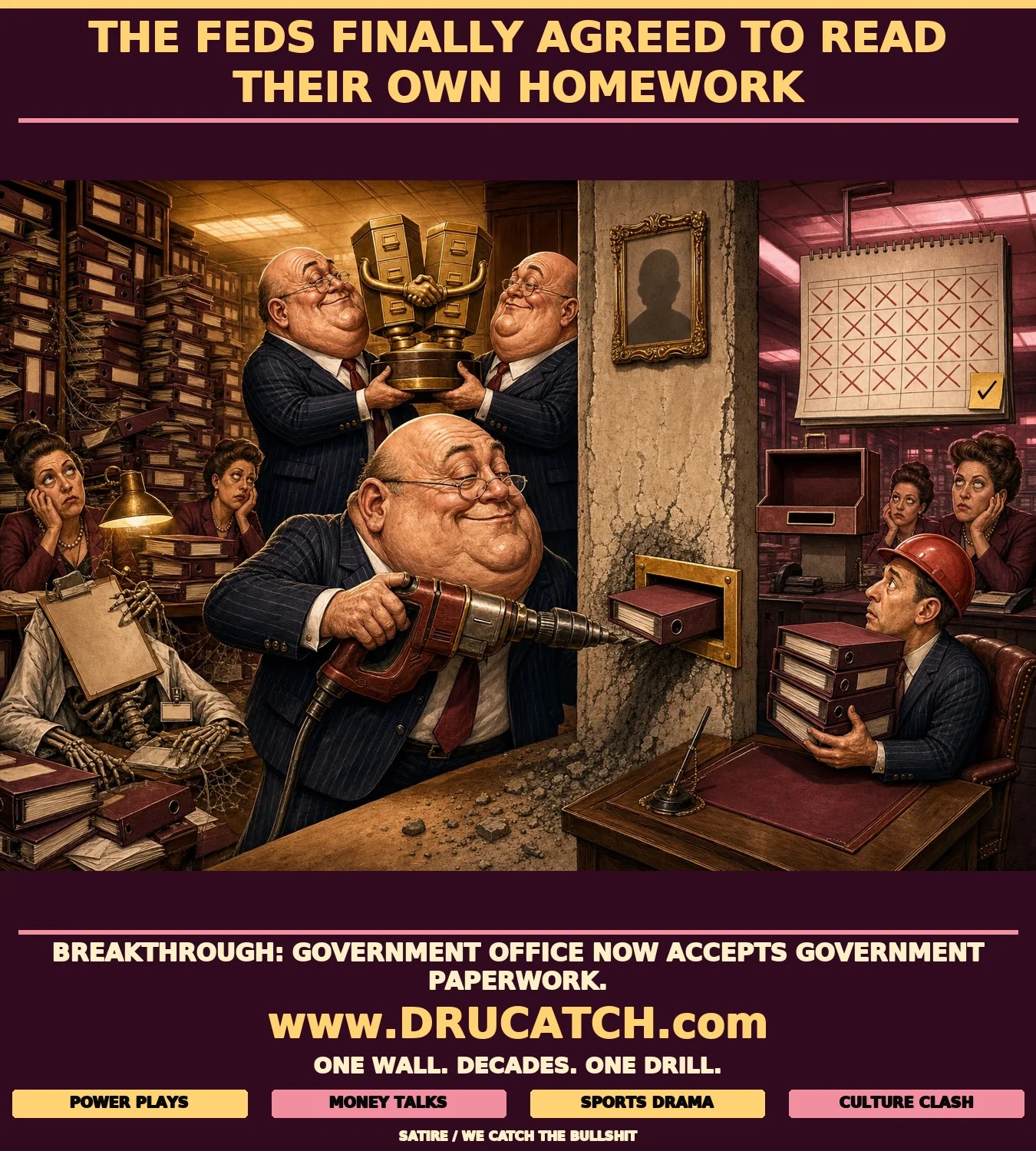
The federal government spent decades funding nuclear reactor demonstration programs through the DOE and the historically named Department of War. It authorized the tests, paid for the hardware, employed the scientists, and filed the results. Then, when a company knocked on the NRC's door with a commercial license application, the NRC effectively said: sorry, we don't accept evidence from over there. That's not a bureaucratic quirk. That's one hand of the government refusing to read a memo written by its other hand - on government stationery, with government pens, in a government building across the street.
The Taxpayer Paid for the Experiment Twice
The rule's own framing is a masterpiece of unintentional self-parody. It 'establishes a more direct means of incorporating' prior demonstration evidence. Translation: there was a means before, but it was indirect enough that applicants routinely had to re-develop equivalent data from scratch. The taxpayer funded the original experiments. The applicant then funded a second round of functionally identical experiments to satisfy a licensing body that is, ultimately, an arm of the same government that ran the first round. Somewhere in Washington, an accountant is quietly weeping.
This is not a case of regulatory caution gone sensible. Safety standards exist for good reason, and independent verification of nuclear data is not automatically stupid. But 'a more direct means' is bureaucratic language for 'we previously made this unreasonably hard,' and framing the removal of a self-imposed obstacle as a regulatory achievement deserves a slow clap.
The DOW Called. You Have One New Message.
What makes this particularly rich is the timeline. The Department of War - which became the Department of Defense in 1947 - authorized some of the eligible demonstration data. That means the NRC has spent the better part of a century not fully consulting a department that no longer exists under that name. The 2026 rule isn't innovation. It's the regulatory equivalent of finally answering a voicemail from 1955.
The press release might as well read: 'After careful deliberation, the federal government will begin talking to itself.' Congress should probably send itself a congratulatory letter. By certified mail. To confirm receipt.
THE COMMENTS SECTION HAS ENTERED THE CHAT
If the U.S. government funds, authorizes, and archives reactor demonstration data, should that data be automatically admissible in federal licensing processes - or is there a legitimate safety argument for requiring independent replication?
Join the discussion / save / share