HOW DRU CATCH SEES IT
A Very Official Suggestion You Cannot Refuse
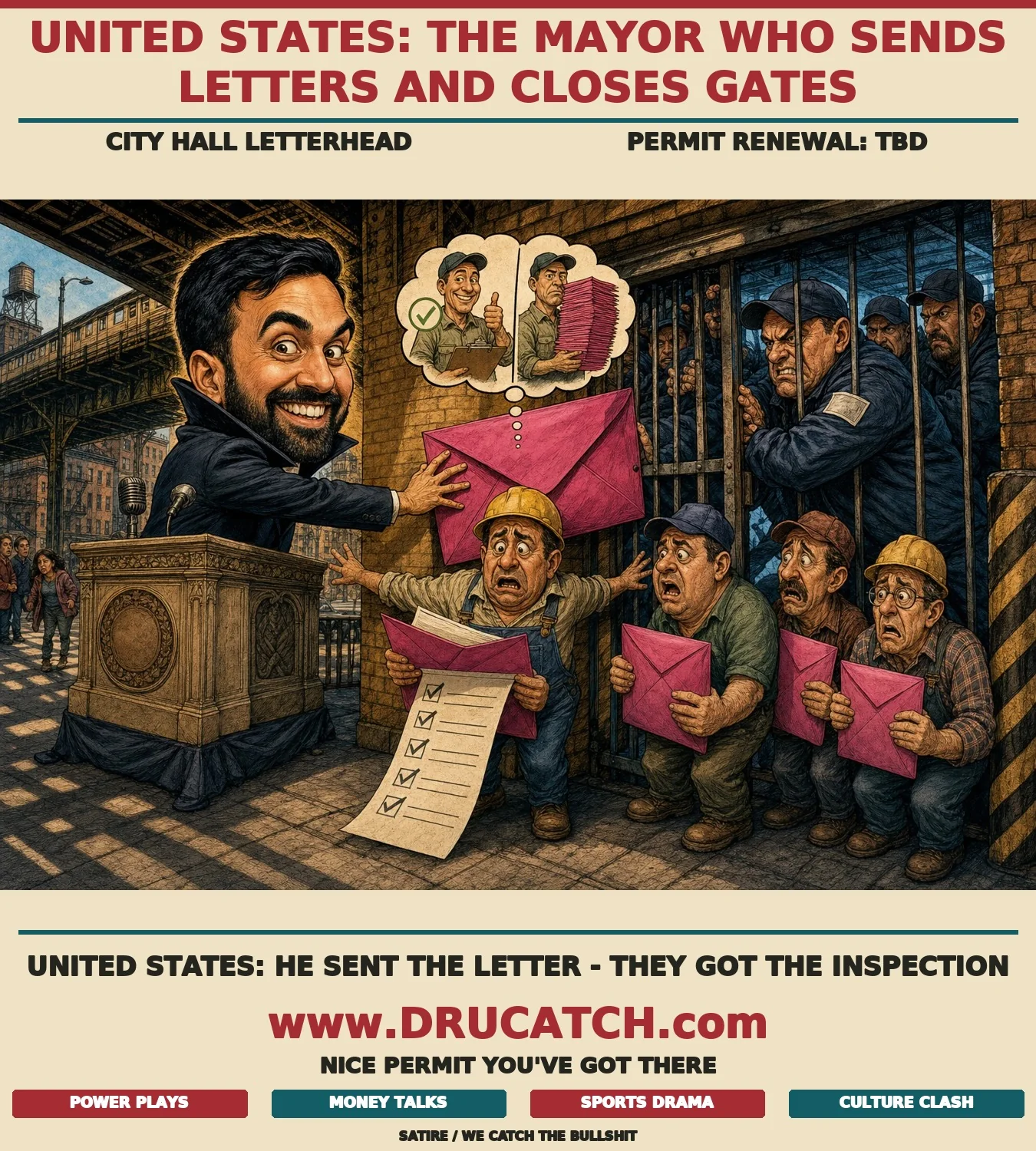
There is a constitutionally tidy version of sanctuary policy: a city declines to use its own resources to assist federal immigration enforcement. Courts have broadly upheld that position. What Mamdani is doing is something structurally different. He is not simply declining to help. He is writing to private businesses - businesses that hold city permits, face city inspections and need city licenses - and asking them to actively block a federal agency from using their property. The letter may say 'implores.' The regulatory relationship says something else entirely.
The New York Post's framing - that any mayoral letter to a regulated business carries an implied threat of City Hall disfavor - is not paranoid. Garages are subject to structural safety inspections. Outdoor lots need licenses from the Department of Consumer and Worker Protection. Public protest already cost the Hudson River Park Trust its ICE parking contract at Pier 40 last June. Mamdani is not inventing this pressure; he is institutionalizing it. The question is whether that institutionalization crosses a line his constitutional cover does not actually extend to.
The Political Arithmetic Behind the Envelope
Mamdani reportedly declined to fire Police Commissioner Jessica Tisch following the arrest of Oscar Belgal - a decision that left his progressive base dissatisfied. This letter is, by several accounts, a compensatory gesture: a visible, headline-generating act of resistance that costs the mayor nothing directly. The businesses receiving it are a different matter. They absorb the operational and political risk of a dispute between City Hall and the federal government that they had no part in creating.
This is the specific absurdity worth naming. A sanctuary posture normally asks: what will the city refuse to do? Mamdani's letter asks a different question: what will private actors do on the city's behalf? That reframes the risk entirely. The mayor gets the activist-friendly headline. The garage owner gets the inspector on Monday morning and a protest outside on Tuesday. That is not solidarity. That is subcontracting your political exposure to someone who runs a parking lot.
How Far Is Too Far, and Who Decides
The New York Post acknowledges that courts might find the letter does not rise to the level of criminal obstruction. That concession matters and should not be buried. A legal opinion about a draft letter is not a conviction, and DruCatch is not a prosecutor. What the letter does demonstrably do - according to the reporting - is escalate a conflict between New York City and federal enforcement agencies in ways that make operations harder and potentially more disruptive for the communities Mamdani says he is protecting.
The sharpest version of this critique is not 'the mayor is a criminal.' It is: if forcing ICE to work harder means enforcement falls more heavily on ordinary community members rather than the violent offenders the agency claims to prioritize, then the political theater of a parking-lot letter achieves the opposite of its stated humanitarian purpose. The garage owners are not the only ones squeezed between two governments. They are just the most visible ones.
THE COMMENTS SECTION HAS ENTERED THE CHAT
When a mayor uses the implicit regulatory power of City Hall to pressure private businesses into blocking a federal agency, is that a legitimate exercise of local authority or an abuse of the permitting relationship - and where exactly should that line be drawn?
Join the discussion / save / share