HOW DRU CATCH SEES IT
The Constitutional Boomerang Conservatives Threw at Themselves
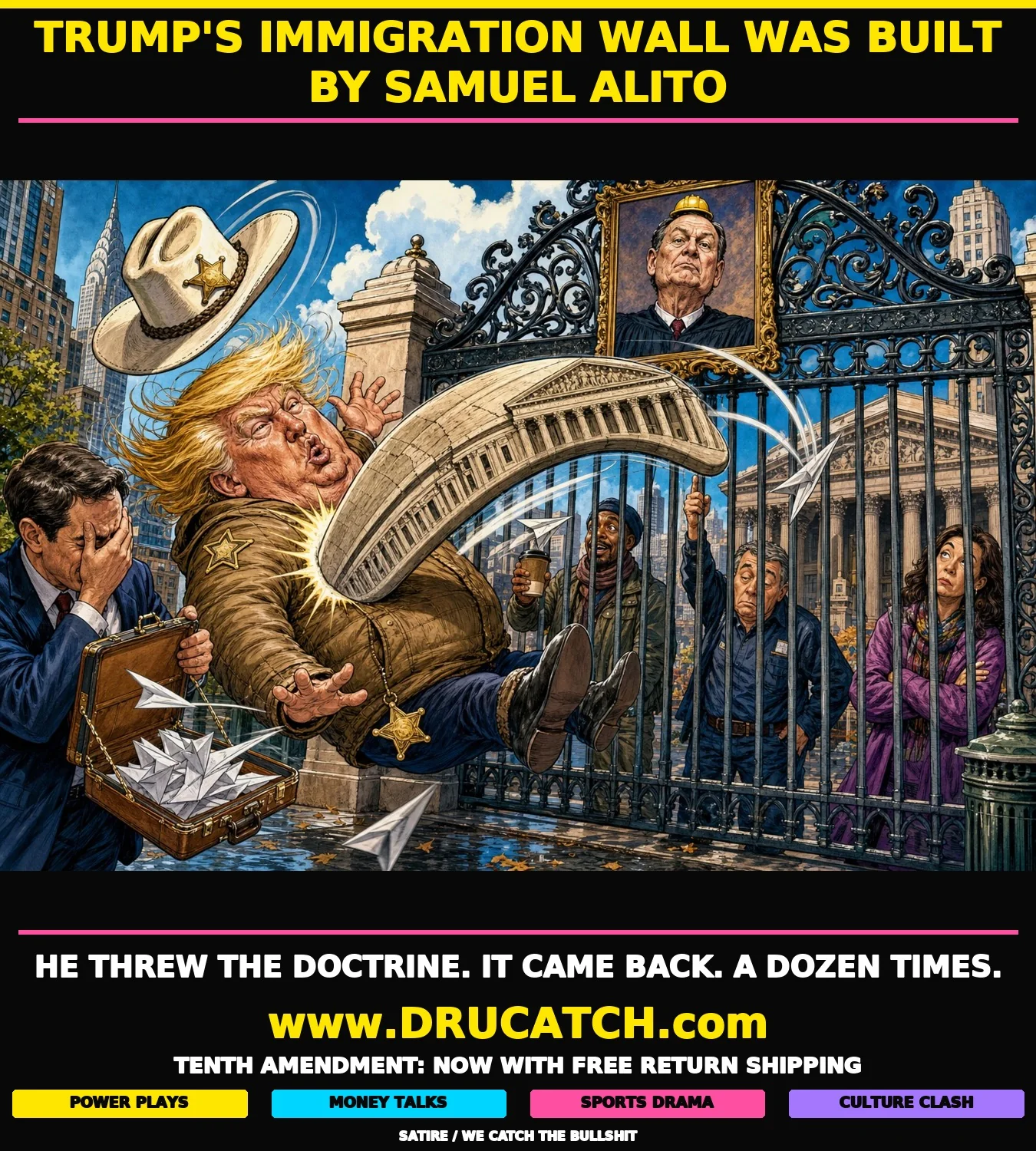
There is a particular species of political misfortune that is entirely self-inflicted: the kind where you spend decades arming your allies, only to walk into their arsenal and take a round through the chest. Trump's immigration enforcement agenda has now lost close to a dozen sanctuary city cases in a single year, and the weapon doing the damage is a constitutional doctrine that his own ideological team forged, celebrated and handed down from the Supreme Court.
The anti-commandeering doctrine - the Tenth Amendment principle that says the federal government cannot conscript state and local governments into carrying out federal programs - was written in 2018 by Justice Samuel Alito, probably the most conservative justice on the Court, and signed by every other conservative then sitting. It was a triumphant ruling for states' rights. The irony is that it has become, in effect, sanctuary cities' most reliable attorney.
Follow the thread: Trump "Asked" If the Job Was Suitable. His White House Answered the Question For Him..
Removing Obstacles Is Still Issuing Orders - Alito Said So
Judge Reyes did not invent a creative workaround. He applied the law that the conservative legal movement spent decades building and was quite happy about until it started blocking deportation vans. The administration tried to argue it was not compelling participation, merely removing obstacles - a distinction the court correctly identified as a rhetorical fig leaf for the same thing.
You cannot order a city to stop protecting itself from a federal mandate without effectively issuing a federal mandate. Alito said so. In writing. In 2018. The court found the administration's position amounts to nothing more than a backdoor around the Tenth Amendment - a phrase that lands like a constitutional door slamming on the president's foot.
A Dozen Losses and the Doctrine Is Still Standing
The losing streak is not a run of bad luck. It is a structural problem. Courts have applied the same anti-commandeering precedent across close to a dozen cases and arrived at the same answer, because the underlying constitutional logic does not shift based on the urgency of the administration's immigration priorities. Judge Reyes cited close to a dozen such cases in roughly a year alone.
The administration built its judicial legacy on the idea that a muscular conservative Court would eventually back its agenda. What it got instead was a body of precedent from that same Court that is methodically dismantling the coercive tools it needs to enforce that agenda. If you champion states' rights long enough and loudly enough, do not be surprised when a state uses them. Trump may eventually get tired of losing - but the Tenth Amendment does not get tired of anything.




THE COMMENTS SECTION HAS ENTERED THE CHAT
Should the Trump administration accept that the Tenth Amendment's anti-commandeering doctrine - written by its own judicial allies - blocks immigration enforcement mandates against sanctuary cities, or is there a legitimate constitutional argument the administration has not yet made in court?
Join the discussion / save / share