HOW DRU CATCH SEES IT
The Richest Man Alive Discovers He Can't Haggle With Physics
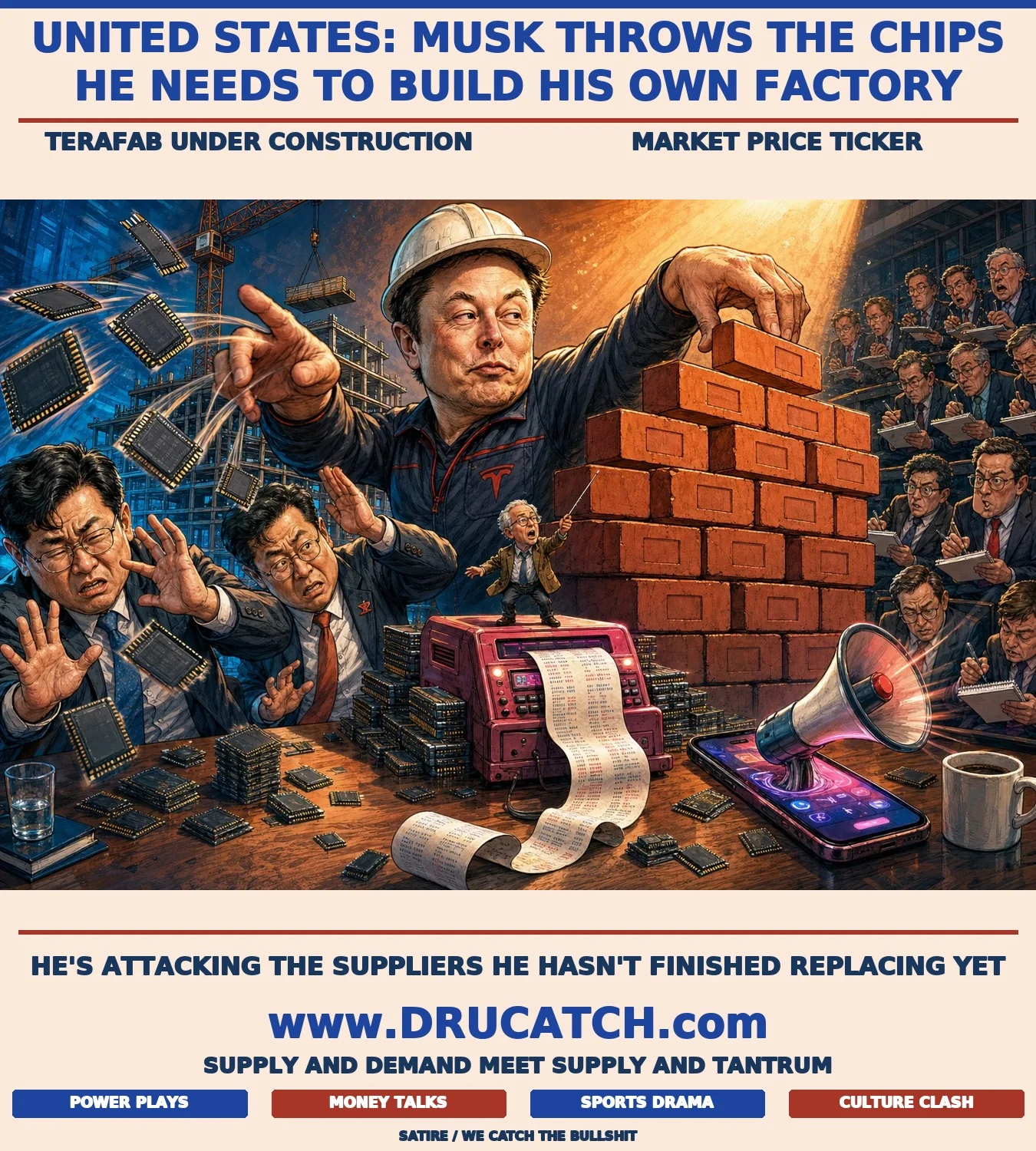
Elon Musk wants cheaper memory chips for his Terafab ambitions, so naturally he did what any rational industrialist would do: he logged onto his own social media platform and called two of the world's largest chipmakers extortionists. Not in a boardroom. Not through procurement negotiations. On X, where the algorithm he owns rewards exactly this kind of tantrum.
The problem, as semiconductor analyst Jim Handy politely explained to The Korea Times, is that memory chip pricing isn't set by Samsung or SK hynix the way a landlord sets rent. It's a commodity market. Suppliers who undercut prevailing prices sell out instantly and leave other buyers empty-handed. Calling market-rate pricing "extortionate" is like screaming at the ocean for being wet - theatrical, loud, and completely ineffective against the underlying physics.
The Tantrum Is the Strategy
But here's what makes the performance worth examining. Musk isn't some helpless consumer comparing prices at Best Buy. He's building Terafab specifically to manufacture chips in-house because he doesn't want to depend on these suppliers. So the public tantrum isn't negotiation - it's leverage theater. You publicly shame Korean chipmakers while privately racing to cut them out of your supply chain entirely. The "extortionate" framing gives him a populist villain to point at while he builds the factory that makes the villain irrelevant.
Heads He Wins, Tails Samsung Loses
It's a neat trick: complain about the price of the thing you're actively trying to stop buying. If Terafab works, Musk looks like the guy who fought back against greedy suppliers. If it doesn't, he's already laid the groundwork to blame Samsung and SK hynix for whatever cost overruns follow. Either way, the post did its job before anyone checked the economics.
THE COMMENTS SECTION HAS ENTERED THE CHAT
When a CEO with a massive social media following publicly attacks supplier pricing that experts say is market-determined, is that legitimate criticism or strategic market manipulation?
Join the discussion / save / share