HOW DRU CATCH SEES IT
A Protection Racket With a Diesel Discount
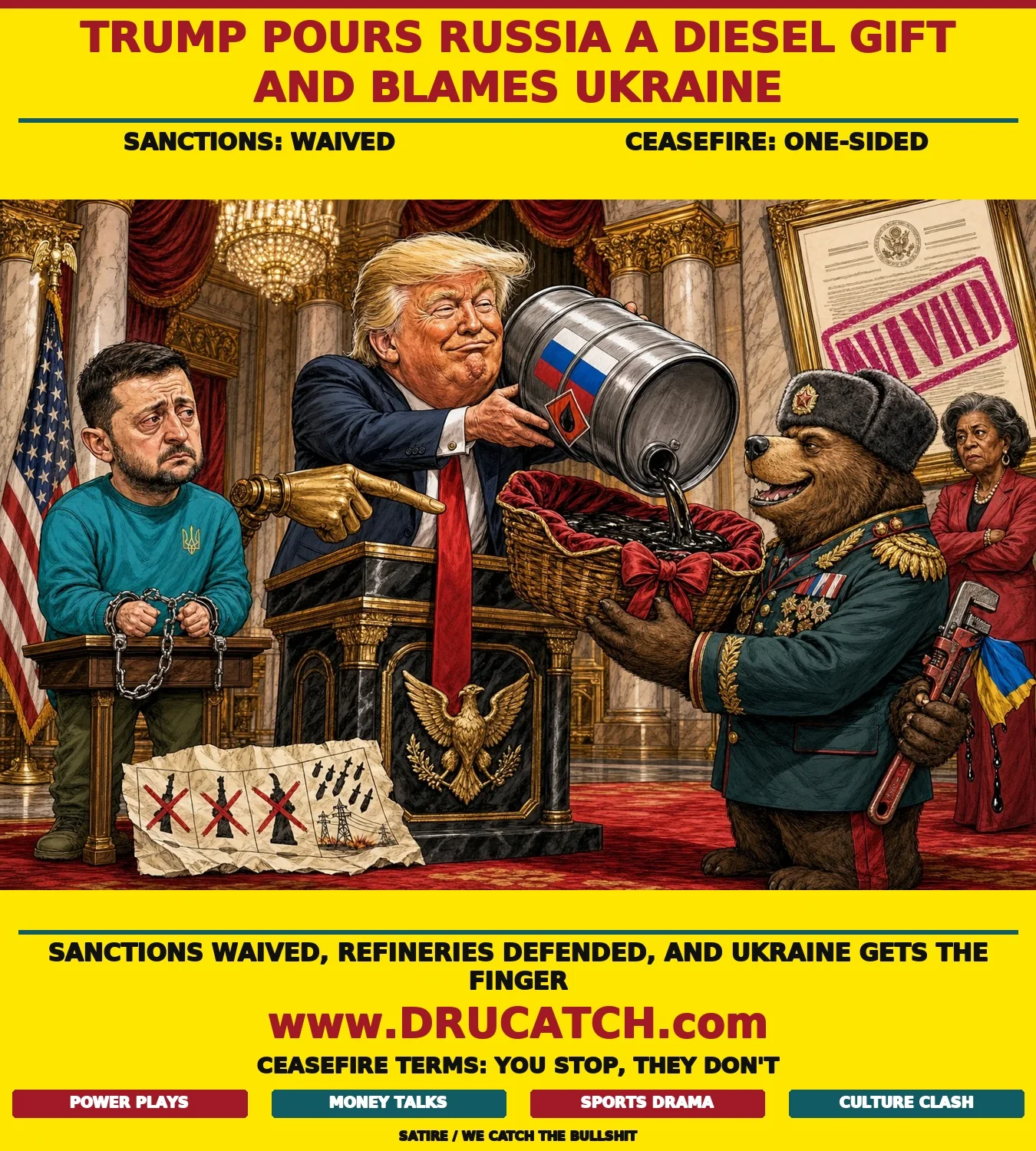
On October 18, Trump posted a Truth Social missive that manages to shield Russia's revenue and scold Ukraine for fighting back - in the same breath. His executive order, signed two days earlier, suspended sanctions under the Graham Act before they could bite, on the stated logic that penalizing Moscow might chase it from negotiations. Simultaneously, he lambasted Zelenskyy for ordering strikes on Russian diesel infrastructure, framing those attacks as a threat to global commodity prices. The arithmetic is striking: the country waging an invasion receives a financial reprieve dressed up as statecraft, while the country absorbing that invasion gets publicly reprimanded for inconveniencing the diesel market. That isn't a negotiation posture - it's a protection racket with a fuel-economy bonus.
Comply, Get Bombed, Get Blamed
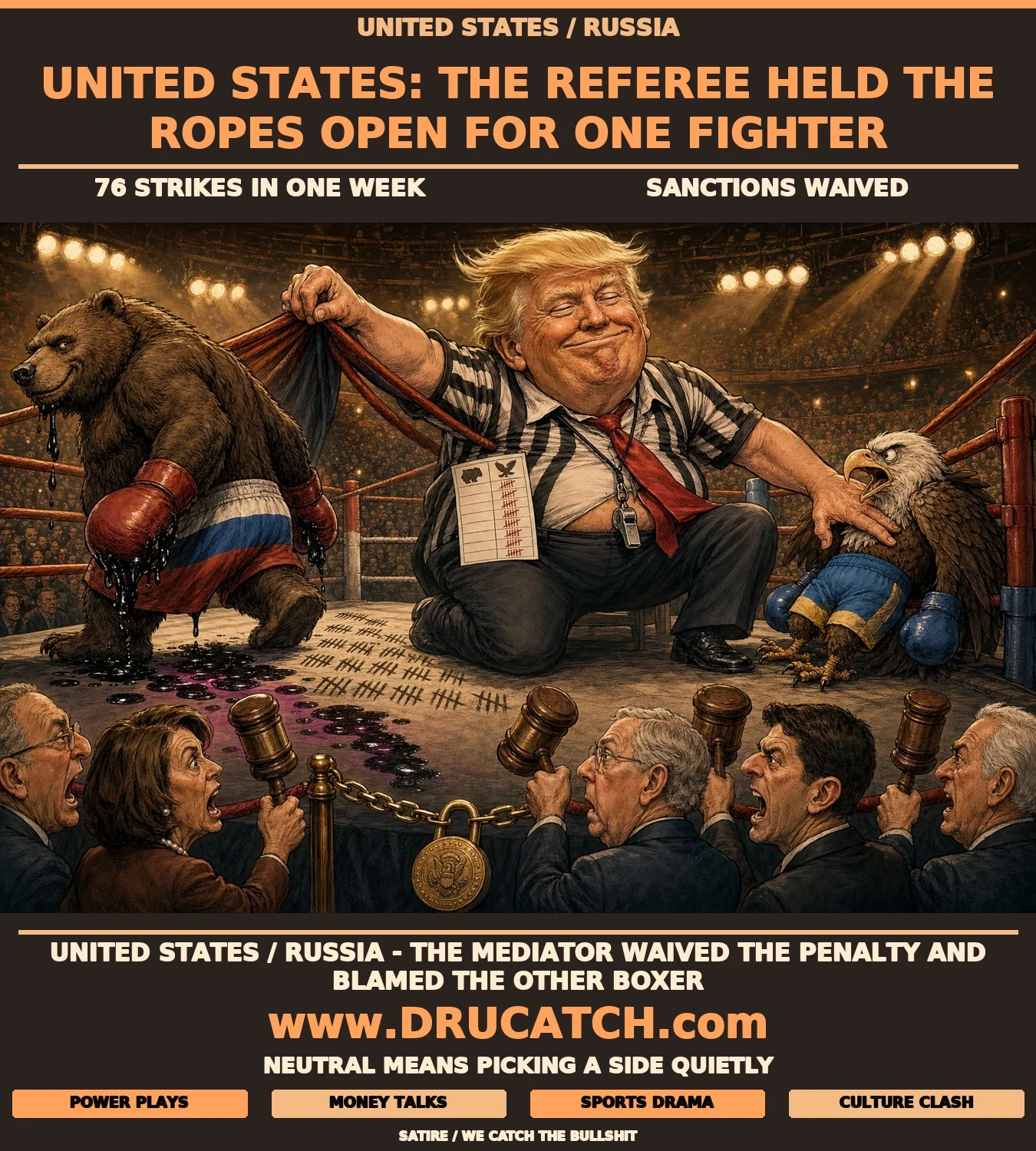
The sequence of events turns the absurdity up another notch. After Trump announced an energy ceasefire on October 11, Kyiv actually honored it, halting refinery strikes for three days at Washington's explicit request. Moscow never acknowledged the ceasefire existed, then proceeded to pound Ukraine's energy grid 76 times during the same window, according to Zelenskyy's October 18 statement. Ukraine eventually resumed hitting back - and was immediately cast as the villain by the very leader who had asked for the pause. Trump's post declared that Zelenskyy could have secured better terms years earlier, adding that Ukraine's male population was decimated and its territory lost. Those are remarkable sentiments from the person whose signature just lifted the economic pressure designed to restrain the army doing the decimating.
Picking a Side and Calling It Diplomacy
The deeper contradiction is baked into the policy architecture itself. Congress wrote the Graham Act to impose concrete economic costs on Russia for prosecuting its war in Ukraine. Trump's executive order erased those costs days before enforcement, while his public messaging reserved its sharpest language for the defender, not the aggressor. He frames all of this as preserving diplomatic space - yet the only actor visibly paying a price under this arrangement is the one that never crossed an international border with tanks. When your peace framework requires cushioning the invader's export income and lecturing the invaded country's military choices, you haven't found a middle ground. You've picked a side and stapled 'diplomacy' to the invoice.
THE COMMENTS SECTION HAS ENTERED THE CHAT
If waiving sanctions is meant to keep Russia at the bargaining table, what leverage does the US retain once the penalties are off the table - and who exactly is being pressured to make concessions?
Join the discussion / save / share