HOW DRU CATCH SEES IT
Terms of Service Apply Mid-Airstrike
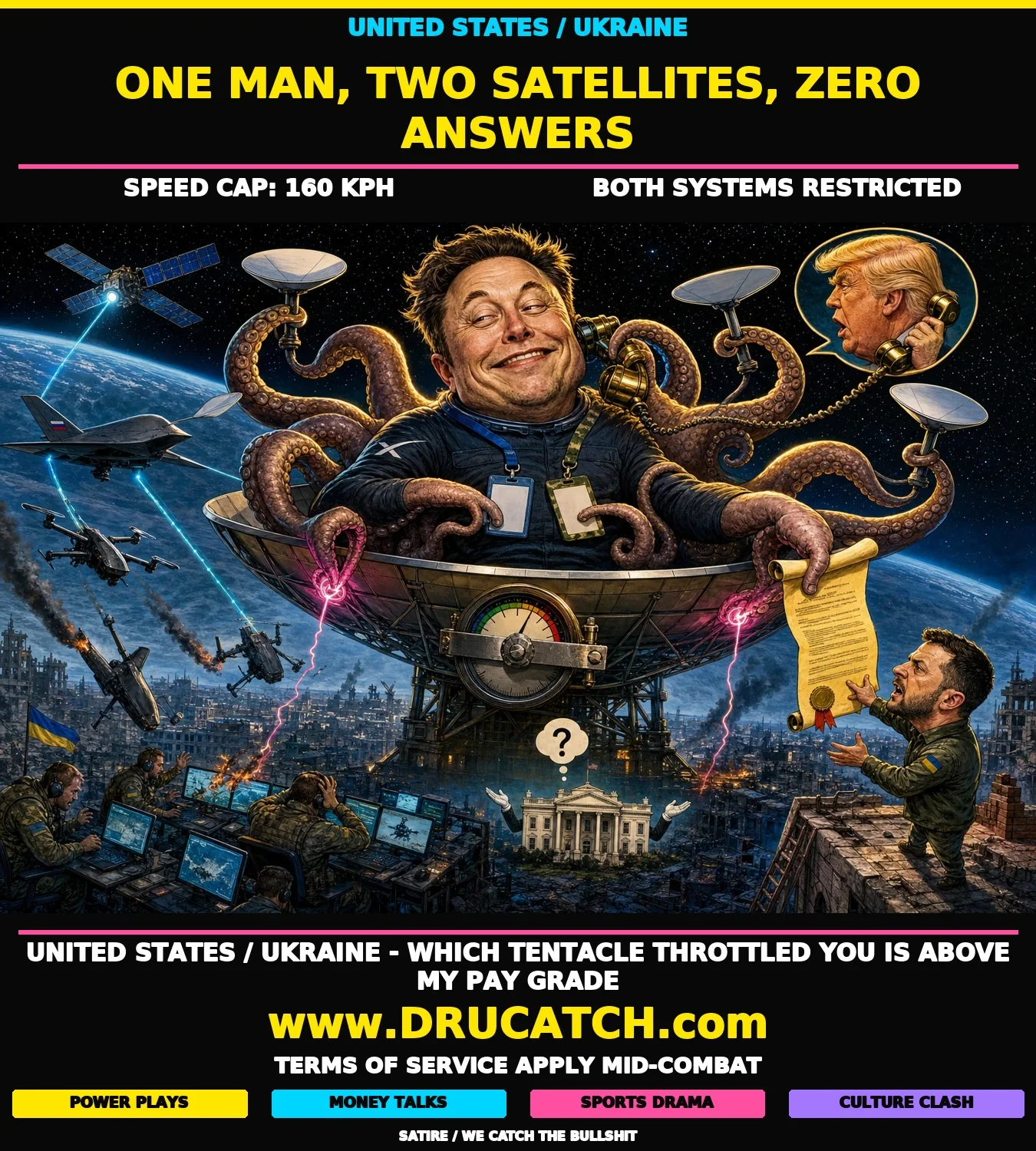
There's something clarifying about watching the world's richest man explain, mid-war, which of his two satellite networks he's personally responsible for and which one belongs to the president. Musk's post effectively said: Starshield throttling? Ask POTUS. Starlink throttling? We're a commercial company - we don't do offense. Ukraine, currently trying to shoot down Russian drones with a system that just forgot how to go fast, got a customer-service distinction instead of an answer.
Follow the thread: United States: Trump Pre-Blames Everyone Except the Guy With $158 Million in Backup.
Technical Malfunctions Don't Usually Come With Speed Limits
The timing is the thing. Starlink didn't hiccup during a firmware update or a solar flare. It throttled days after Zelensky publicly criticized Trump's decision to lift sanctions on Russian oil, after which Trump called for Ukraine to elect a new president. Then Ukraine's interceptor drones lost connectivity. Then the early-warning intel feed went dark. US officials blamed a "technical malfunction." Ukrainian officials, who have been operating these systems for years, said the system turned off when drones exceeded specific speed thresholds - 80 kph, then 160 kph. Technical malfunctions don't usually come with speed limits.
Nobody Flipped the Switch. Everybody Owns the Switch.
And here's the absurdity that should keep you up at night: a country fighting an active war has its battlefield communications routed through a commercial product owned by a single private citizen who also advises the president currently feuding with that country's leader. Poland's foreign minister asked Musk on X whether he was "playing politics with your products again." The White House told Ukraine it doesn't control SpaceX. SpaceX told Ukraine it doesn't do offense. Nobody told Ukraine who actually flipped the switch. The drone operators just got a terms-of-service update - mid-combat.



THE COMMENTS SECTION HAS ENTERED THE CHAT
When a single private company controls battlefield infrastructure for an allied nation, and that company's owner advises the president currently in a diplomatic dispute with that nation, who should be accountable when the service mysteriously degrades?
Join the discussion / save / share