HOW DRU CATCH SEES IT
The Terms of Service That Run a War
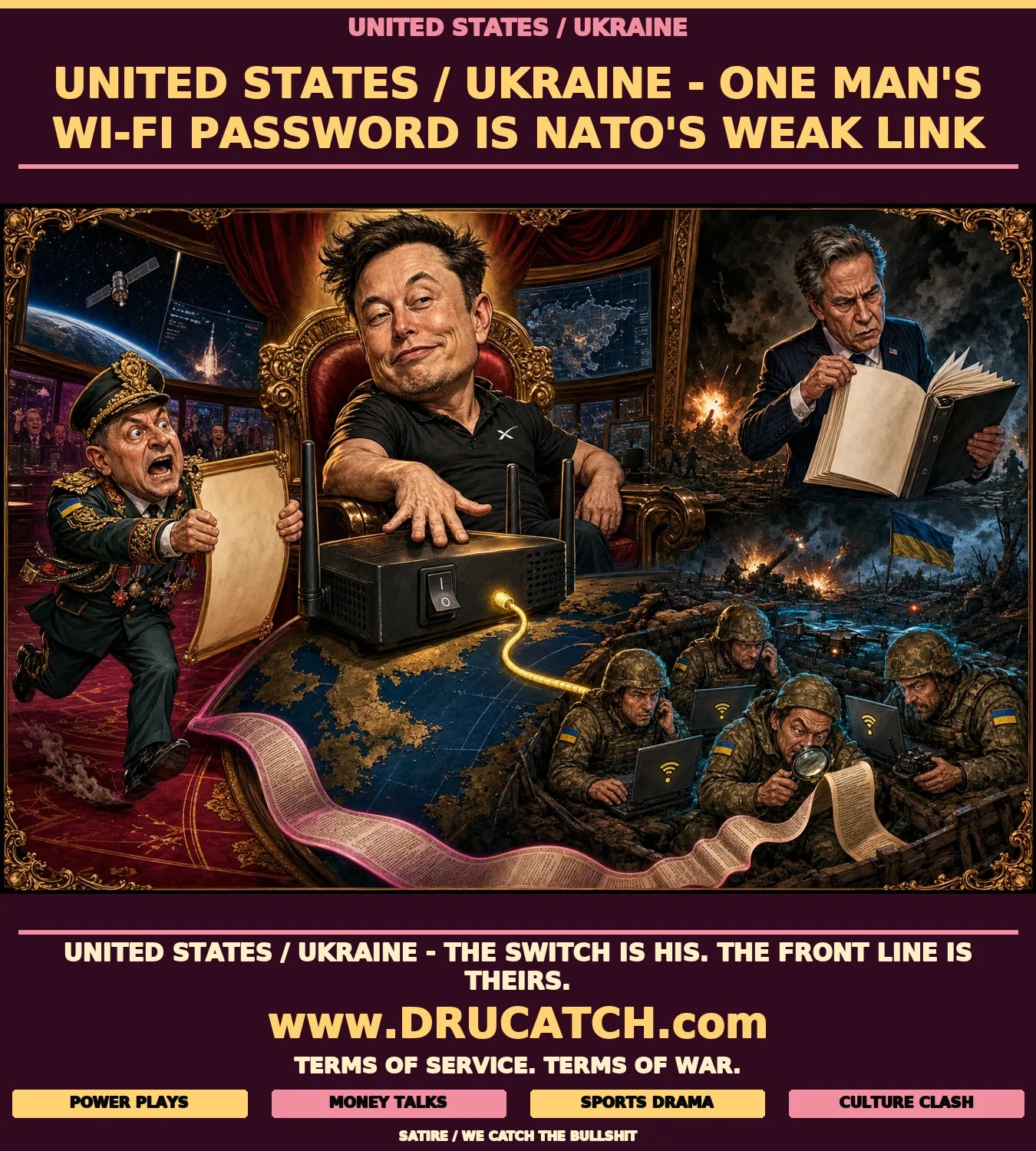
Elon Musk posted on X that Starlink was never authorized for UAV kill operations, that the Ukrainian army violated his terms of service by using it that way, and that the vulnerability enabling this was closed last week. A private company enforcing a user agreement is entirely normal. A private company whose user agreement determines whether a wartime ally can function on the battlefield is not.
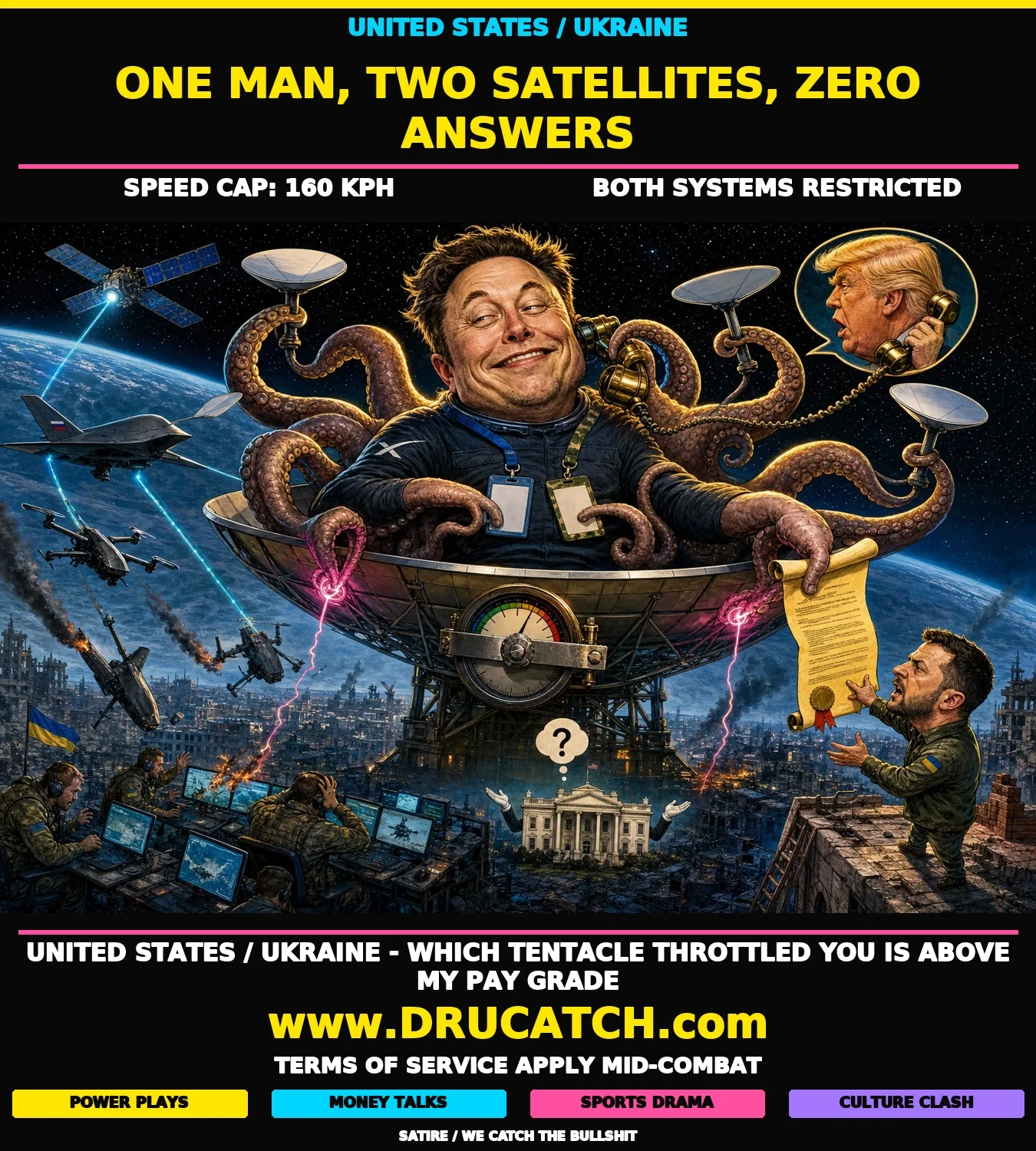
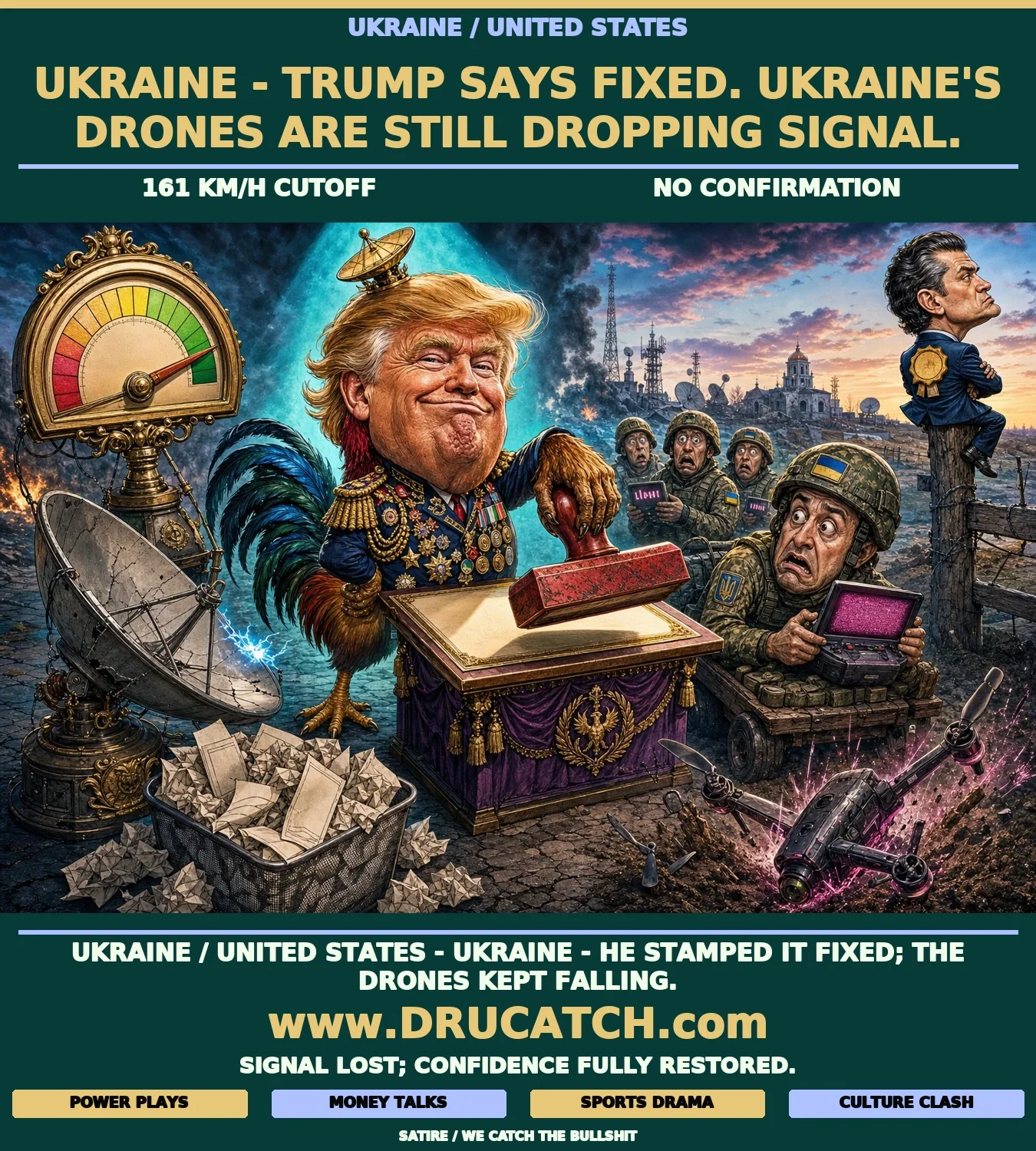
US media reports claimed Musk had already ordered the internet service Starlink provides to the Ukrainian army to be slowed. Zelensky confirmed speed restrictions had been in place and said they had since been lifted. So the sequence, per reporting, goes: slow the service, close the vulnerability, post the terms-of-service lecture on X, remind everyone the front line depends on it. In a conventional vendor relationship, that last step is called a renewal pitch. In geopolitics, it has another name.
You Cannot Be Both Indispensable and Neutral
Musk argued SpaceX has contributed more to Ukraine's defense than any other private company in the world. He also argued that Starlink must never be used for operations aimed at killing people. Both statements appeared in the same post. The logical gap between them is the size of a front line.
If Starlink is indispensable to Ukraine's survival and simultaneously forbidden from supporting Ukraine's offensive military operations, then Musk has constructed a product that is allowed to keep Ukraine from losing but not allowed to help Ukraine win. That is a foreign policy position. It was not debated in Congress, it was not coordinated with NATO, and it was published on a social media platform Musk also owns.
The Foreign Policy Single Point of Failure Nobody Voted For
Musk helpfully noted that Starshield - a different, government-controlled system - is under US government authority. The implication being that Starlink, which is currently keeping the front line from collapsing, is not. The US government's dependence on SpaceX has produced a remarkable situation: the most consequential satellite connectivity in an active war zone is governed by the business decisions and personal politics of a private citizen who holds no security clearance, no elected office and no treaty obligation.
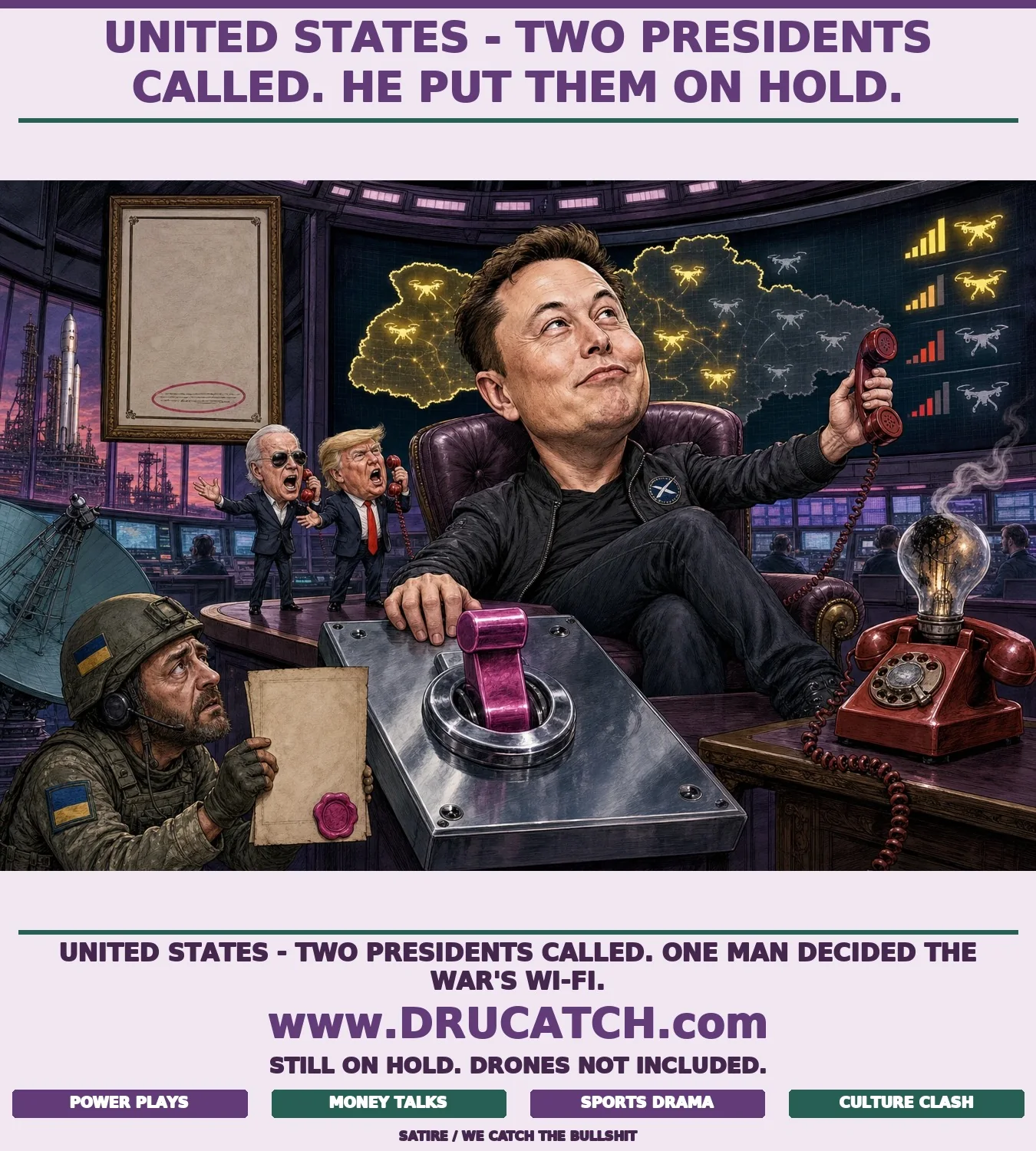
When Musk said shutting down Starlink would cause Ukraine's front line to collapse immediately and called it 'not a threat, just a fact,' he was technically correct. It was not a threat. It was a description of the leverage. The difference between those two things, from Kyiv's perspective, is academic.
THE COMMENTS SECTION HAS ENTERED THE CHAT
Should a single private company's infrastructure be allowed to become the critical backbone of a wartime ally's battlefield communications - and what accountability mechanisms, if any, exist when the owner of that infrastructure is also a prominent political figure in the country funding the war?
Join the discussion / save / share