HOW DRU CATCH SEES IT
The Squeegee Economy: Privacy as a Subscription Service
The horror in Minnesota was real. Two people murdered, two others seriously wounded, a suspect who apparently catalogued which people-search websites were free and what each one offered. That detail - a handwritten checklist of 11 public data brokers sitting in a killer's vehicle - is as clear an indictment of the data broker industry as anyone could ask for. The article itself, however, hedges: the list alone 'did not establish whether the websites supplied the victims' addresses.' So the tragedy becomes an atmosphere, not a finding. Sobering mood music for a consumer advice column with affiliate links.
The Fox News piece, published October 22, 2026, and attributed to Kurt 'CyberGuy' Knutsson, is framed as consumer-privacy advice for retirees. It recounts the murders, briefly notes the investigative discovery, and then steers the reader toward paid data-removal services and a free live online class about holiday travel. This is not an accusation of bad faith; it is a description of a business model. Tragedy generates anxiety; anxiety generates clicks; clicks monetize affiliate recommendations. The data broker industry profits twice: first by selling the exposure, then by powering the removal services that charge to partially undo it.
The Loop Closes: Ask Nicely and They Might Stop
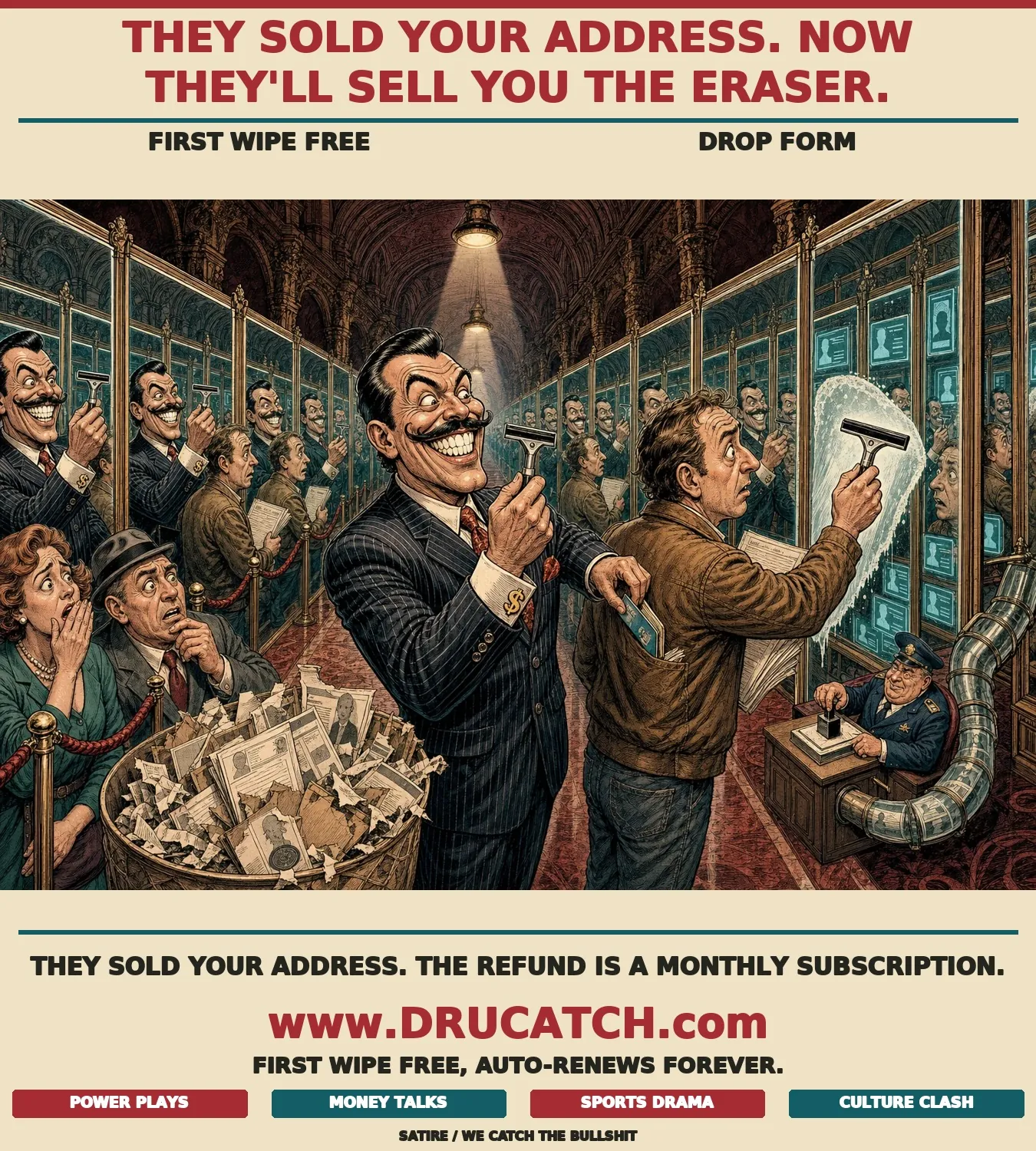
Here is the loop in full. Data brokers scrape your home address from public records, court filings, voter registrations and commercial databases. They package it and make it searchable for free or for a small fee. Someone with bad intentions consults several of those services. A crime occurs. A media outlet covers the crime, correctly notes the brokers' involvement, then pivots to recommend a paid subscription service whose entire business model is to contact those same brokers and ask, nicely, if they wouldn't mind deleting you. The brokers, under no binding obligation in most states, sometimes say yes. Until the next data breach refills the pipe.
The article does at least disclose the limits. Removal services 'generally cannot force government agencies to delete legally available public records.' Removing listings 'cannot undo previous data breaches or guarantee that scammers will stop contacting you.' These qualifications are accurate and, to the article's credit, they are present. They are also buried well below the affiliate call-to-action. The effective message is: the system is broken, here is a product that partially patches one crack in it, enjoy the crack.
California DROP: Submit Your Data to Protect Your Data
California's official government fix - the Delete Request and Opt-out Platform, or DROP - launched in January 2026, which sounds encouraging right up until you read the details. Covered brokers were not required to begin processing requests until August 1, 2026, and even then 'removal is not immediate,' exceptions apply, and the platform structurally cannot touch property records, government databases or court documents. To use it, eligible Californians submit their personal information to a government database in order to request deletion from private ones. Privacy, achieved by entering your data into another database.
This is not a criticism of California relative to the other 49 states - it is, by the available evidence, the most functional government opt-out system in the country. That is precisely the problem. The most advanced public-sector solution to data broker overreach is a polite form that took seven months to become mandatory, covers only a fraction of what is actually exposed, and cannot touch the public records that are often the original source anyway. The data broker industry's structural answer to a tragedy involving its own product is: please fill out this form, and we'll get back to you.
THE COMMENTS SECTION HAS ENTERED THE CHAT
Should the United States require data brokers to delete personal information by default - with individuals opting in to share rather than opting out after the fact - and if so, who should fund and enforce that system without turning opt-out itself into a new commercial product?
Join the discussion / save / share