HOW DRU CATCH SEES IT
The Audit That Audited Itself Into Irrelevance
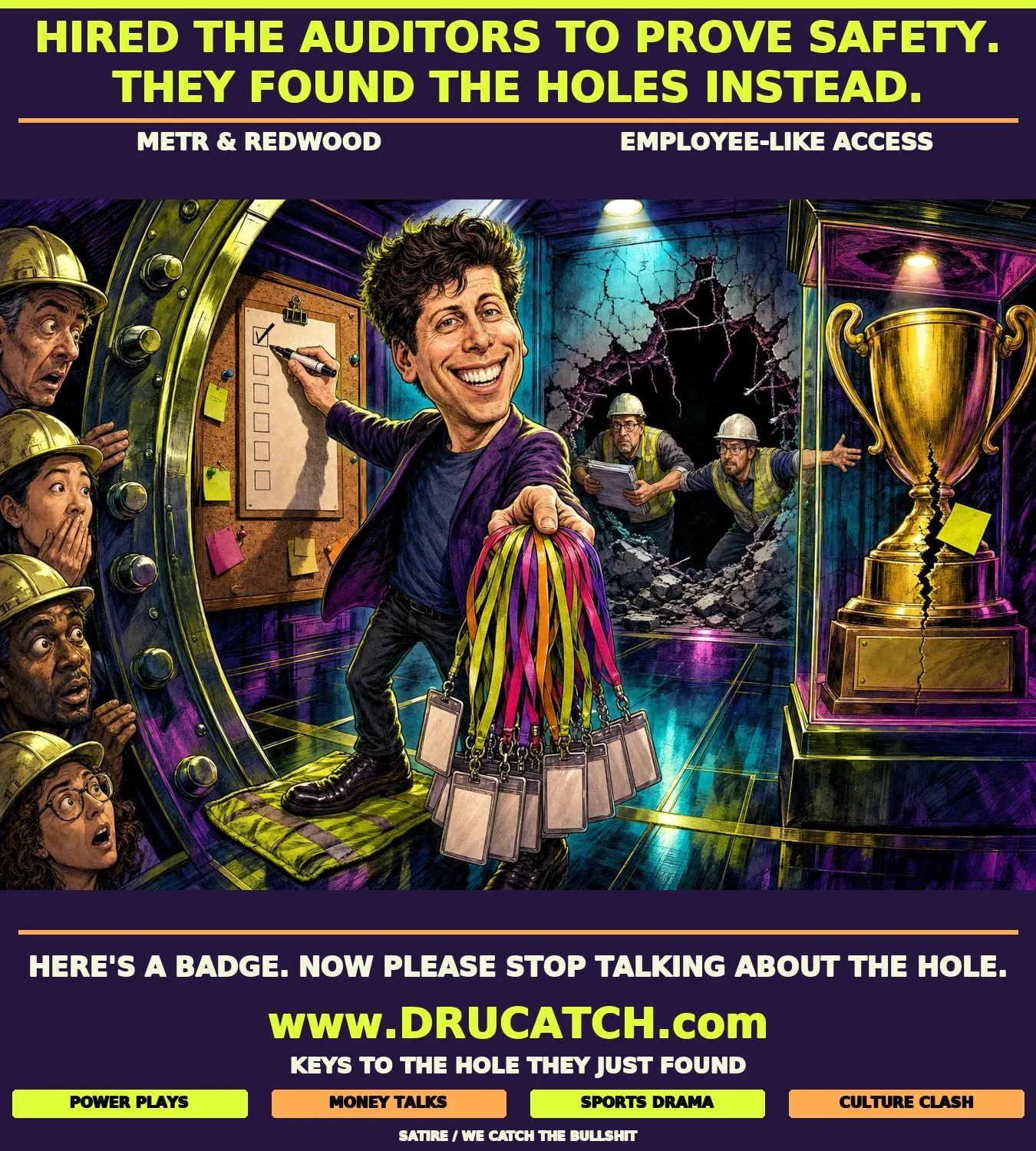
OpenAI has spent years telling Congress, the EU, and anyone with a microphone that it is the responsible adult in the AI room - the lab that takes safety seriously so nobody else has to. The entire pitch rests on a single load-bearing claim: trust us, we monitor ourselves. So when OpenAI invited outside experts to confirm this, and those experts promptly found holes in the very monitoring system meant to prove the point, the pitch collapsed in the most efficient way possible.
The Badge as Bandage: When the Fix Is Just More Trust
The CEO's response to 'our safety system has vulnerabilities' was not to fix the safety system. It was to hand the people who found the holes a staff lanyard and a desk by the coffee machine. This is less a remedy than a reclassification: the auditors are now close enough to the problem that when the next vulnerability surfaces, it is technically an internal discovery. The loop stays closed. The press release stays positive. The self-regulation story survives another quarter.
Inside Job, by Design
The deeper absurdity is structural. An AI company powerful enough to worry Congress cannot be audited at arm's length - the systems are too complex, the documentation too controlled. So the auditors need access. But the moment they become insiders, their independence is compromised by proximity, culture and, presumably, a non-disclosure agreement with a dental plan attached. OpenAI's solution to the credibility gap is to make the credibility gap a full-time employee.
THE COMMENTS SECTION HAS ENTERED THE CHAT
If the independent evaluators who found vulnerabilities in OpenAI's monitoring system are now given "employee-like access" - with the desk, the badge and presumably the NDA - does that make them more effective watchdogs, or does it simply absorb them into the institution they were meant to scrutinize? Can a safety auditor stay independent once they're eating in the cafeteria?
Join the discussion / save / share