HOW DRU CATCH SEES IT
When the Building Burns, Blame the Smoke Alarm
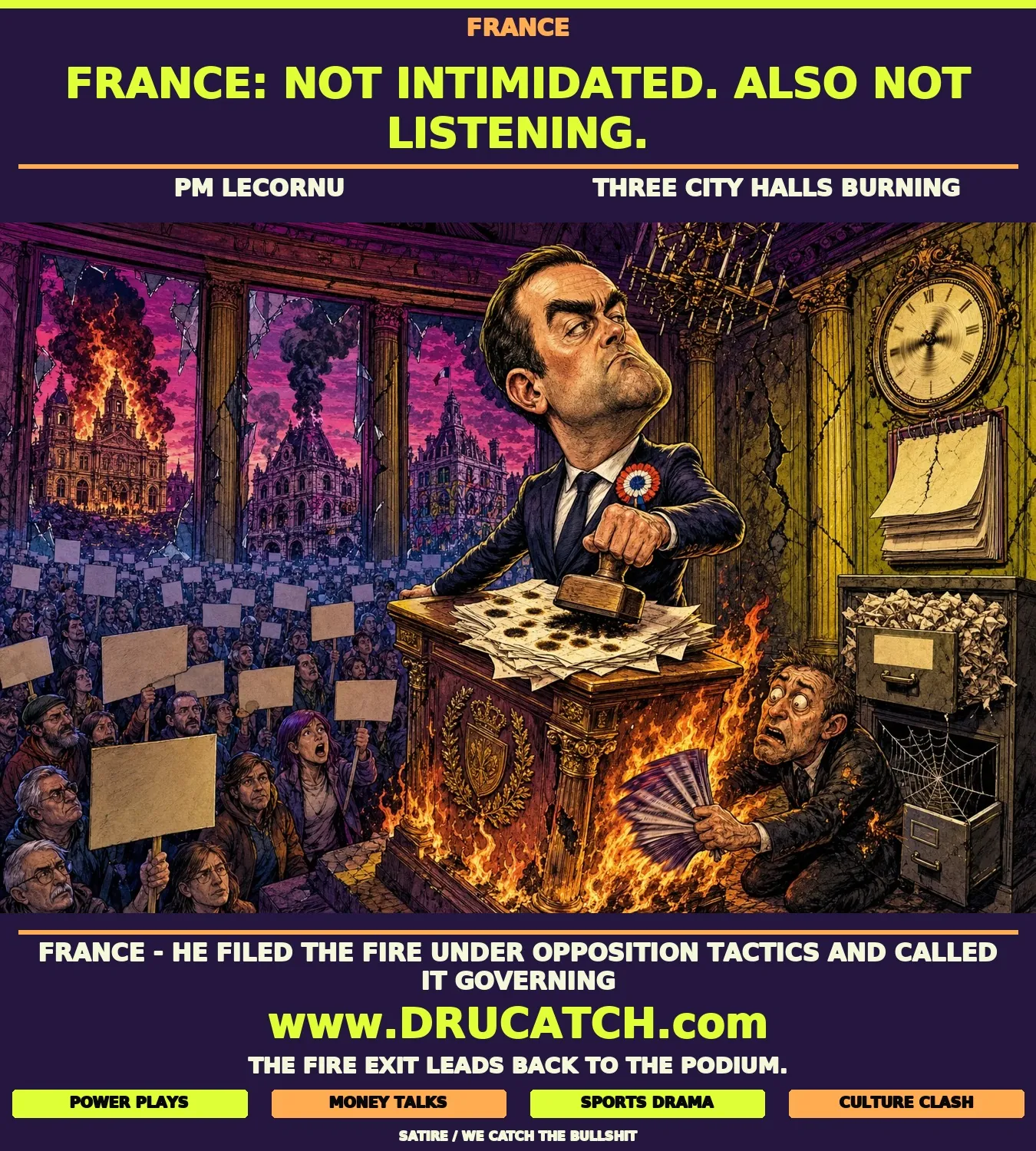
Sebastien Lecornu's government presides over rising living costs and declining public services so severe that hundreds of thousands of people marched in the streets. The official response? Blame the "ultra-left" and criminals, announce the government won't be "intimidated," and position the whole thing as a pre-election provocation. That's not crisis management. That's a landlord watching the building catch fire and blaming the tenants for complaining about the smoke detector.
Every Crisis Gets Filed Under Election Season
The tell is in the framing. Lecornu didn't address the living costs. He didn't announce emergency measures for the public services people are watching collapse. He went straight to the political script - "ultra-left," "criminals," "presidential election" - as if the hundreds of thousands who marched peacefully were a backdrop for the ones who lit the fires. When your first instinct is to sort a nationwide eruption into convenient electoral categories, the riot isn't the crisis. The sorting is.
Filing a Complaint About the Complaint
And there's a specific absurdity in denouncing violence while offering nothing to the conditions that produced it. City halls in Limoges, Marseille, and Lyon didn't burn because anarchists checked a calendar and noticed an election was coming. They burned because the buildings had become symbols of institutions people feel have abandoned them. Lecornu's statement essentially tells a country on fire: "We see your frustration, and we've filed it under 'opposition tactics.'" That's not governing. That's filing a complaint about the complaint.
THE COMMENTS SECTION HAS ENTERED THE CHAT
When a government responds to mass protests about living conditions by blaming political opponents rather than addressing the conditions, does that response itself become evidence of the disconnect protesters are describing?
Join the discussion / save / share