HOW DRU CATCH SEES IT
The Rights of the Nation - and Its Grocery Bill
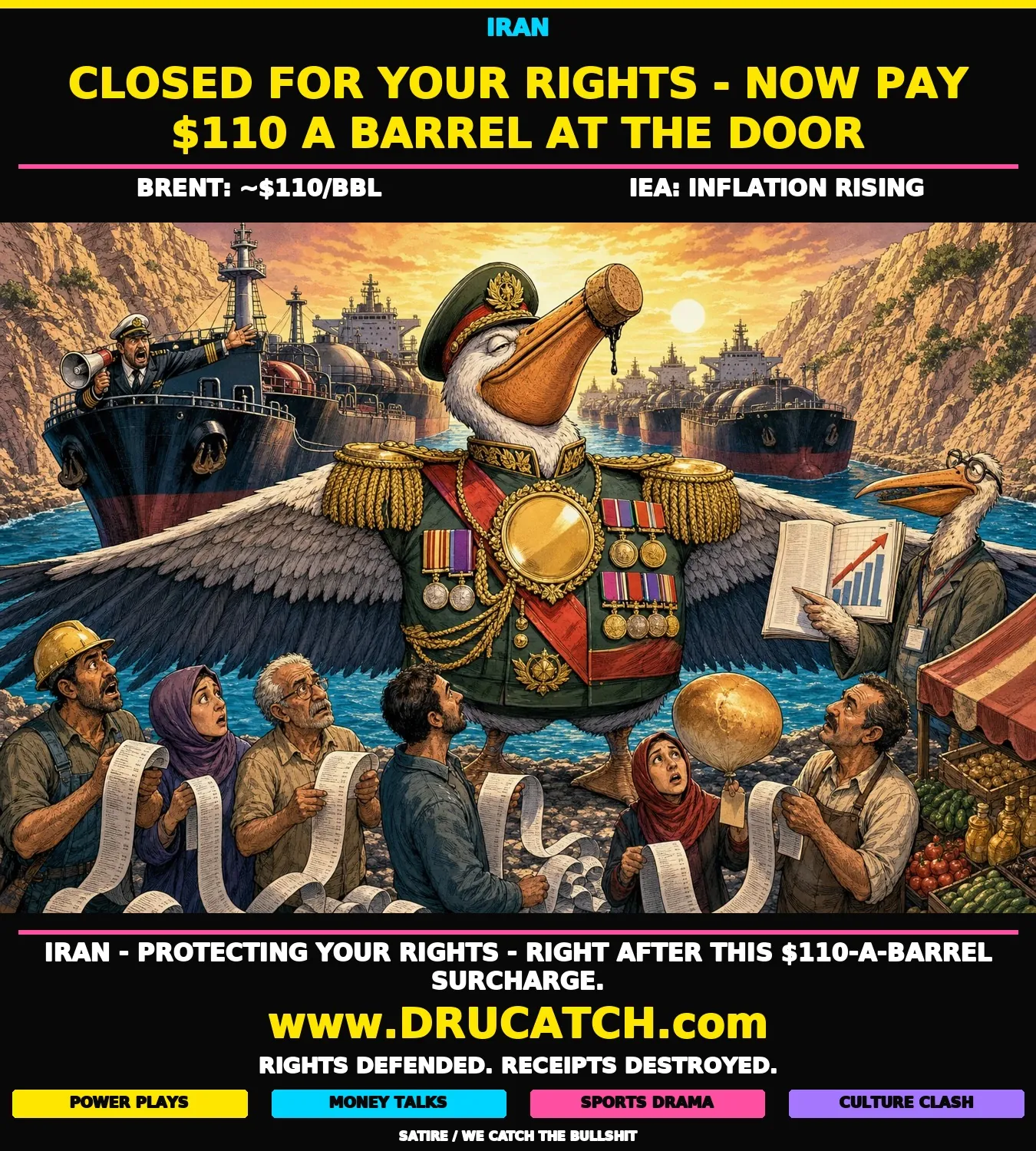
There is a specific kind of political theater where the general stands at the podium, thumps his chest for 'the people,' and the people in the crowd quietly check how much their grocery bill went up while he was speaking. Iran's army chief Amir Hatami delivered a textbook performance of that genre at the National I'tikaf Festival in Tehran, declaring the Strait of Hormuz closed until 'the enemy respects the rights of the Iranian nation.' Stirring stuff. Also: Brent crude hit $110 a barrel the same Friday.
The IEA is not a think tank with an agenda against Tehran. It is the international agency that tracks energy economics, and what it said is blunt: the diesel price increase driven by these Hormuz restrictions is already affecting the population's income and economic activity. Not the enemy's population. Not the Israeli regime's truckers. The population. The broad one. Including the Iranian one that Hatami is defending.
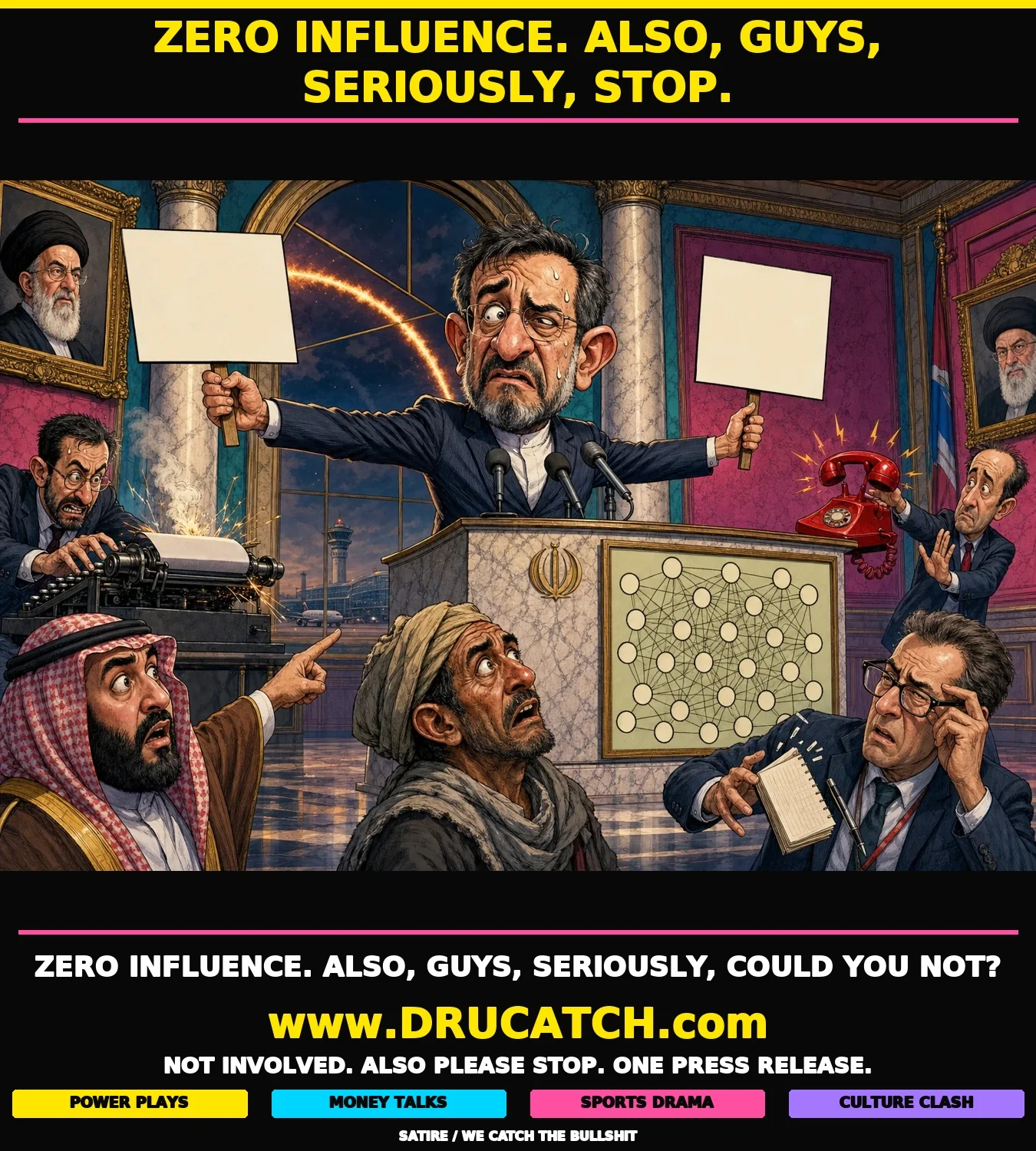
Follow the thread: Iran Has Nothing to Do With the Houthis. Also, Could the Houthis Please Stop?.
When "Defending Rights" Costs $110 a Barrel
That is the joke the evidence writes by itself. The 'rights of the Iranian nation' apparently do not include the right to affordable fuel, affordable food or affordable transportation - all of which climb in lockstep with a $110 barrel of crude. The IEA further warns that maintaining the restrictions will exacerbate global inflation, which is a polite way of saying the people Hatami claims to protect will keep paying at the pump for every additional day he keeps his thumb on the chokepoint.
Hatami also threatened that any new attack on Iranian infrastructure would produce a response causing several times greater damage to the adversary. The adversary's infrastructure. Got it. Meanwhile the IEA is documenting the damage Hatami's own policy is causing to everyone else's food bill.
The Most Expensive Principle in the Supermarket
Here is the complete loop: a military general closes the world's most critical oil artery in defense of national rights. Oil hits a five-month high. Diesel prices climb. Food costs follow. The IEA flags the hit on ordinary incomes. The general calls it a principled stand. Nobody who drives a truck or buys bread was consulted on whether the principle was worth the surcharge.
You do not need to be a general to find the irony in this. You just need a receipt.

THE COMMENTS SECTION HAS ENTERED THE CHAT
When a government closes a major strategic resource in the name of protecting its people's rights - while international agencies document that the closure is directly driving up those same people's food and fuel costs - is that a principled stand, a self-defeating policy, or something else entirely? And who should be held accountable when the cost falls on consumers rather than the stated adversary?
Join the discussion / save / share