HOW DRU CATCH SEES IT
Four to Five Weeks Was Never a Plan
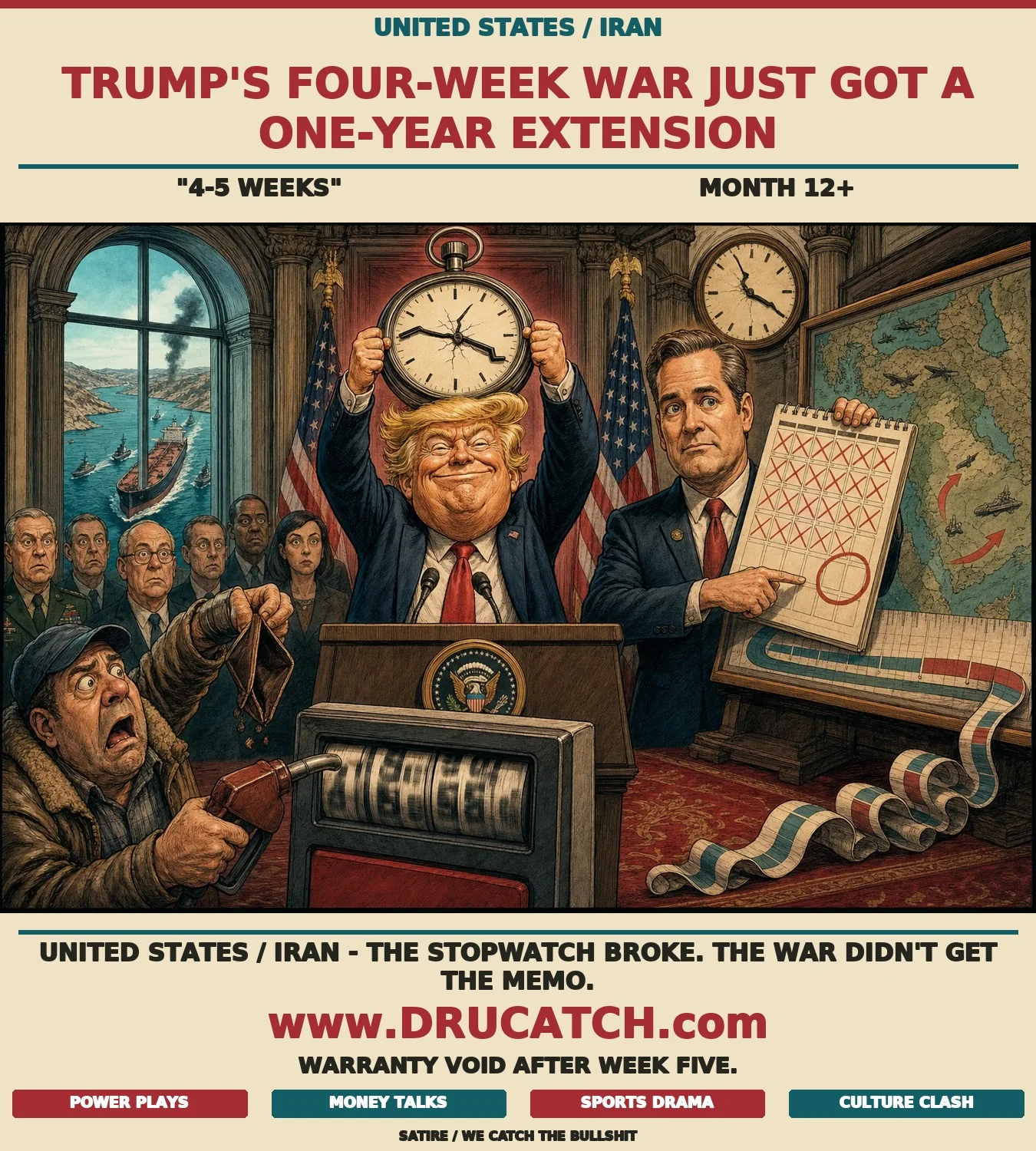
Trump's four-to-five-week promise was not a battle plan. It was a confident number produced by a man far more invested in the announcement than the outcome - carrying the specificity of a guarantee and the load-bearing capacity of wet cardboard. His own UN envoy has since quietly walked that timeline out back and retired it without ceremony.
Waltz told the Financial Times that U.S. forces could still be engaged twelve months from now - because the core objectives, Iran surrendering its highly enriched uranium and accepting a binding enrichment arrangement, remain unachieved. Asked about the possibility of another year of conflict, Waltz said he would not offer hypotheticals, adding that he could only hope Iran would engage seriously before then. That is the diplomatic register for: we are nowhere close to finished.
The Same Week, Two Completely Different Wars
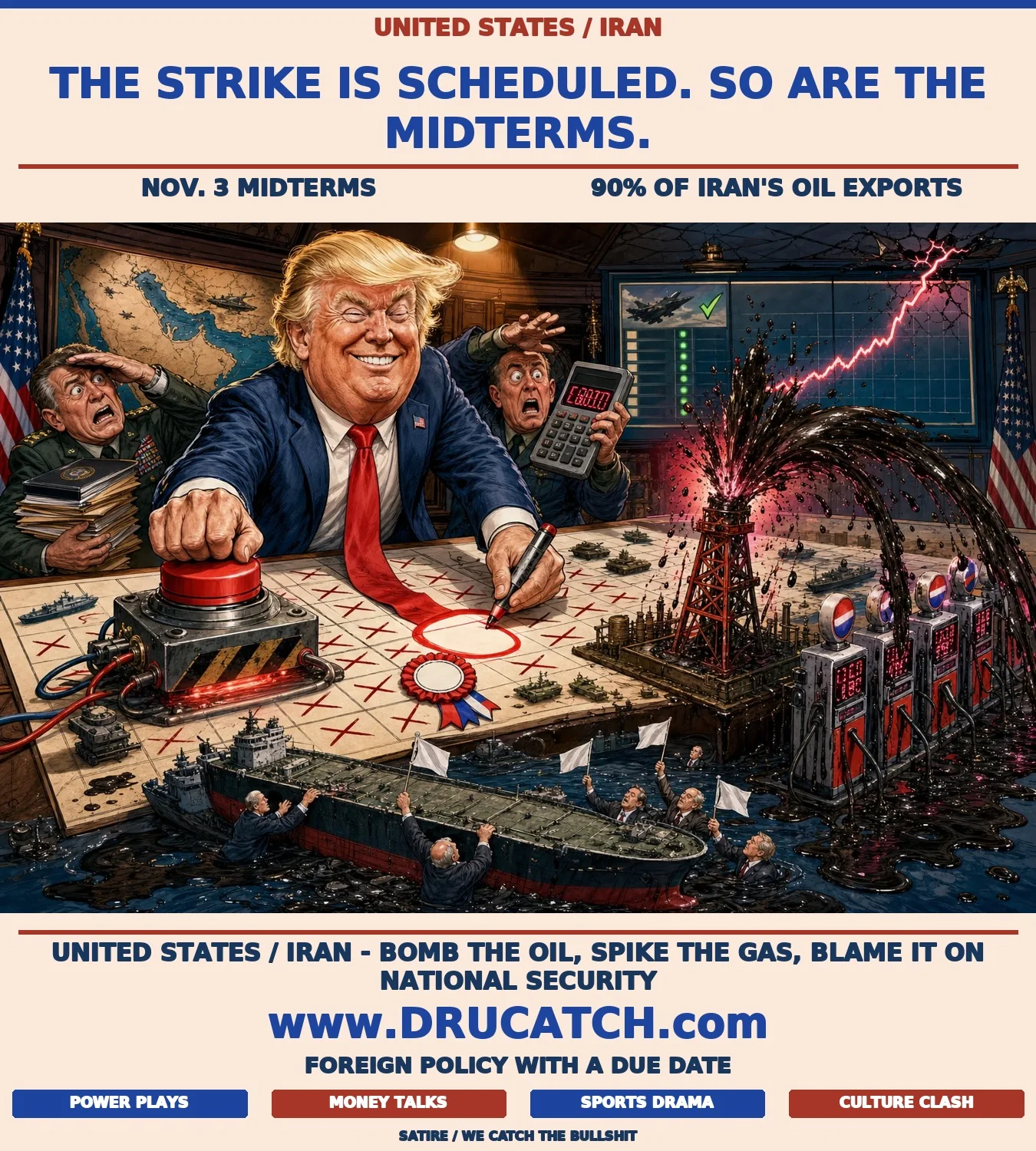
The absurdity is sharpest when you look at the timing. In the same news cycle that Waltz was briefing the Financial Times on a conflict that may stretch well into the future, Trump was posting on Truth Social that Iran was fabricating tanker incidents in the Strait of Hormuz to push energy costs up before the November midterms. Both claims could theoretically be accurate. Read side by side, though, they describe an administration prosecuting a war it once called nearly over, against an adversary it now accuses of staging attacks, toward goals that carry no defined finish line - and simultaneously pointing at that adversary as the reason fuel is expensive.
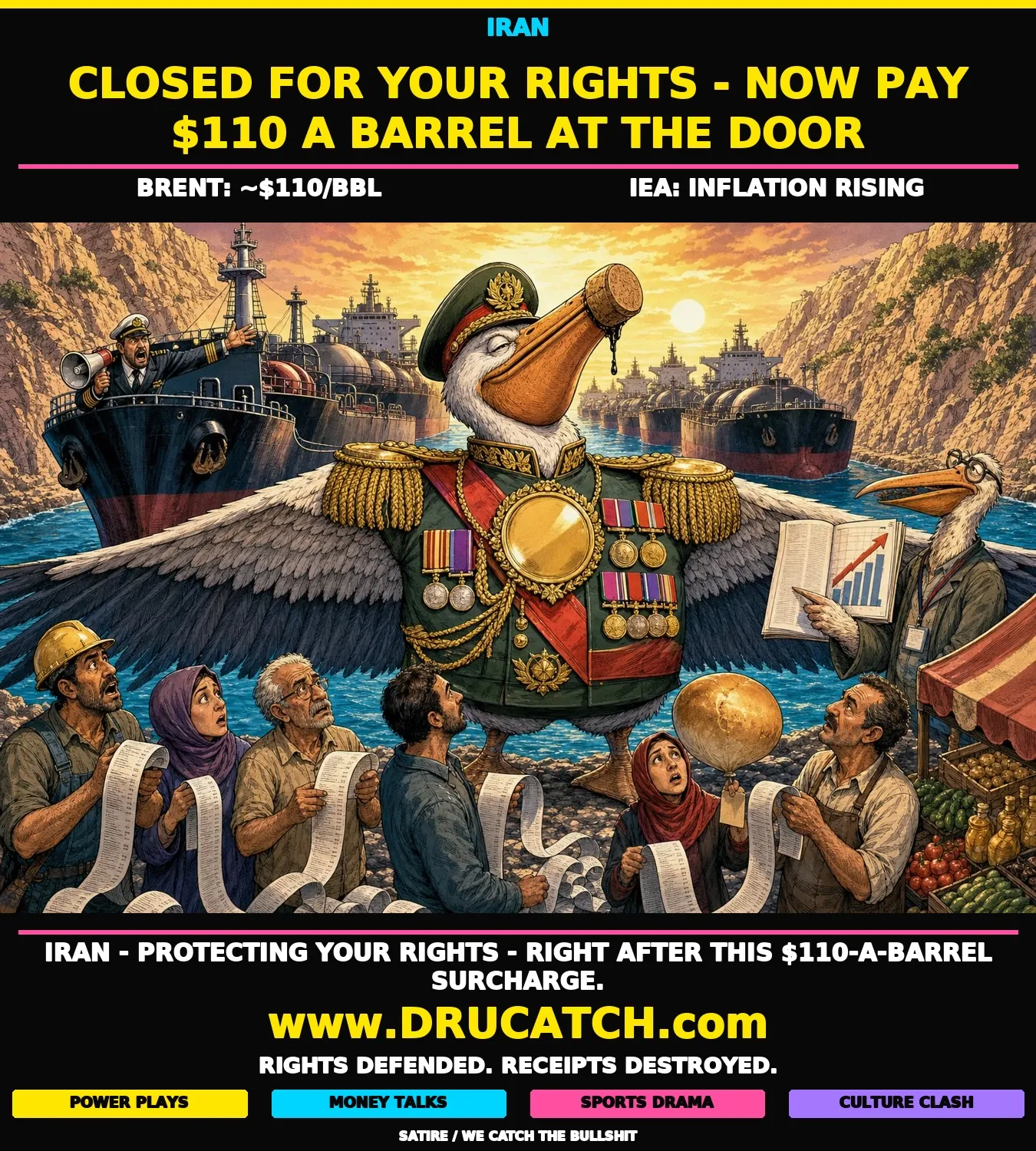
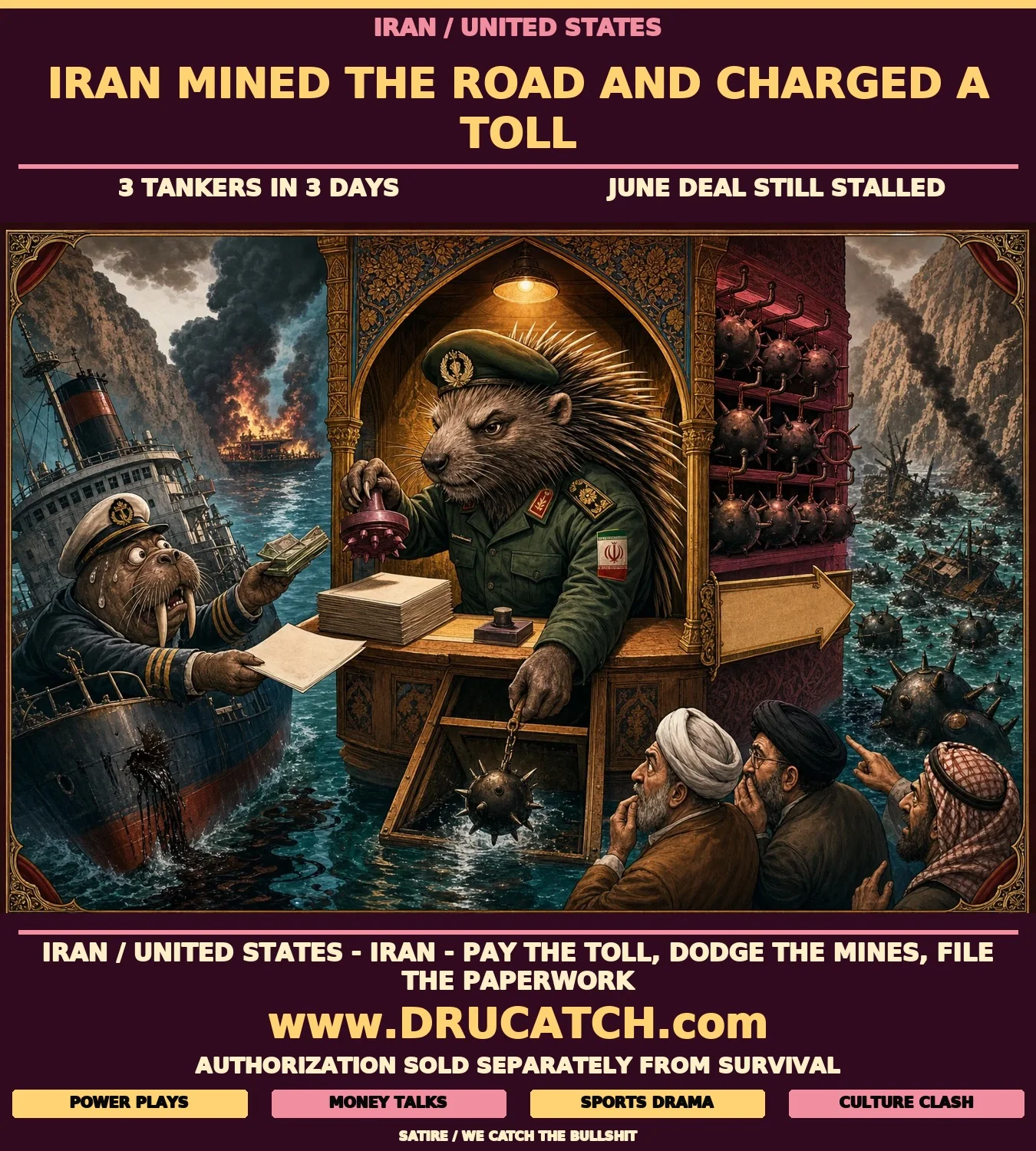
Brent crude settled at $112 a barrel on Thursday, a peak not seen since mid-May. Iran reported striking four vessels near the Strait and alleged three more hit sea mines along the U.S.-endorsed southern shipping lane. The American military has been shepherding tankers through that corridor - a process the reporting characterizes as costly - to demonstrate that the route functions. The waterway is partially operational. The war is open-ended. The price is elevated. And the original four-to-five-week estimate has aged about as gracefully as crude oil left sitting in a damaged Hormuz tanker.
A Wrong Prediction Is Now a Permanent Yardstick
The original forecast has evolved into something more durable and more damaging than a correct one: a fixed reference point against which every additional week of conflict is automatically measured. No press conference is required. No correction needs to be issued. The gap between the announced number and the running total simply widens in public, week by week, on its own.
At the one-year mark, the estimate will sit roughly 900 percent wide of the actual duration. That is not a forecasting miss within a reasonable margin of uncertainty. That is a different conflict entirely from the one that was declared. Waltz did not say his principal was mistaken. He said, with the careful phrasing of someone who checks the exits before speaking, that the naval blockade on Iranian ports can be sustained for the foreseeable future and that economic pressure is still being tightened. Neither phrase resembles a victory lap. Both phrases describe a man explaining an open-ended military commitment in present tense, while the deadline his administration announced dissolves behind him in full view.

THE COMMENTS SECTION HAS ENTERED THE CHAT
When a president makes a specific public prediction about how long a war will last and his own senior officials contradict it months later, does that original statement deserve more scrutiny - or is wartime forecasting simply too unpredictable to hold anyone accountable?
Join the discussion / save / share