HOW DRU CATCH SEES IT
The Glamour Shot That Cost 156 Euros
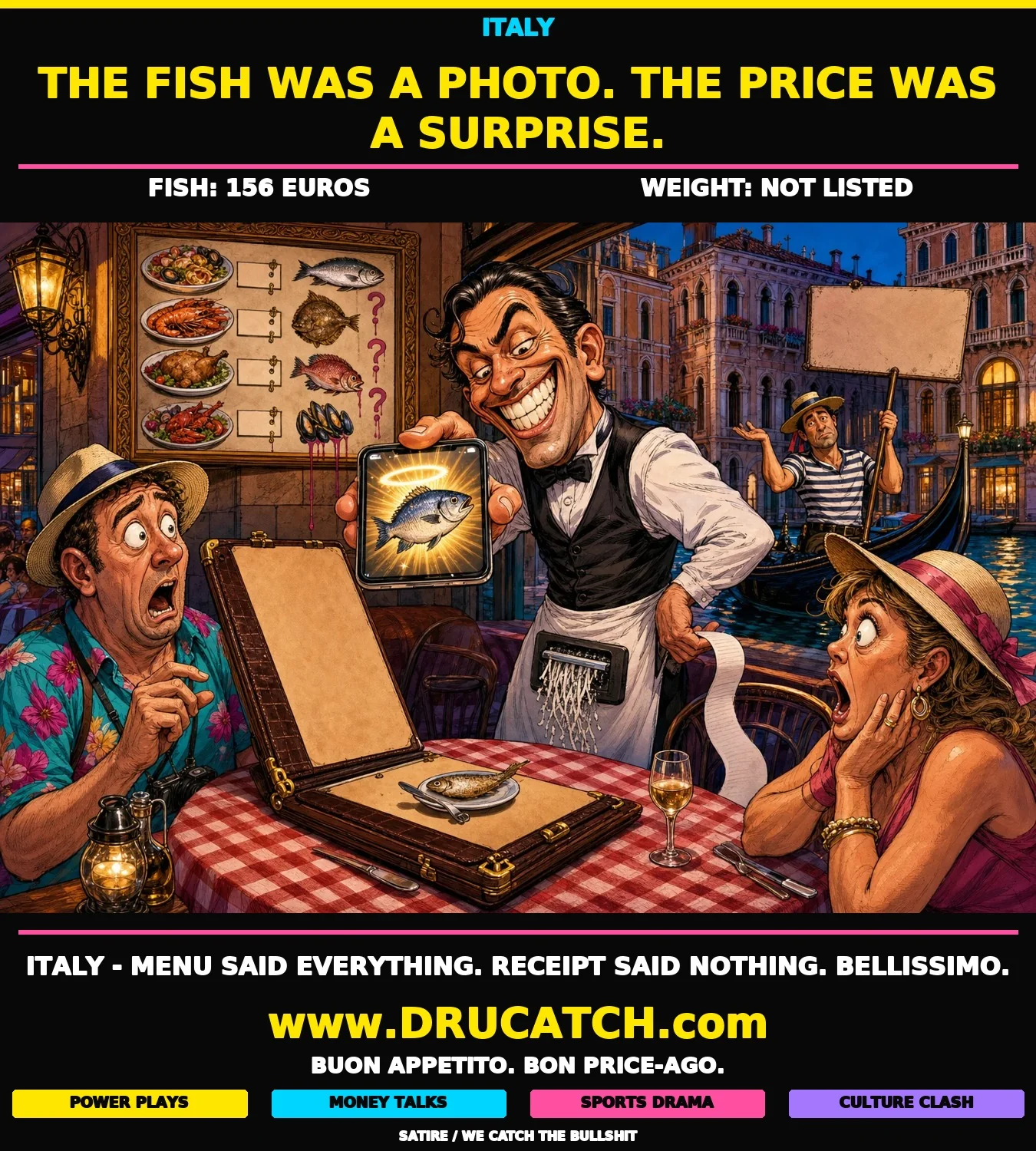
The waiter didn't show a price. He showed a photograph. On his phone. Of a fish. And somewhere between the glamour shot and the bill, 156 euros appeared on a receipt that was too bashful to mention how much the fish actually weighed or what it cost per gram. The rest of the menu topped out at 34.50 euros. So either this was the Mona Lisa of sea bass or someone skipped the part where Italian consumer law says you have to tell people what they're paying for products sold by weight.
Follow the thread: Dollar General's $1.875M "Penalty" Is a Food Drive for the People It Robbed.
The Receipt That Conveniently Forgot Everything
The owner's defense is beautiful in its simplicity: the price was in the menu. Thirteen euros per hundred grams, right there in black and white. And yet when the receipt printed - the one legal document the customer takes home - it contained exactly none of that information. No weight. No unit price. Just a number and, presumably, a little prayer that nobody would ask questions. According to Adico, that is not a technicality. That is a contestable receipt under Italian consumer protection rules.
Social Pressure Is the Real Menu
Here is the real engine of the scam that isn't technically a scam: social pressure. The tourists paid. Of course they paid. You're sitting in a Venice trattoria, the canal is right there, you've had the wine, and a waiter is standing over you with a bill. Contesting a receipt in a foreign language while other diners pretend not to watch is not a consumer skill most people pack alongside their sunscreen. The restaurant doesn't need to hide the price. It just needs to make finding it slightly harder than paying and leaving. That's not a menu. That's a tollbooth with tablecloths.




THE COMMENTS SECTION HAS ENTERED THE CHAT
If the price was really in the menu, why did the receipt omit the weight and unit price that Italian law requires for products sold by weight - and does social pressure at a restaurant table effectively nullify consumer protections?
Join the discussion / save / share