HOW DRU CATCH SEES IT
Two Sides, One Spiral, Zero Off-Ramps
The genuinely terrifying thing about the U.S.-Iran standoff right now is that neither side appears to be bluffing - they are both just completely convinced the other side is about to move first. That is not a military strategy. That is two people in a darkened room, each holding a weapon, each absolutely certain the other is about to swing. The difference is that these two people command nuclear-adjacent arsenals and a region full of proxy armies.
The New York Times describes 'a maelstrom of factors' - political calendars, pretexts, mutual suspicion - converging into heightened risk. That is diplomatic language for: both governments have built an incentive structure in which going first looks safer than waiting. Once you are inside that logic, you do not need anyone to make a decision. The war plans write themselves.
When the Pretext Is the Fear Itself
Here is the structural absurdity nobody in either capital wants to say out loud: if the U.S. is genuinely afraid Iran is about to attack, and Iran is genuinely afraid the U.S. is about to attack, then the actual trigger could be neither side's intention - it could be the fear itself. History has a word for that. It rhymes with '1914.'
The Pentagon drafts the plans, the calendar ticks, the pretexts multiply. The reporting notes that all sides may be seeking pretexts for action - which means the same set of events can be simultaneously proof of aggression to both audiences. At that point, the intelligence briefings stop being information and start being ammunition for a conclusion already reached.
Asking Who Started It Is Already Too Late
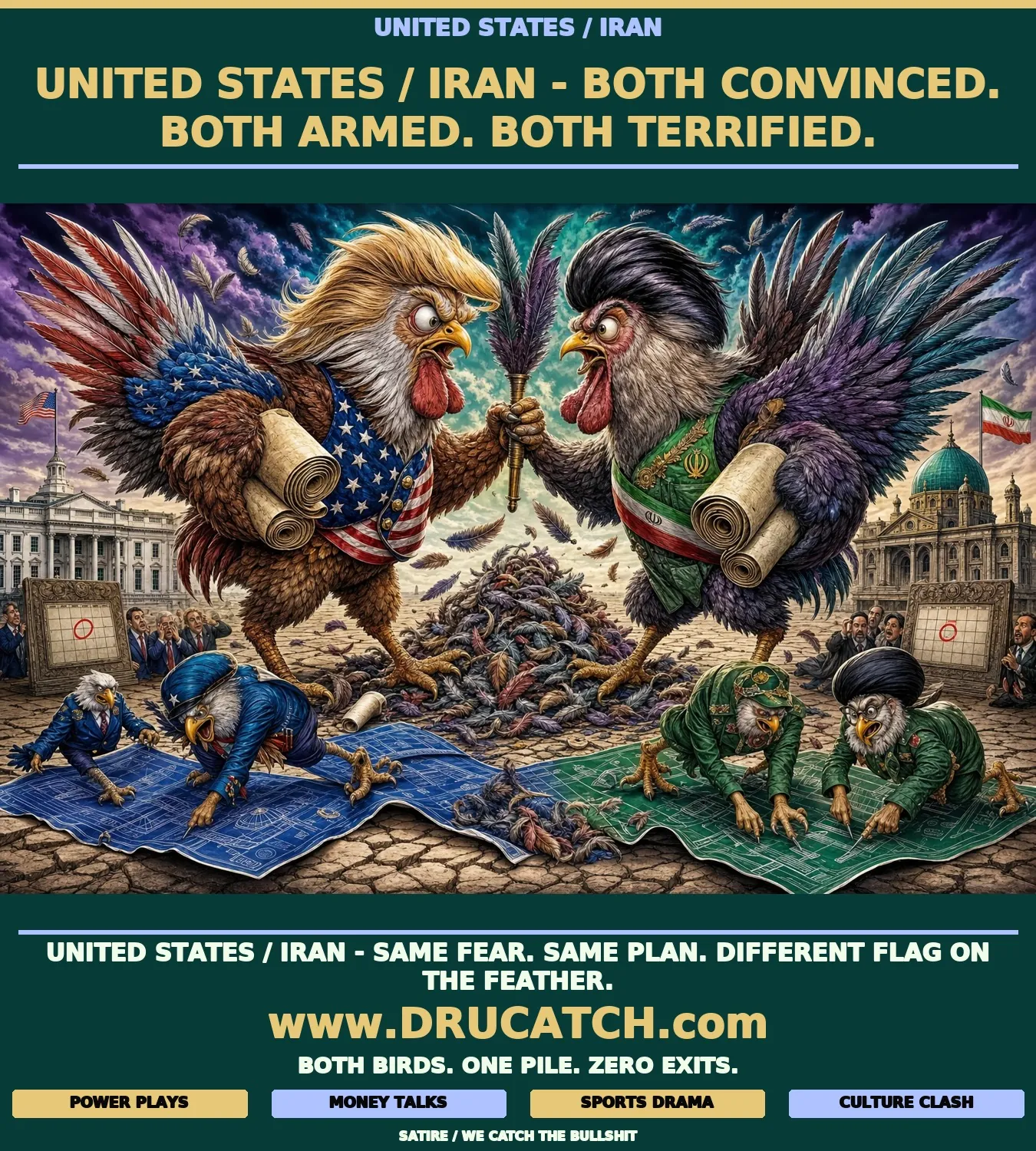
Once both roosters are in the full-peck spiral, asking who threw the first feather is the least useful question in the room. The evidence brief does not name a single diplomat, back-channel or deescalation framework currently operating between Washington and Tehran. That absence is doing more editorial work than anything this publication could add.
The satire writes itself, and that is what makes it unfunny: two governments, each credibly afraid, each rationally preparing, each making the other's fear more rational by preparing. The Middle East does not need one side to be wrong. It just needs both sides to be this right about each other at the same time.

THE COMMENTS SECTION HAS ENTERED THE CHAT
If both the U.S. and Iran are genuinely reacting to the other's perceived threat rather than making independent first-strike decisions, is there any mechanism currently in place that could interrupt the escalation cycle before a pretext becomes a casus belli?
Join the discussion / save / share