
HOW DRU CATCH SEES IT
What the Rally Heard vs. What the Memo Said
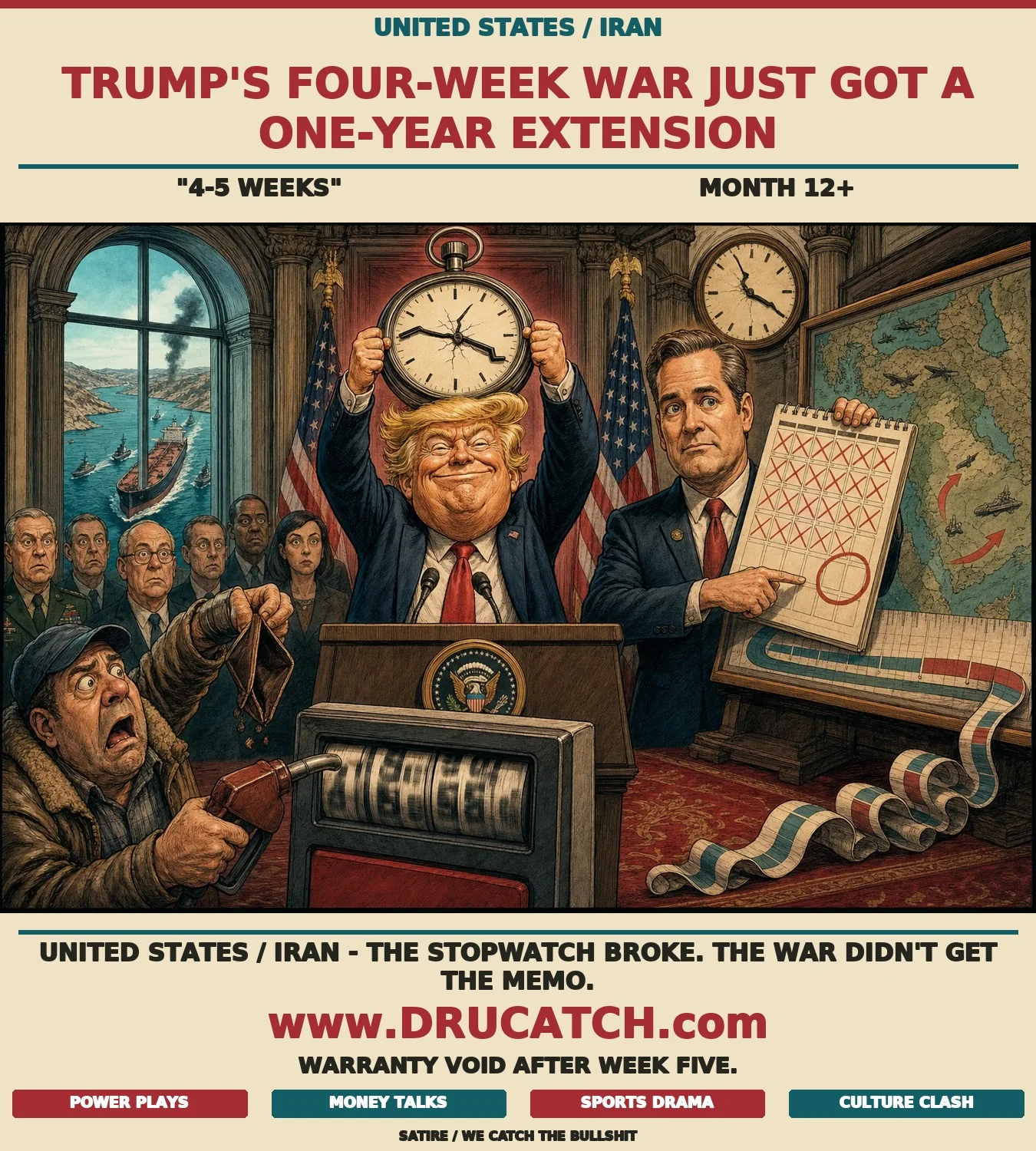
There is a specific kind of boldness that only functions when nobody cross-references the logistics. At a Florida rally, Trump floated the idea of a follow-up military operation against Iran - a country whose intelligence services, per his own Director of National Intelligence, have advanced their plotting against U.S. personnel to what the memo describes as a critical stage. That same week, U.S. bases across the region were quietly drawing down and the State Department was cutting staff at posts in Lebanon, the UAE, Qatar and Jordan.
Consider what is actually occurring simultaneously: the administration is telling the Secretary of State that the danger to American personnel exceeds what most cleared officials are even permitted to hear about, while its operational response to that danger is to station fewer American personnel in the area. That arithmetic does not describe a drawdown. It describes a confidence maneuver with an extremely short fuse.
The Intelligence Gap Nobody Was Supposed to Notice
When a Director of National Intelligence tells the Secretary of State that the threat level is relevant to far more people than currently hold the clearance to receive it, that is not a standard security notification. It is a bureaucratic concession that the individuals most directly exposed to the danger are, structurally, among the last to be informed of its severity.
The DNI memo went further, asking Rubio for latitude to declassify enough detail that State Department personnel could at least be warned. At the identical moment, ordered departures and restricted-operations designations were spreading across regional posts. The safety apparatus and the public-communications apparatus are accelerating in opposite directions - and the rally audience only ever catches wind of one of them.
The Deal He Called Losing - Before Withdrawing the Pieces
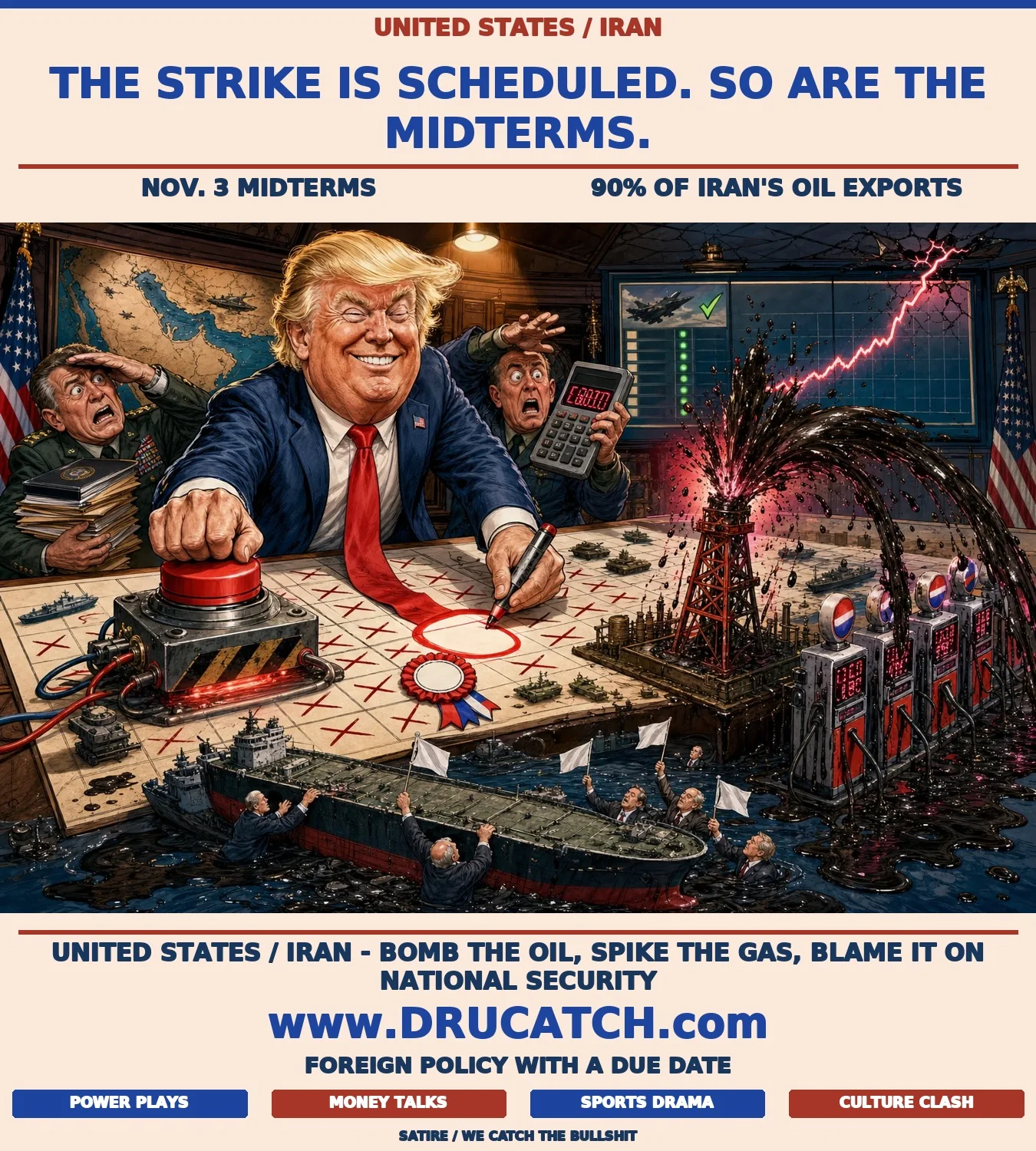
Last month Iran proposed reopening the Strait of Hormuz. Trump dismissed the offer publicly, arguing Tehran was seeking terms only because it was faring poorly, and further accused Iranian leadership of attempting to move oil prices before the U.S. midterms. Iranian Foreign Minister Araghchi answered that his government's concern was national interest, not American electoral math. Fair enough - diplomatic rejections carry their own logic.
What resists a clean explanation is declining a ceasefire offer while simultaneously reducing the forces that would underwrite any subsequent escalation - and then presenting a president, who has just described a possible next operation to a cheering crowd, with targeting options that include Kharg Island and Qeshm. The homeowner analogy requires almost no decoration: the listing goes up, the sledgehammer swings, and the contractor turns out to hold a general's rank. Nobody has quite answered who settles the bill once the walls come down.

THE COMMENTS SECTION HAS ENTERED THE CHAT
When a government publicly considers escalating military action while simultaneously reducing the personnel it would put at risk, is that a coherent strategy or a communications gap that the evidence cannot bridge?
Join the discussion / save / share