HOW DRU CATCH SEES IT
The Rebrand Heard Round the Fleet
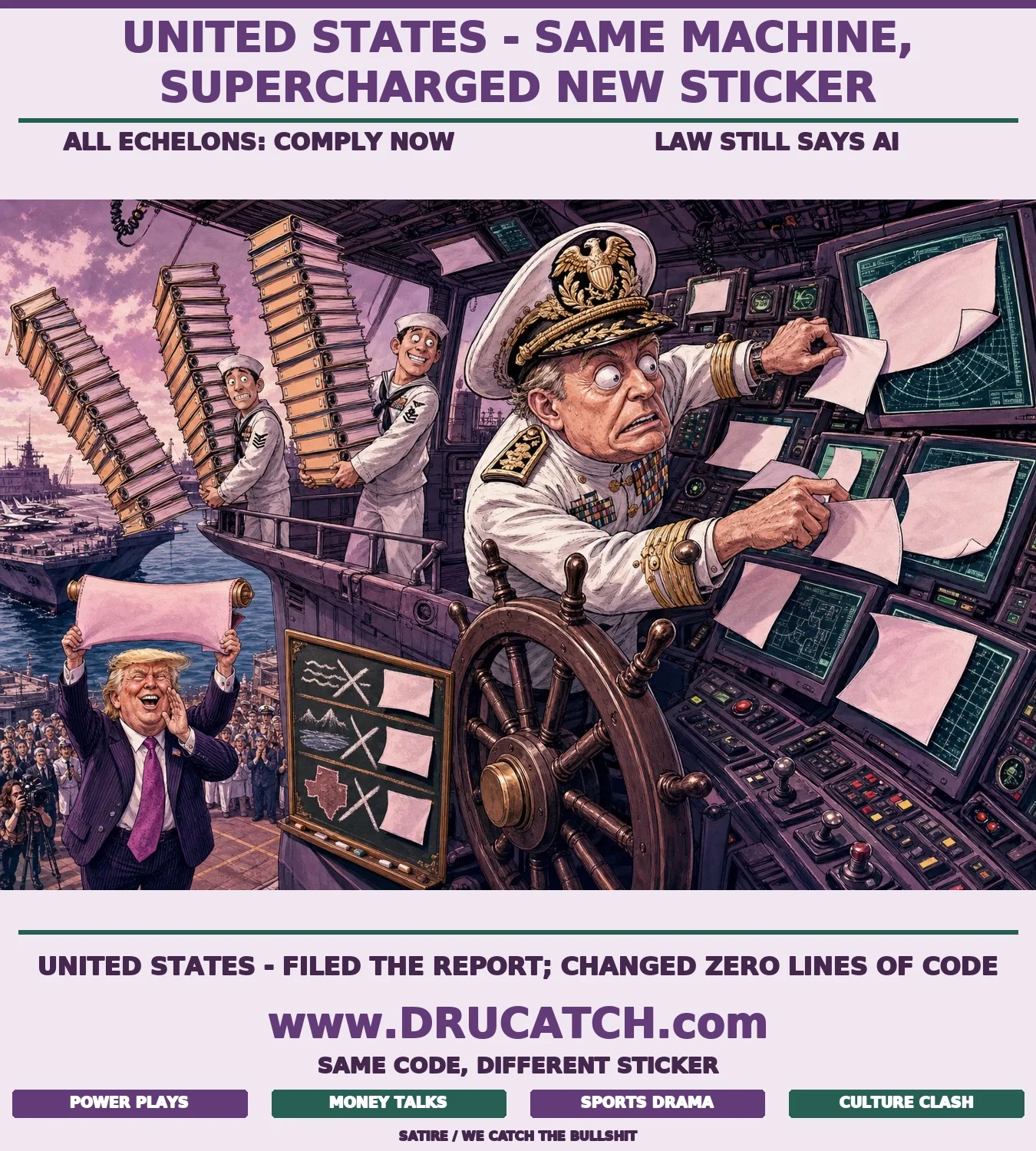
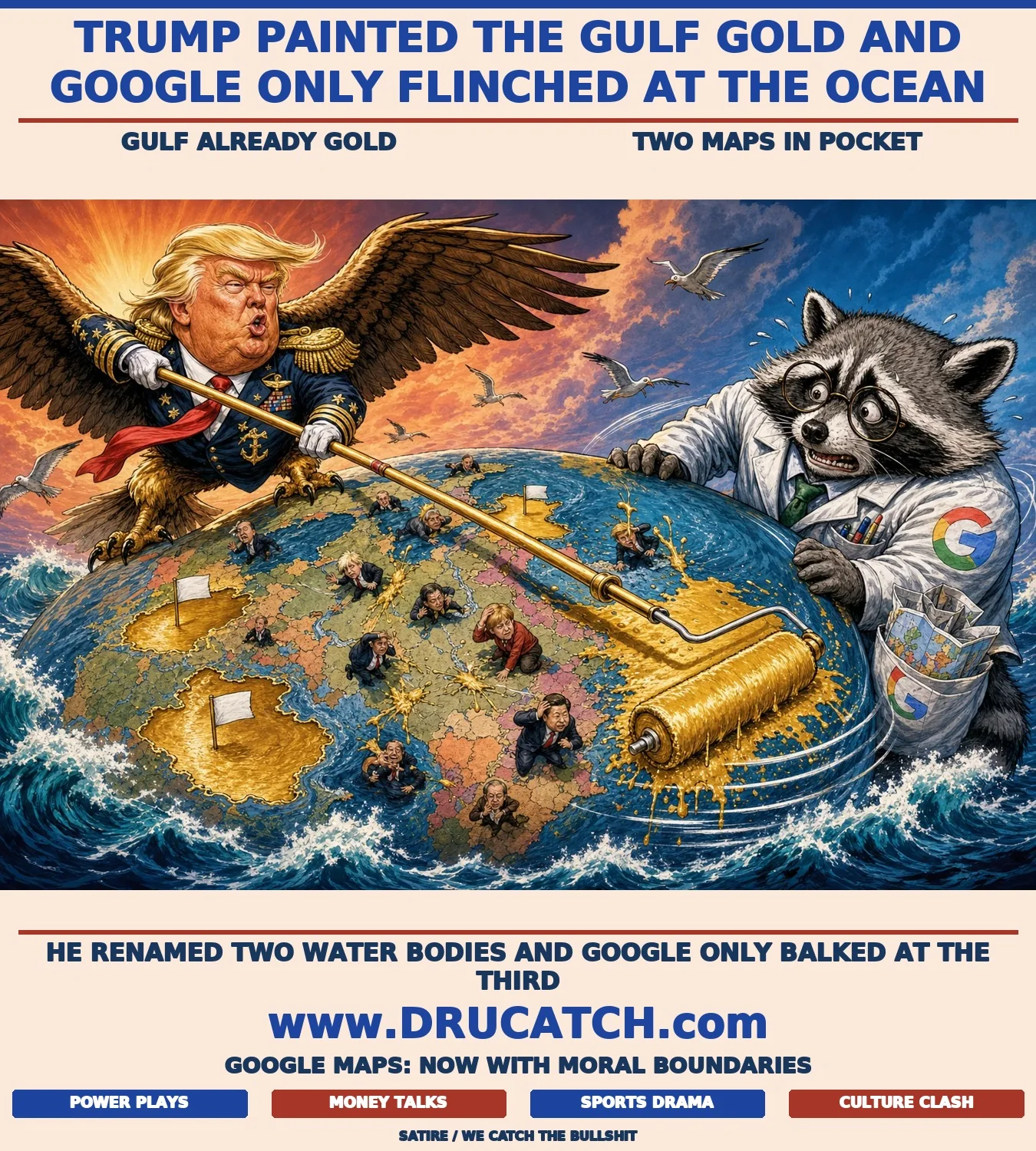
Renaming things has a long and distinguished American tradition. The Gulf of Mexico got a new nameplate. Lake Ontario nearly followed. New Mexico nearly became New America. In every case, not one drop of water shifted, not one surveyor's pin moved, and no resident woke up somewhere different. The Navy's mandated pivot to 'Super Intelligence' belongs to that same tradition - just with more braid on the cap.
Thirty Days to Change Every Word for Nothing
The service memo is a small bureaucratic marvel: maximum procedural urgency, zero operational consequence. Echelon II commanders, type commanders and systems commanders must comb through public releases, intranet portals and external presentations within 30 days, then submit a compliance report certifying the job done. The underlying technology will occupy those same 30 days doing precisely what it has always done - running as designed, wholly indifferent to whatever its personnel file now says.
The Statute Still Calls It AI
There is a quietly clarifying line near the bottom of the memo: existing laws and contracts remain in force under their original language until Congress passes conforming amendments. In plain terms, a Truth Social post cannot reassign a statute's vocabulary. The Navy is aware of this. It is filing compliance reports regardless. Whether that qualifies as the new preferred term - or something closer to its predecessor - is left as an exercise for the reader.



THE COMMENTS SECTION HAS ENTERED THE CHAT
If a government agency can be required to rename a technology across all official communications without changing how the technology works, what does that tell us about the relationship between language, institutional compliance and actual policy? And where, exactly, does the line sit between harmless rebranding and something more corrosive to public trust?
Join the discussion / save / share