HOW DRU CATCH SEES IT
A $4.2 Billion Factory, Announced From a Campaign Stage
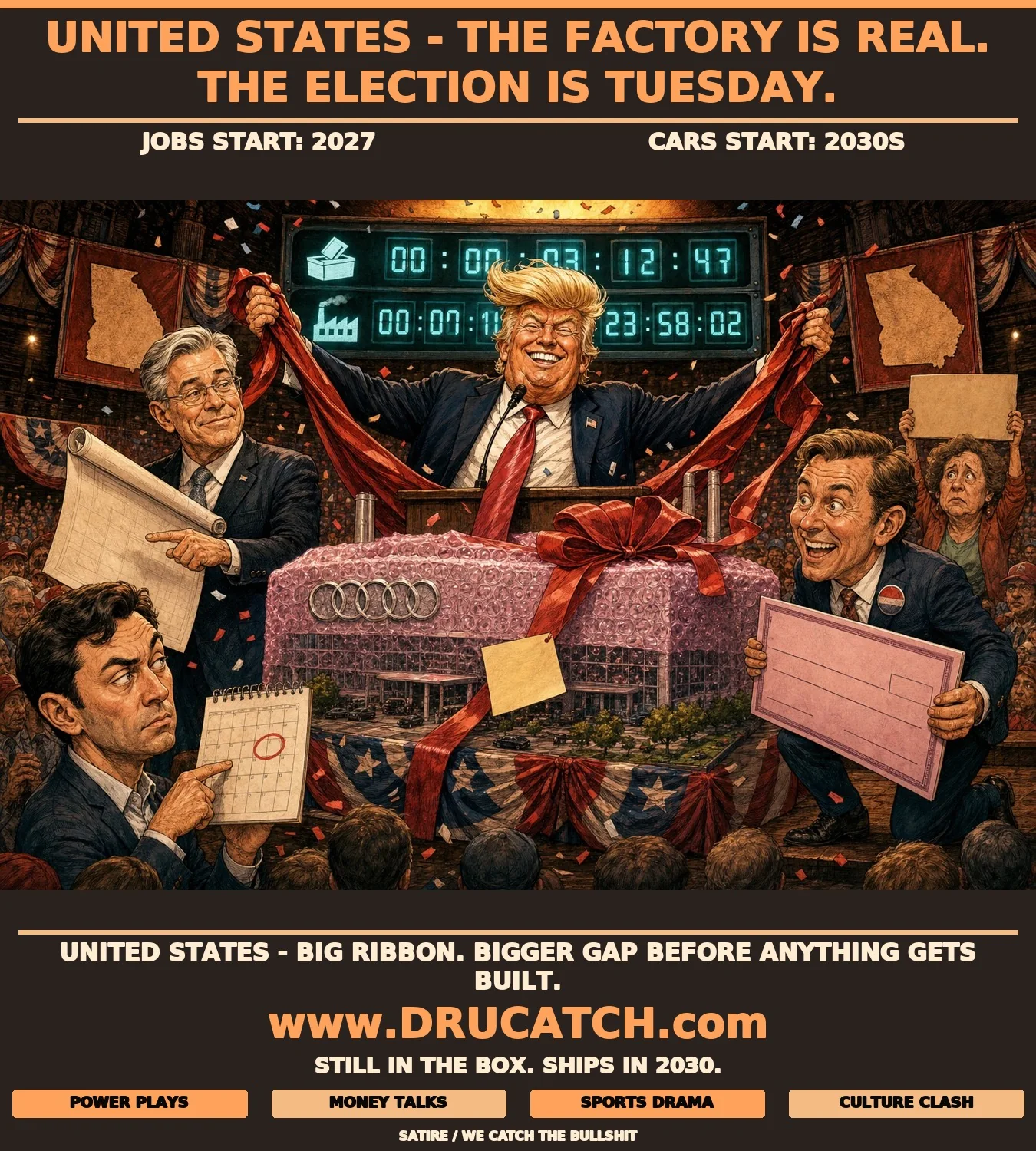
A $4.2 billion commitment, roughly 4,500 promised jobs, a construction start penciled in for 2027, and cars not expected off the line until the early 2030s - Trump chose that package as the headline act at a Perry, Georgia campaign rally nine days before an election where Republicans are bracing for losses. Calling the timing a coincidence would require a remarkable amount of charitable imagination.
Audi's own news release confirmed the construction and production schedule. AP coverage noted pointedly that the announcement appeared designed to benefit Republican candidates in the battleground state, among them Rep. Mike Collins in his challenge to Democratic Sen. Jon Ossoff. Rick Jackson, running for Georgia governor, mounted the stage to thank Trump personally. A deal years in the making received its public debut at a midterm rally - which tells you something about who the intended audience was.
He Blamed the Tariffs. Then He Took the Credit.
Trump attributed Audi's Georgia commitment to his tariff agenda - widely characterized as both aggressive and broadly unpopular. That is a striking pivot. The same policy blamed for pushing up sticker prices on vehicles sold to American buyers is now being presented, from a campaign stage, as the force that persuaded a German luxury automaker to eventually, theoretically, employ Georgians in Macon.
Audi's chairman Gernot Döllner, standing alongside Trump at the podium, described the investment as a sign of confidence in the American market over the long term. He made no specific mention of tariff pressure as the deciding factor. Trump did. The distance between 'we believe in this market' and 'the tariffs compelled us' is substantial, and that distance is currently performing serious rhetorical labor somewhere in central Georgia.
The Jobs Are Real. The Election Is Tuesday.
The precise absurdity is this: the factory is genuine - Audi published a news release and Döllner appeared in person. The jobs and the vehicles, however, are creatures of the 2030s. The votes are November 3. Trump stood before a Perry crowd and marveled aloud about 200,000 cars a year from a plant that will not complete its first production run for the better part of a decade.
None of that is a verdict on the deal itself, which may prove to be a real economic gain for Georgia. The issue is packaging a multi-year industrial timeline as an election-week rally moment, casting voters as spectators at a trailer screening rather than people weighing a present-tense decision. The factory is genuine. The delivery date is not this term. The applause, however, was available Saturday afternoon - and that, evidently, was the point.



THE COMMENTS SECTION HAS ENTERED THE CHAT
When a president announces a major economic deal at a campaign rally days before an election - with construction years away and jobs not yet created - where is the line between legitimate economic news and timed political theater?
Join the discussion / save / share