HOW DRU CATCH SEES IT
The Most Dangerous Credential in Nigeria Was Allegedly a Name Badge
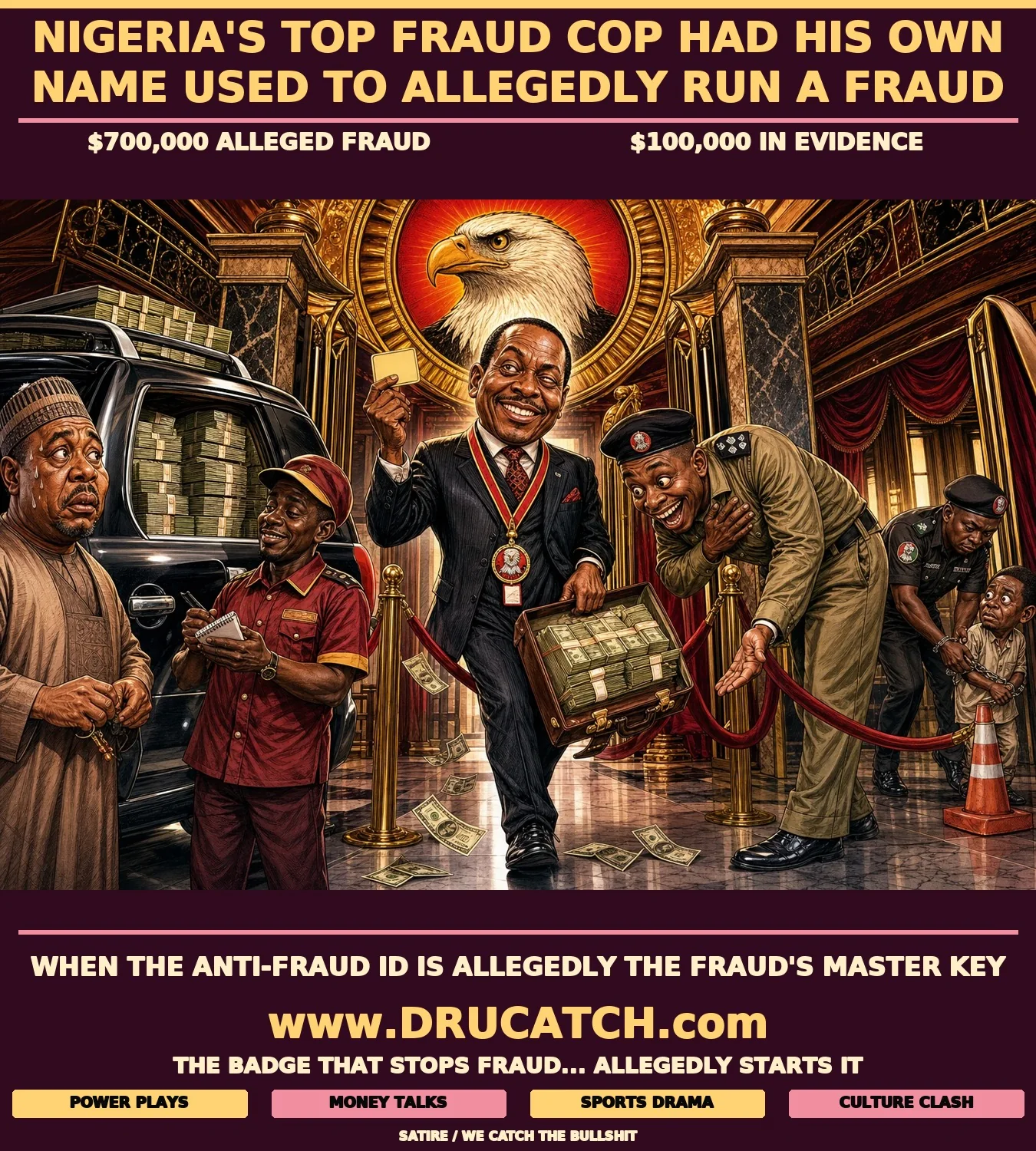
Nigeria's EFCC is not a gentle institution. It arrests governors, freezes accounts and seizes assets with a consistency that has made its chairman's name genuinely consequential. That name, according to the EFCC's own allegations in this case, is exactly what one defendant allegedly decided to borrow. Mr Joshua is accused of posing as the personal assistant to EFCC chairman Ola Olukoyede while allegedly working with co-defendant Mr Hashim on a scheme the prosecution values at $700,000. All charges remain allegations; both men are presumed innocent.
The comic geometry here is almost too neat. The agency's power to terrify fraudsters is the same power that allegedly made impersonating its chairman's assistant so effective. A name that is supposed to make criminals sweat apparently made doors open instead.
How a Fearsome Reputation Becomes a Fraud Weapon
There is a structural irony buried in this allegation that goes beyond the individuals charged. Institutional authority operates partly on reputation - the assumption that someone speaking in an agency's name carries real weight. The more fearsome the agency, the more weight that name carries. The EFCC has spent years building exactly that kind of gravity.
The alleged scheme, if proven, exploits that gravity directly. Nobody questions the assistant to the man who puts fraudsters in prison - because who would be bold enough to fake that? The deterrence mechanism and the exploitation mechanism turn out to run on identical fuel: the unquestioned credibility of the EFCC's top office. The anti-corruption shield becomes, in this telling, the fraudster's best cover story.
One SUV, Two Phones and a Very Specific Irony
A Nigerian court has now admitted $100,000 in physical cash, an SUV and mobile phones as exhibits in the trial - a prop list that almost writes its own punchline. The EFCC, whose core business is seizing exactly these kinds of assets from fraudsters, is now presenting them as evidence in a case where its own chairman's name allegedly served as the enabling credential.
The trial will determine guilt or innocence. But the institutional question sits in the record regardless of the verdict: when an anti-corruption body's name becomes a usable instrument for the crimes it was built to stop, the agency's reputation is simultaneously its greatest asset and, allegedly, someone else's greatest tool. That is not a design flaw anyone thought to patch.

THE COMMENTS SECTION HAS ENTERED THE CHAT
When an anti-corruption agency's own name and reputation become the most valuable tool an alleged fraudster can carry, what does that tell us about how institutional credibility functions as social currency in Nigeria - and what, if anything, can enforcement bodies do about it?
Join the discussion / save / share