HOW DRU CATCH SEES IT
The 1% That Wasn't
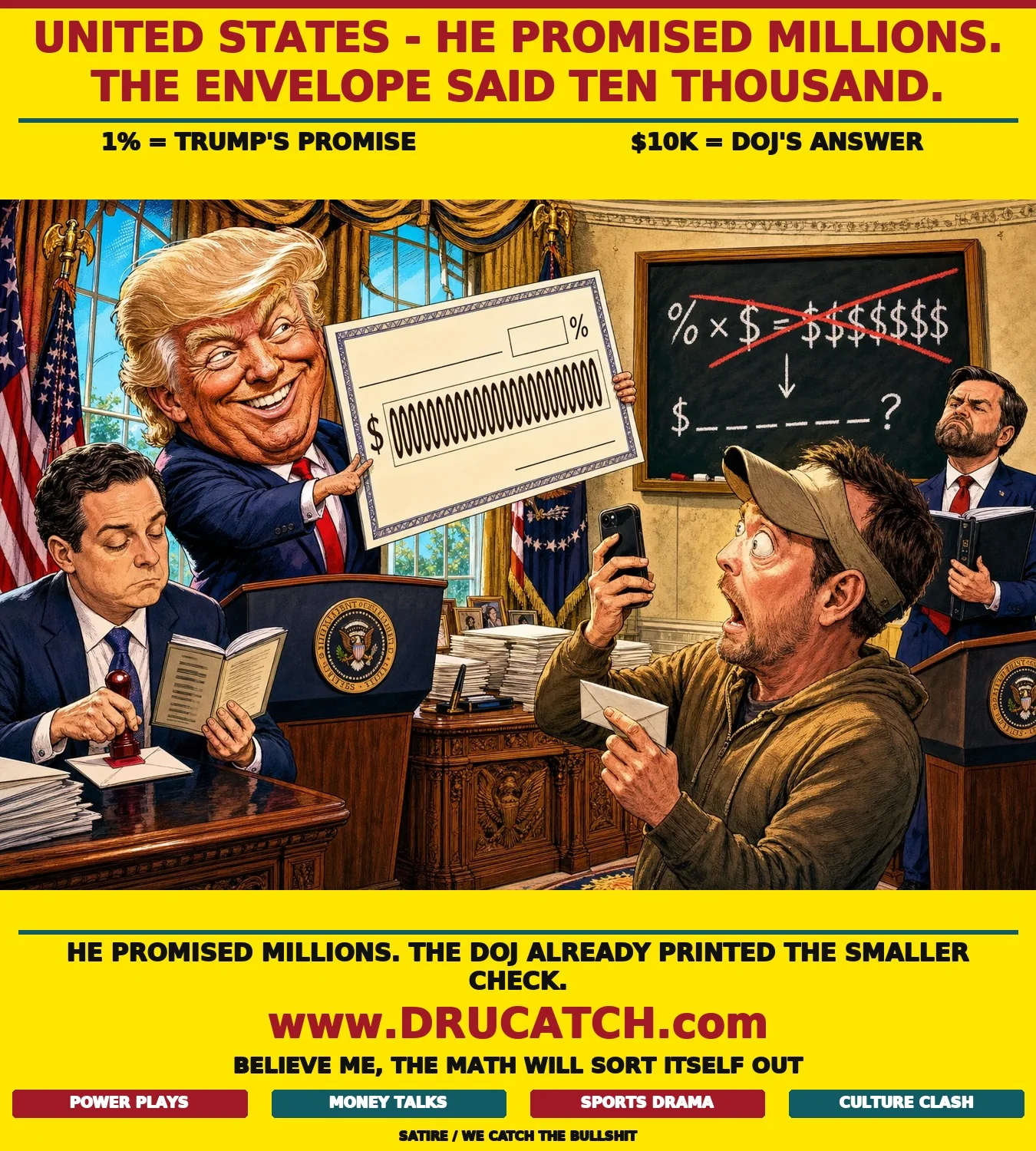
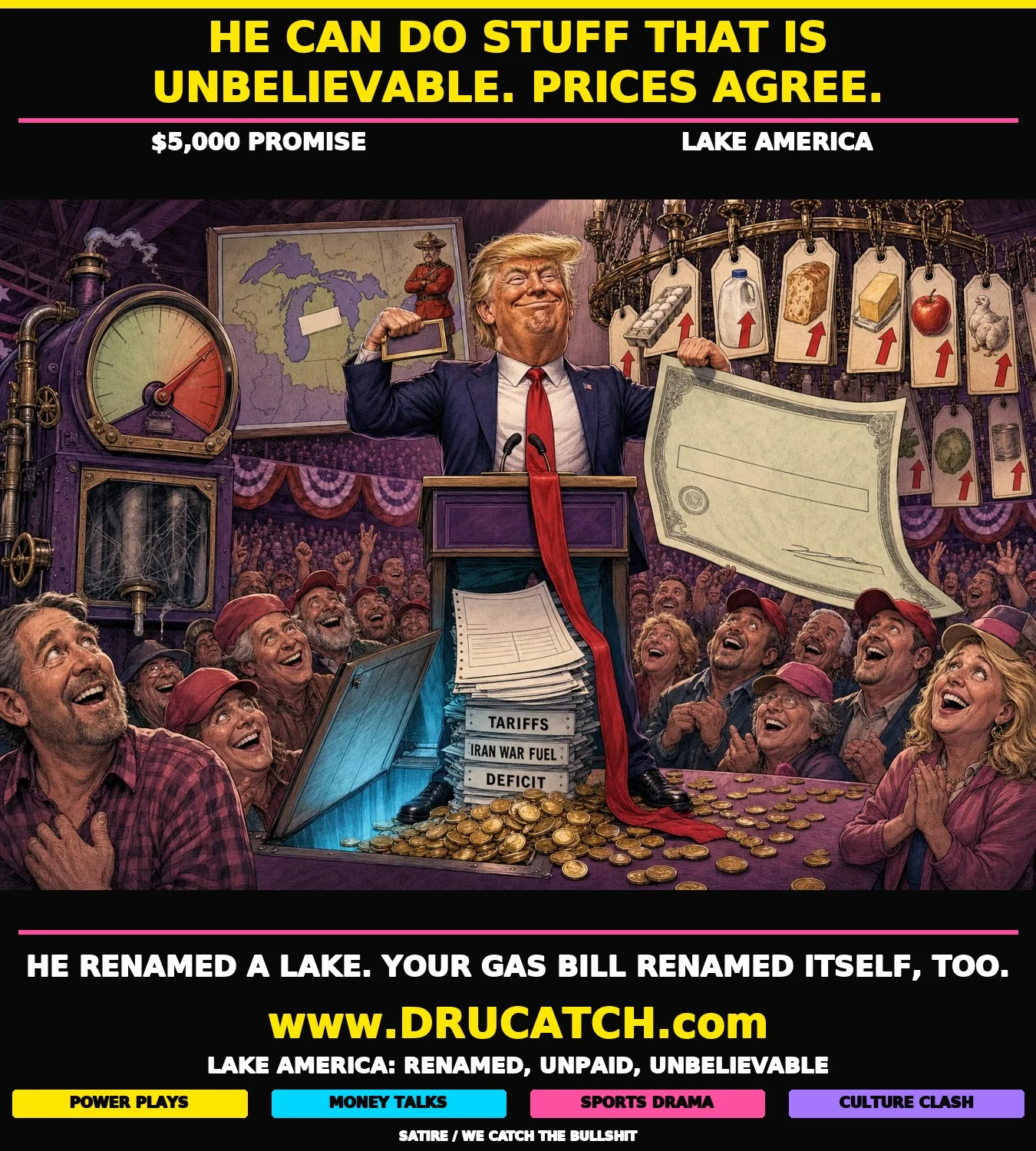
The contradiction here isn't subtle. Trump stood in the Oval Office and told the country that exposing $1 billion in fraud would net the tipster $10 million - a 1% cut, he explained helpfully, because 'that's a lot of money.' The program's own government website quietly disagrees, capping rewards at $10,000 to $30,000. That gap is not a rounding error; it's the difference between retirement and a decent used car.
Believe Me - The Arbitrator Clause
Then came the kicker: Trump announced he personally would serve as arbitrator for all disputed payouts. Not a panel, not the courts, not even the DOJ he nominally oversees - him. 'I will be very generous, believe me.' That phrase - 'believe me' - has a documented track record that does not inspire enormous confidence.
What we have is a program that cannot decide whether it is a government bounty scheme or a presidential patronage system, administered by a set of rules the president hasn't read, or has read and chosen to ignore. The DOJ says 'sole discretion.' Trump says 'I will be the arbitrator.' Those are not the same thing, and the first person who finds serious fraud will find out exactly which version was real.
Exhibit A: The Man Who Was Right There
The first WHIP recipient, conservative YouTuber Nick Shirley, appeared at the announcement itself. He had already done the work: videos alleging daycare fraud in Minnesota, FBI resources deployed, a CEO arrested on $4.6 million in false claims. His reward? $10,000. By Trump's own 1% math, Shirley was owed $46,000 at minimum. By the billion-dollar rhetoric Trump deployed at the podium, Shirley should have left the Oval Office a millionaire. He left with the amount the DOJ's website always said it would give - the one Trump was actively contradicting in the same room, at the same event, while Shirley stood beside him.
THE COMMENTS SECTION HAS ENTERED THE CHAT
Should any sitting president have personal authority to determine who receives federal whistleblower rewards, or does that create an obvious conflict of interest in a program meant to uncover government fraud?
Join the discussion / save / share