HOW DRU CATCH SEES IT
A 48-Hour Deadline Built on a Zero-Win Record
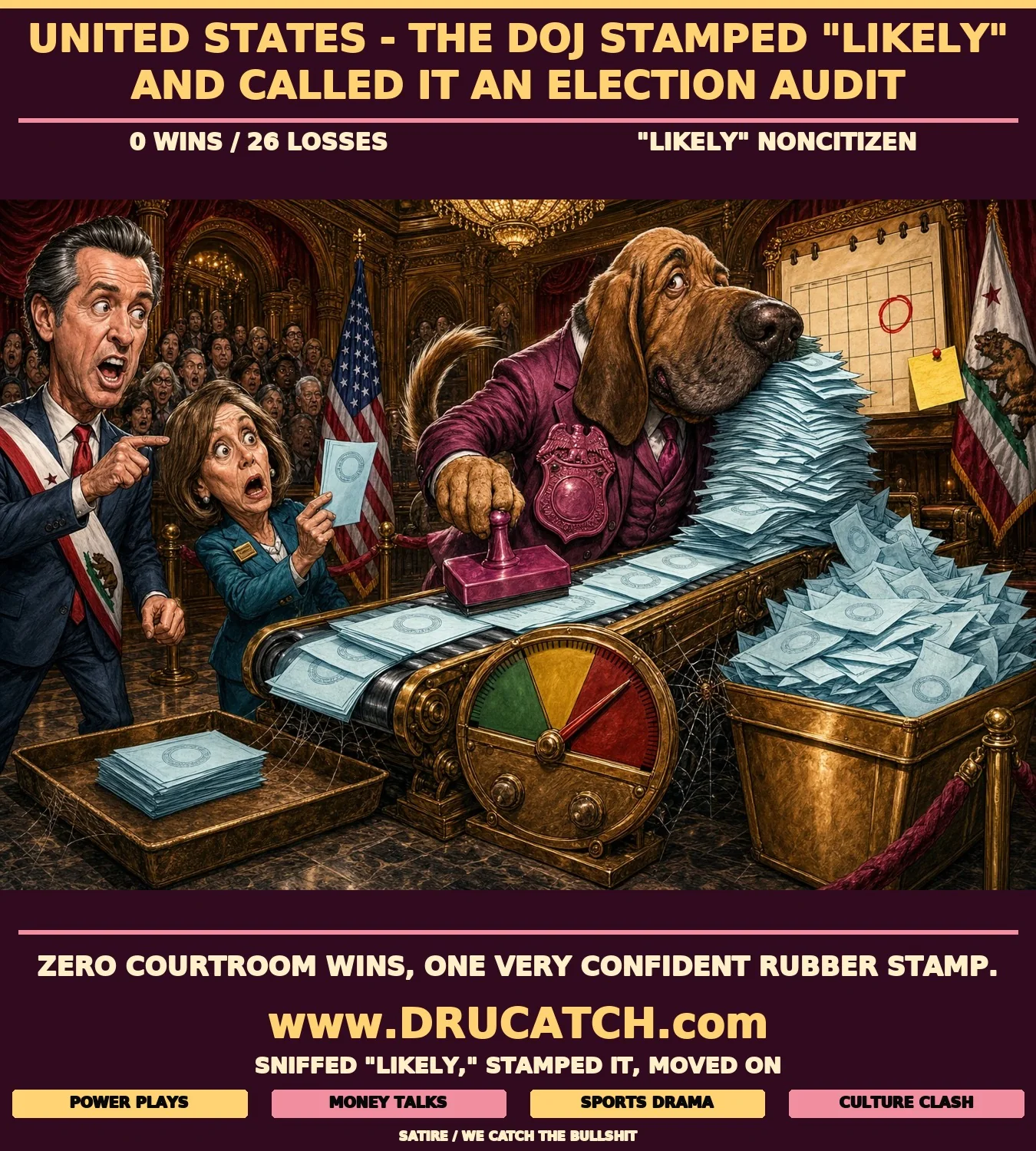
There is a word for what the Trump administration is doing in California, and it is not "voter fraud detection." The Department of Justice delivered official federal letters to 18 counties ordering ballot quarantines based on suspect lists the government's own officials have described as inaccurate. No confirmed roster. Not a single courtroom win. Just a federal letterhead, an impossible 48-hour clock, and timing that lands with almost geometric precision ahead of midterms.
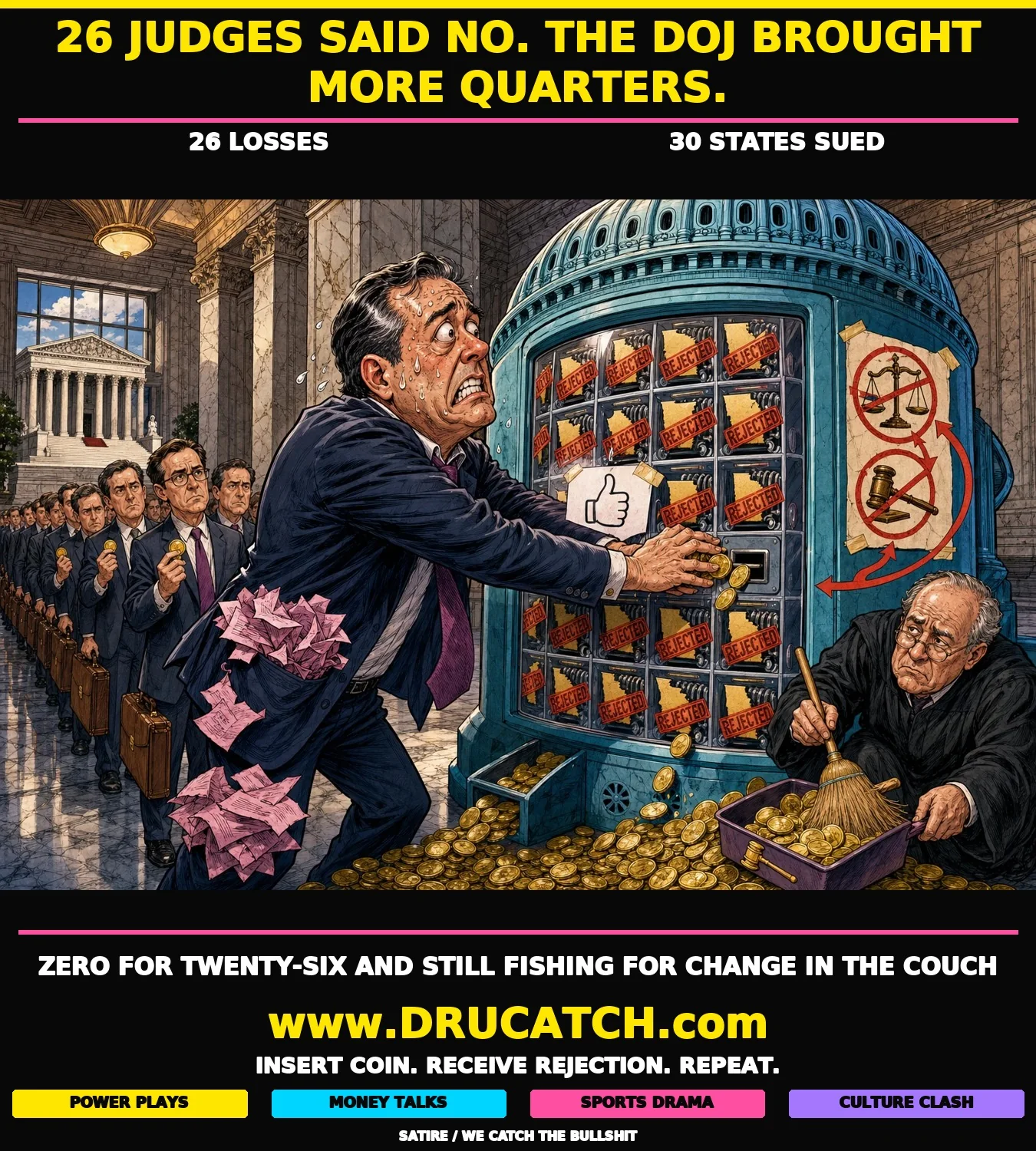
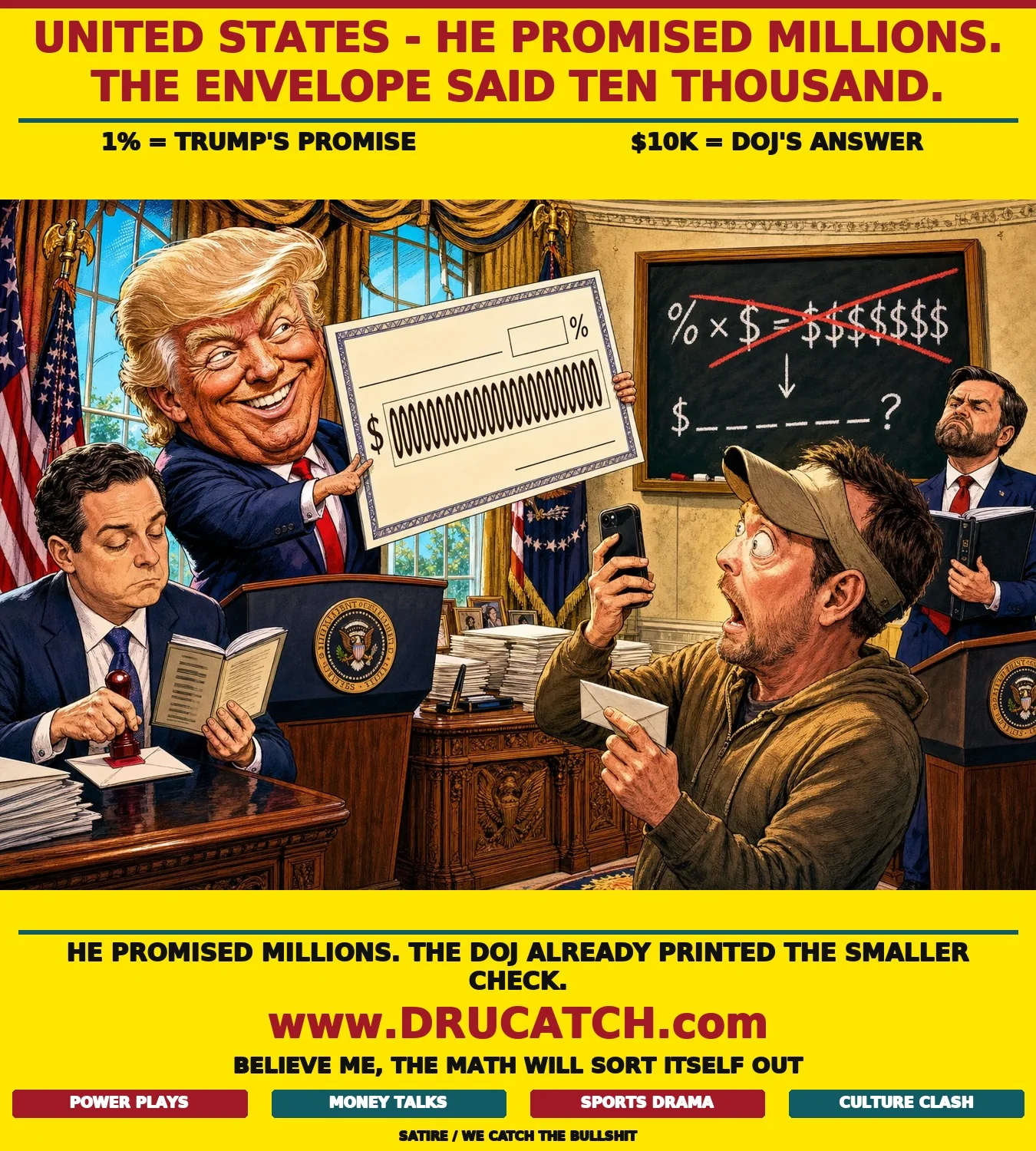
The DOJ's Civil Rights Division has launched 31 lawsuits in pursuit of unredacted voter rolls. Twenty-six of those cases ended in defeat, and the winning column remains empty. That is not a vigorous-but-principled enforcement campaign; it is a department running the same play on repeat, treating every new loss as a reason to file the next one. A private law firm carrying that record on a single issue would be looking for new clients. The federal government marks it down as momentum.
Election Integrity Was Also an Immigration Data Run
The additional detail that makes this stranger is that the Civil Rights Division has acknowledged it intends to pass those same voter rolls to the Department of Homeland Security for noncitizen screening. That means the ballot-box machinery is simultaneously doing double duty as an immigration database build. Whatever the word for that exercise is, it is operating underneath the label of protecting the vote.
Democratic Sen. Alex Padilla stated publicly that the DOJ had offered no evidence for its fraud claims and that its own officials had conceded the underlying data was flawed. California's lawyers argued in court filings that the demands put actual citizens at risk of disenfranchisement and could push certification past the legal deadline. The administration's answer to those arguments was to take the dispute directly to the 9th Circuit with a Saturday turnaround.
The Strict Parent Who Already Knows Nobody Got In
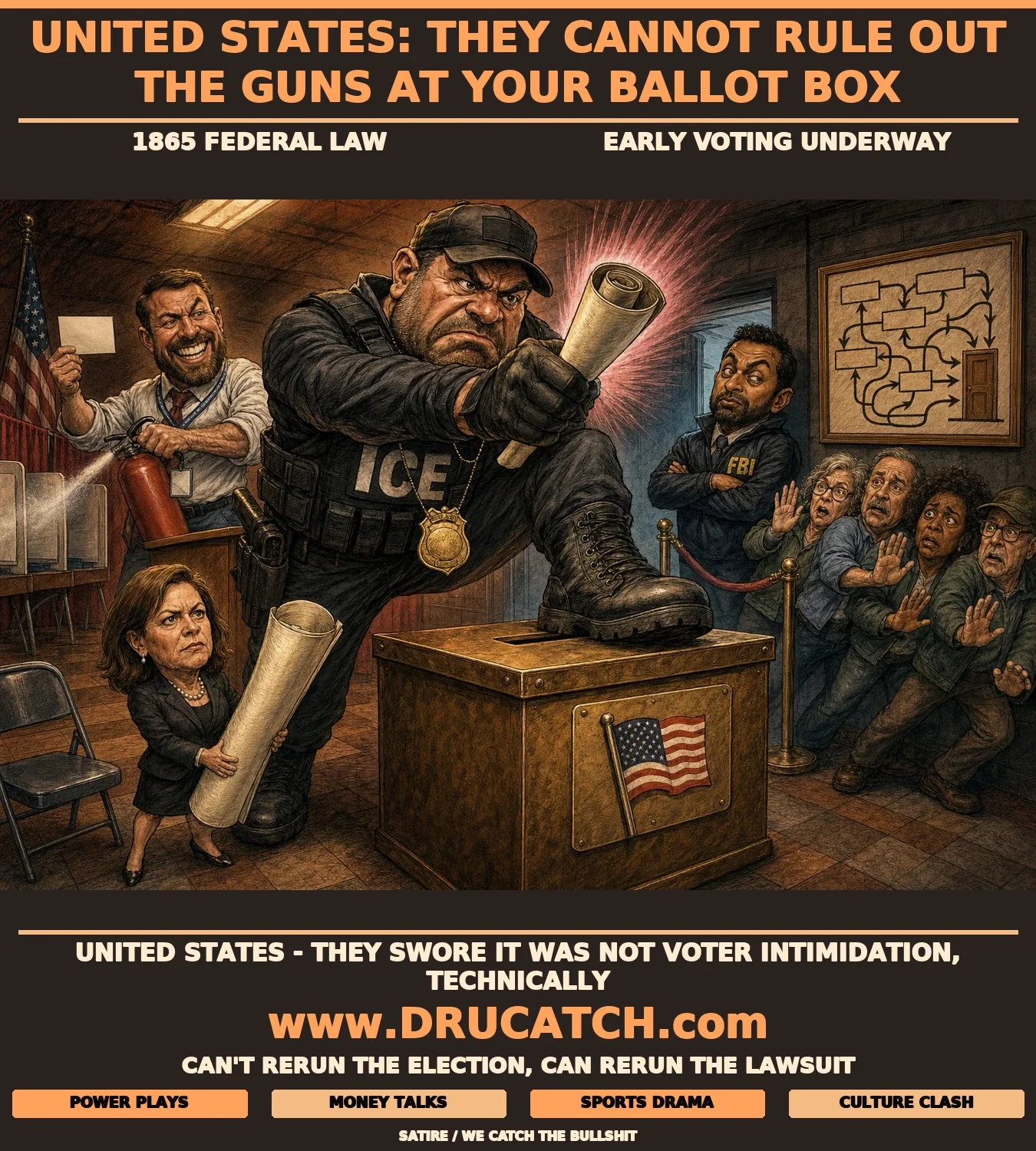
Research consistently shows that noncitizen voting is exceptionally rare, hard to substantiate, and has not been demonstrated to alter the outcome of any race. The administration's own personnel have questioned the accuracy of the lists driving this effort. And yet the same department sitting at 0-for-26 sent letters warning that processing a noncitizen ballot exposes election officials to legal jeopardy - a threat directed at people following state law, using a dataset the federal government has itself flagged as unreliable.
This is not a parent checking ID because someone suspicious was spotted at the door. It is a parent demanding identification, rejecting every form offered, calling law enforcement on the host, and requesting Social Security numbers from the line on the way out - while courts keep returning the paperwork stamped "insufficient evidence." With more than 330,000 California mail ballots already in the count, the contest has shifted away from fraud prevention and toward something simpler: who holds the documents when the results are certified.
THE COMMENTS SECTION HAS ENTERED THE CHAT
When a federal agency pursues a pattern of legal action with a documented 0-for-26 record, and its own officials acknowledge the underlying data is unreliable, at what point does "election integrity enforcement" become something else - and who should decide that?
Join the discussion / save / share