HOW DRU CATCH SEES IT
The Referee Who Owns Both Teams
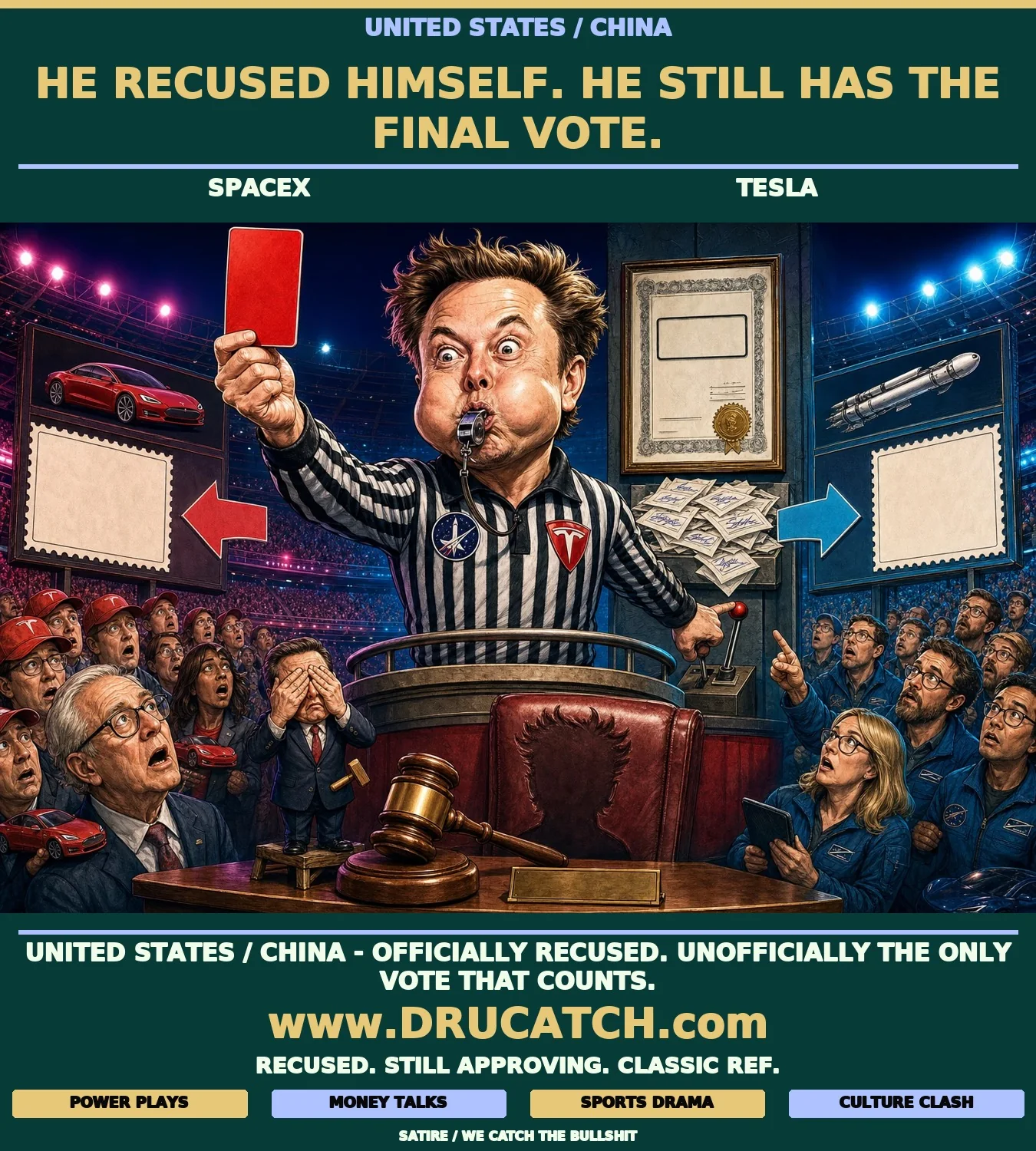
There is a specific kind of theater where someone announces they are leaving the room and then immediately signs the lease on the room. Elon Musk has managed to perform that exact trick at a scale of roughly $3.5 trillion. He recused himself from SpaceX-Tesla merger talks because of conflicts of interest, then publicly called the deal "a good idea" this week, and now SpaceX's own regulatory filing confirms that the whole thing still needs his personal approval. The recusal is a noun. The deal remains a verb with only one subject.
What "Recusal" Means When You Control Both Sides
The word "recusal" carries a specific legal weight - it means the conflicted party steps back so other decision-makers can operate without their thumb on the scale. SpaceX helpfully clarified that those other decision-makers include, in their own words, "our controlling shareholder." That shareholder is the man who recused himself. The special committee is special in the sense that it exists inside a structure Musk controls from both ends. Reuters reported that Musk's public endorsement of the deal rattled insiders who worry it could invite shareholder scrutiny and delay the process - which is a polite way of saying the recused party keeps talking.
The Conflict of Interest Is Also the Business Plan
Analysts quoted in the reporting say a merged entity would give Musk even greater consolidated power. So the conflict of interest that triggered the recusal is also the primary outcome the deal is designed to deliver. He removed himself from the talks to avoid influencing a transaction that, if it closes, makes him substantially more influential. The recusal is not a firewall. It is a press release about having once considered building one. A person with direct knowledge of the talks told Reuters that the disclosure created a "mess" - which is the most honest sentence in this entire episode.

THE COMMENTS SECTION HAS ENTERED THE CHAT
When a controlling shareholder recuses himself from merger talks due to conflicts of interest but the deal still legally requires his approval, does the recusal serve any meaningful purpose - or is it purely performative governance?
Join the discussion / save / share